
 Search Articles


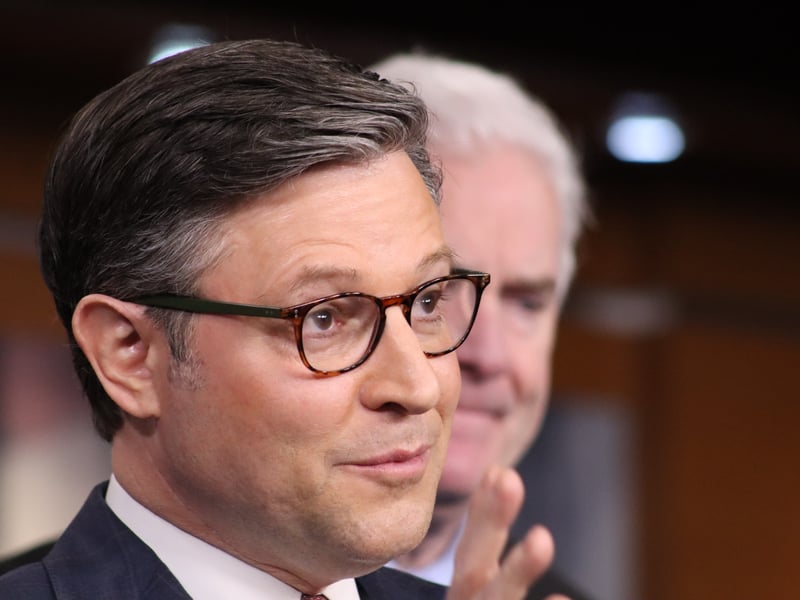
WASHINGTON (CN) — House Republicans on Tuesday narrowly passed a budget resolution setting the tone for President Donald Trump’s ambitious legislative agenda, overcoming intra-party squabbling to get the measure over the finish line in an evening vote.
The 217-215 vote was a crucial victory for House Speaker Mike Johnson and other GOP leadership, who spent the day working to convince several of their more skeptical colleagues to back a budget framework which prescribes more than $1 trillion in spending cuts across the federal government.
Republicans in both houses of Congress have grappled for weeks with how to lay out the framework of the White House’s agenda, which calls for massive spending cuts while hiking federal funds for border security and extending Trump’s 2017 tax cuts.
The intra-party squabbling has yielded two separate versions of the proposed budget resolution in the House and Senate — but the president has favored the lower chamber’s measure, which aims to package all his demands into one “big, beautiful” bill.
In a statement following Tuesday’s vote, Johnson alluded to the dichotomy between the House and Senate resolutions.
“Today, House Republicans moved Congress closer to delivering on President Trump’s full America First agenda — not just parts of it,” he wrote.
The House’s budget resolution directs congressional committees to review government spending and find a minimum of $1.5 trillion in federal cash to cut. The measure would also include roughly $300 billion for border security and a $4 trillion hike to the debt limit.
Johnson said that Republican leadership will work alongside committee chairs to determine the “best policies” for meeting the target for budget cuts.
“We have full confidence in their ability to chart the best path forward,” he added.
Though the text of the budget resolution does not prescribe specific cuts, some lawmakers, particularly Democrats, have argued that the trillion-dollar baseline for slashing spending will require Congress to slash funding for Medicaid, which represents the third largest portion of the federal budget.
It wasn’t a foregone conclusion that the Republican spending resolution would pass the House Tuesday. The plan faced backlash from within the GOP, mainly among budget hawks who were unhappy with the level of proposed budget cuts.
Several Republican lawmakers, including Indiana Representative Victoria Spartz and Tennessee Representative Tim Burchett, had signaled that they might oppose the measure. That threat persisted into Tuesday evening — as the House delayed a vote on the resolution while leadership attempted to flip the holdouts.
Ultimately, only one Republican, Kentucky Representative Thomas Massie, voted against the measure. Every House Democrat similarly opposed it.
Ahead of Tuesday’s vote, House Republican leadership signaled that they would go to the mat for the budget resolution, projecting confidence about their chances for passing the measure.
“Every time we’ve had a big vote on the House floor, we’re talking to members all the way up until the vote closes,” said House Majority Whip Steve Scalise during a news conference. “Today is no different.”
Johnson assured reporters that Republicans were “very, very close” to consensus on the budget resolution and defended the chamber’s decision to approve the administration’s agenda in a single bill.
“We promised to deliver President Trump’s full agenda, not just a part of it,” he said. “We’re not just going to do a little bit now and then return later to do the rest.”
The House speaker also pushed back on complaints from some of his Republican colleagues, such as Massie, who have contended that the proposed resolution would increase the federal deficit rather than shrink it. He also rejected the argument that some of the proposed spending cuts in the measure would require the government to slash funding for Medicaid.
Johnson pointed out that the budget measure does not outline specific policies but is rather a blueprint for future legislation.
“It doesn’t even mention Medicaid in the bill,” he said. “What we’re talking about is rooting out the fraud, waste and abuse.”
Asked by reporters whether the cost savings laid out in the budget resolution would eventually require cuts to Medicaid, he remained obstinate: “Watch how the process plays out, and you’ll see what we’re talking about.”
The House on Tuesday afternoon voted to open debate on the budget resolution, passing a procedural marker 217-211. Four Democrats and one Republican did not cast votes.
But even with the measure passed, the GOP’s budget headache is not yet over.
Further complicating things for Republicans is a looming fiscal deadline. A short-term budget patch, or continuing resolution, passed by Congress late last year is keeping the government funded through early March, but lawmakers will need to pass some sort of spending plan before then to avoid a government shutdown.
Johnson did not answer shouted questions from reporters Tuesday about whether he was considering another continuing resolution to buy more time to negotiate with his colleagues. Such stopgap measures have proven politically sticky for the speaker and House Republicans in the past.
On the Senate side, however, Senate Majority Leader John Thune did not rule out the possibility that Congress would need a short-term budget patch.
“We’re keeping all options on the table, but we are running out of time,” he said during a news conference Tuesday. “I think that realistically, we have to think about how we fund the government to make sure there isn’t a government shutdown.”
 Follow @BenjaminSWeiss
Subscribe to our free newsletters
Our weekly newsletter Closing Arguments offers the latest about ongoing trials, major litigation and rulings in courthouses around the U.S. and the world, while the monthly Under the Lights dishes the legal dirt from Hollywood, sports, Big Tech and the arts.