
 Search Articles


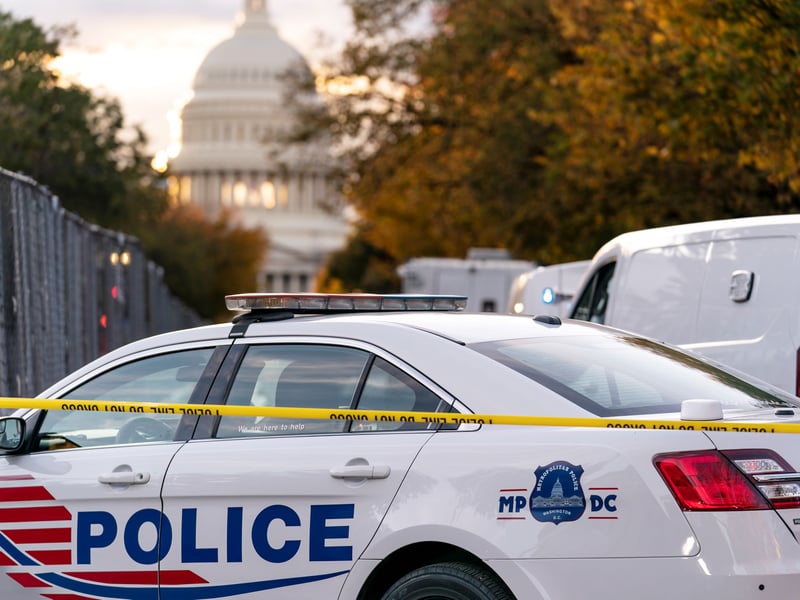
WASHINGTON (CN) — House Republicans on Wednesday launched an enormous legislative salvo against Washington, D.C., debating a raft of bills they said are aimed at addressing crime and mismanagement in the nation’s capital.
But Democrats and the D.C. government have argued that the effort, which would inject Congress further into the city’s lawmaking power and clamp down on its criminal justice system, is an unprecedented assault on D.C.’s historical independence and represents a “power grab” by the GOP and President Donald Trump.
Washington, D.C., aided by its unique legal standing, has become ground zero for the Trump administration’s crackdown on escalating federal law enforcement and immigration activities in Democratic cities.
Last month, the president invoked a rarely used clause in D.C.’s home rule law to seize control of the Metropolitan Police Department and deployed National Guard troops and federal agents to address what Republicans claim is a surge in crime.
The White House has also taken an interest in “beautifying” D.C. In March, Trump issued an executive order forming a multi-agency task force to restore monuments and federal buildings and clear homeless encampments from federal property.
With the president’s “emergency” declaration set to expire and D.C. leaders bracing for a possible indefinite federal presence in the city, Congress is moving to assert its authority over the nation’s capital.
The House Oversight Committee met Wednesday to debate more than a dozen mostly Republican-backed bills. GOP leadership frames the effort as making D.C. safer, while Democrats accuse them of using the city as a political prop.
“It’s pretty clear that Donald Trump and House Republicans, especially here on the Oversight Committee, are pushing a blatant power grab by hijacking authority from local Washington, D.C. leaders and residents,” said California Representative Robert Garcia, the top Democrat on the panel.
At the top of Wednesday’s agenda was a bill to lengthen Congress’ review period for D.C. laws passed by D.C.’s council and signed by its mayor. Currently, lawmakers have 30 days to block most measures and 60 days for criminal laws.
The proposal, from Arizona Representative Paul Gosar, would give Congress 60 days to review all local laws and let it overrule individual provisions.
Gosar told the committee that his bill would “promote efficient governance” by keeping the city council from passing laws similar to ones already disapproved by Congress and that it requires “accountability” from the D.C. government.
“Unfortunately, the D.C. Council has shown time and time again that it cannot be trusted to put public safety first,” the Arizona Republican said.
Representative Eleanor Holmes Norton, D.C.’s nonvoting delegate, warned the GOP bill would inject “chaos” into city lawmaking by blocking emergency orders and causing laws to “constantly” change.
Norton contended that the proposed legislation was “masquerading” as harmless congressional procedure and added, “It is, in fact, one of the biggest reductions in the District of Columbia’s authority since Congress passed the Home Rule Act in 1973.”
As the Oversight Committee debate continued, Democrats accused Republicans of ignoring D.C. residents’ right to self-governance, while Republicans argued the nation’s capital remains under Congress’ authority.
Louisiana Representative Clay Higgins pointed out that D.C. was in a “unique” legal position.
“You say that Washington, D.C. is unique, but Washington, D.C. is unique because you made it that way,” Missouri Representative Wesley Bell fired back. “[Y]ou continue to vote in a manner to keep it that way, to keep folks in D.C. from having statehood or enjoying the rights that other states enjoy."
Higgins later found himself in a heated debate with Florida Representative Maxwell Frost, as the Oversight Committee took up a measure aimed at codifying Trump’s March executive order standing up the D.C. beautification task force. Democrats had demanded to know whether Republicans coordinated with the White House to draft the legislation.
Frost excoriated Higgins and other Republicans for their focus on crime in the nation’s capital, accusing them of behaving like “lapdogs” to the president.
“You’re more likely to be shot in a random street in your state than in Washington D.C.,” the Florida Democrat said to the Louisiana Republican.
Still, other GOP lawmakers offered full-throated endorsements of the Trump administration’s federal takeover of D.C. Georgia Representative Marjorie Taylor Greene argued that the capital city needed National Guard intervention to “clean up the crime” and stop criminals from “murdering, raping, stealing and making cities unsafe.”
“That’s the reality of where we are today,” said Greene. “Not like this,” said someone in the crowd.
The large audience gathered in the cavernous Capitol hearing room was fully engaged with lawmakers during Wednesday’s panel meeting. People wearing Washington Commanders gear and shirts emblazoned with the D.C. flag applauded and murmured in support as Democrats advocated for capital statehood — and scoffed at Republicans who criticized crime rates in the city.
The Oversight Committee is set to examine more D.C.-oriented legislation throughout the day. Two hours into the meeting, lawmakers had only worked through a handful of bills, with final votes on each scheduled for the end of the session.
The committee is also weighing bills to tighten D.C.’s criminal justice system, including mandatory pretrial detention for violent crimes, eliminating cash bail and lowering the age to charge minors as adults to 14.
Republicans are also pushing measures to fire D.C.’s elected attorney general and scrap the city’s judicial nominations commission, giving the president power to appoint the top prosecutor and nominate judges.
In a letter Wednesday, D.C. Attorney General Brian Schwalb argued the plan would strip residents of their say in choosing officials with “significant power” over municipal judicial issues and break from how other cities select local leaders.
“In no other place in the United States are such local issues determined by a federally appointed person with no local accountability,” wrote Schwalb. “Substituting the will of D.C. voters with the whim of federal politicians is undemocratic and un-American.”
D.C. Mayor Muriel Bowser wrote lawmakers opposing the bills, saying they “encroach” on the city’s legal home rule. She noted the city has cooperated with Congress and the White House, citing her recent order creating a multi-agency task force to coordinate with federal law enforcement operating in the capital under Trump’s direction.
Oversight Chair and Kentucky Representative James Comer said he hopes to keep working with D.C.’s government. Asked by Courthouse News before Wednesday’s meeting how cutting the city out of parts of the criminal justice system accomplished that goal, the congressman laid blame at the feet of the D.C. council.
“We have a good relationship with the mayor, and I think that the mayor is sincere about reducing crime,” Comer told Courthouse News. “I’ve never blamed the mayor for the crime outbreak. I would put more blame on the liberal council than the mayor … it’s been like pulling teeth to get the commission to go along with any of the proposals that we want their support for in Congress.”
As of early Wednesday afternoon, the Oversight Committee had yet to vote on any of the 14 proposed bills.
 Follow @BenjaminSWeiss
Subscribe to our free newsletters
Our weekly newsletter Closing Arguments offers the latest about ongoing trials, major litigation and rulings in courthouses around the U.S. and the world, while the monthly Under the Lights dishes the legal dirt from Hollywood, sports, Big Tech and the arts.