
 Search Articles


BRUSSELS (CN) —** ** U.S. President Donald Trump’s announcement that Washington would start talks with Russia “immediately” to end Moscow’s war in Ukraine came as top Trump officials were making their first in-person visit to Europe for a flurry of security talks.
“We both agreed, we want to stop the millions of deaths taking place in the War with Russia/Ukraine,” Trump wrote on his social media platform, Truth Social.
“President Putin even used my very strong Campaign motto of, ‘COMMON SENSE.’ We both believe very strongly in it. We agreed to work together, very closely, including visiting each other’s Nations,” he added.
As a next step, Trump added, he would also call Ukraine’s President Volodymyr Zelenskyy, who was initially expected to visit the White House this week before heading to the Munich Security Conference later this week.
NATO talks
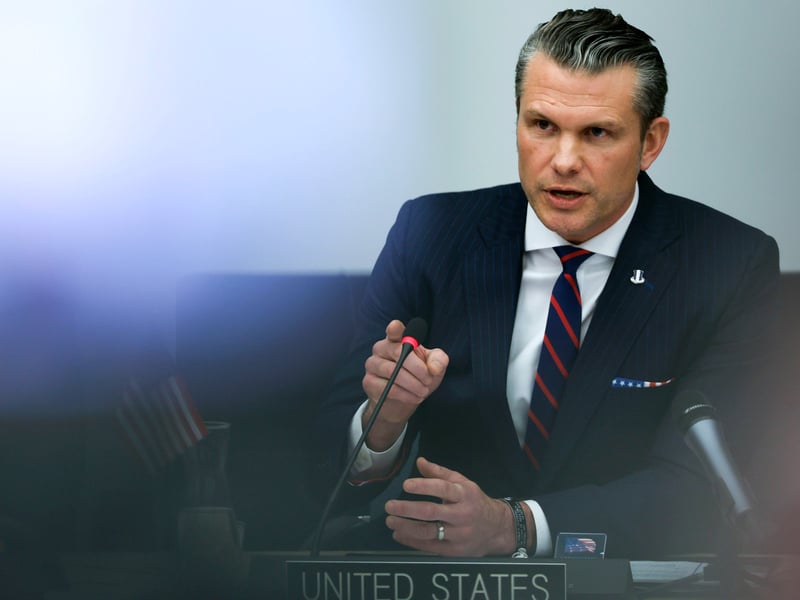
U.S. Secretary of Defense Pete Hegseth this week attended two-day talks in Brussels with NATO counterparts to discuss defense spending and continued Western support of Ukraine.
“Arrived at NATO HQ. Our commitment is clear: NATO must be a stronger, more lethal force — not a diplomatic club,” Hegseth wrote on X. “Time for allies to meet the moment.”
Amid worries American commitment to Kyiv could falter and make them bear the full burden, the future of the Ukraine Defense Contact Group was unclear.
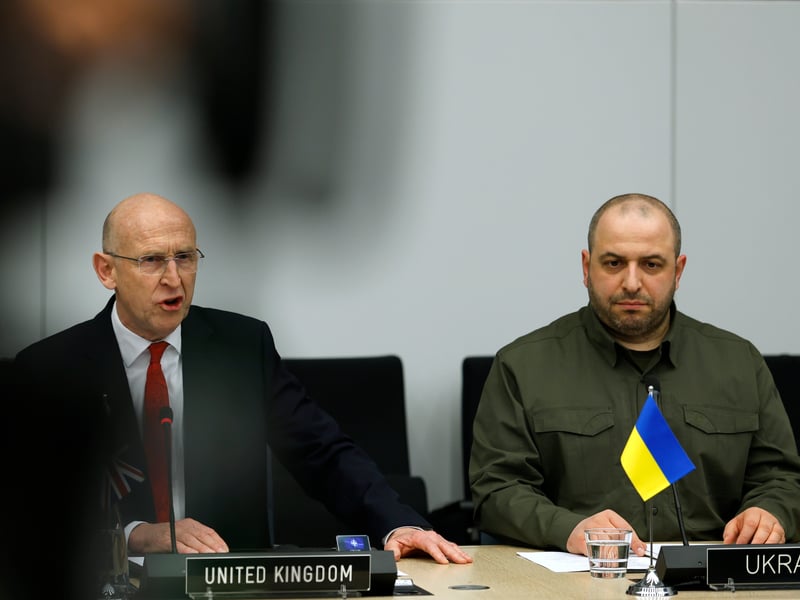
The United Kingdom chaired the meeting in the absence of American will to lead talks.
Washington, unsurprisingly, did not make any announcements of new military support for Ukraine in the session, but several European partners did.
“While Russia is weakened, it remains undeniably dangerous. We must step up further and secure peace through strength together,” U.K. Defense Secretary John Healey told reporters as London announced a £150 million ($186,741) aid package that includes thousands of drones, dozens of battle tanks and armored vehicles and air defense systems.
European NATO allies in recent weeks signaled to the Trump administration that their levels of defense spending had changed compared to the time when he criticized them for not pulling their weight inside the Western military alliance. Back then, many non-U.S. NATO members were falling significantly short of the alliance’s 2% GDP defense spending pledge.
It’s arguable whether, in the end, it was Trump or Russia’s invasion of Ukraine that had the bigger impact over the past three years, but now 23 out of 32 NATO countries have reached the 2% GDP target.
NATO Secretary-General Mark Rutte told reporters before the talks that defense spending by non-US NATO allies increased by 20% in 2024.
“It is a big step in the direction of what President Trump has called for — and I agree with him that we must equalize security assistance to Ukraine,” Rutte said.
Discussions circulating ahead of NATO’s June Summit in The Hague have even touched on ramping up defense spending toward around 5% GDP.
**Ukraine peace talks **
With the prospect of top U.S. officials traveling to Europe, Europeans had hoped to hear more details of Trump’s Ukraine peace plan, which has been in preparation since he appointed U.S. special envoy Keith Kellogg to the task.
Kellogg, however, earlier this week dismissed reports that any plan would be presented in the coming weeks.
In his opening remarks, Hegseth, meanwhile, seemed to announce a policy shift on Ukraine; he drew clear lines around the White House’s break with the Biden administration.
“We want, like you, a sovereign and prosperous Ukraine. But we must start by recognizing that returning to Ukraine’s pre-2014 borders is an unrealistic objective,” Hegseth told European counterparts. “Chasing this illusionary goal will only prolong the war and cause more suffering.”
Hegseth added, “The United States does not believe that NATO membership for Ukraine is a realistic outcome of a negotiated settlement.”
Subscribe to our free newsletters
Our weekly newsletter Closing Arguments offers the latest about ongoing trials, major litigation and rulings in courthouses around the U.S. and the world, while the monthly Under the Lights dishes the legal dirt from Hollywood, sports, Big Tech and the arts.