
 Search Articles


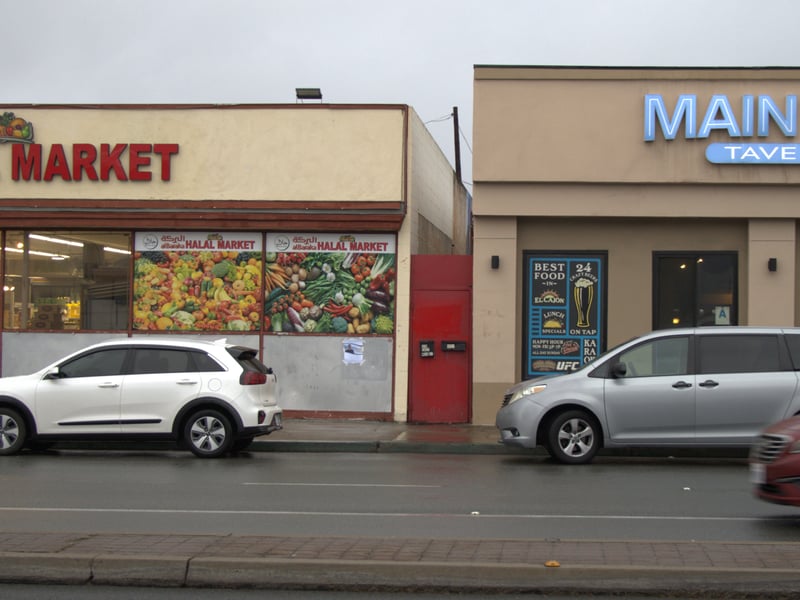
EL CAJON, Calif. (CN) — From her small office off El Cajon’s Main Street, Dilkhwaz Ahmed can look out and see the community she helped foster.
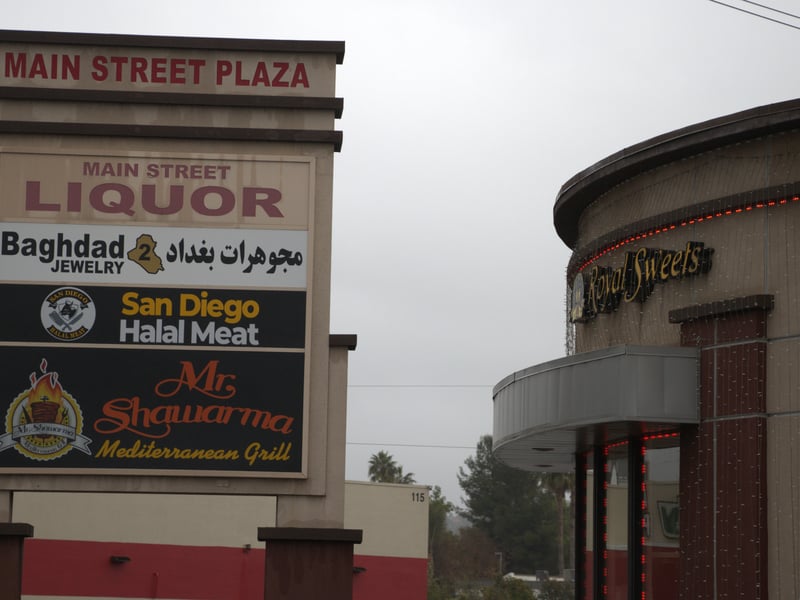
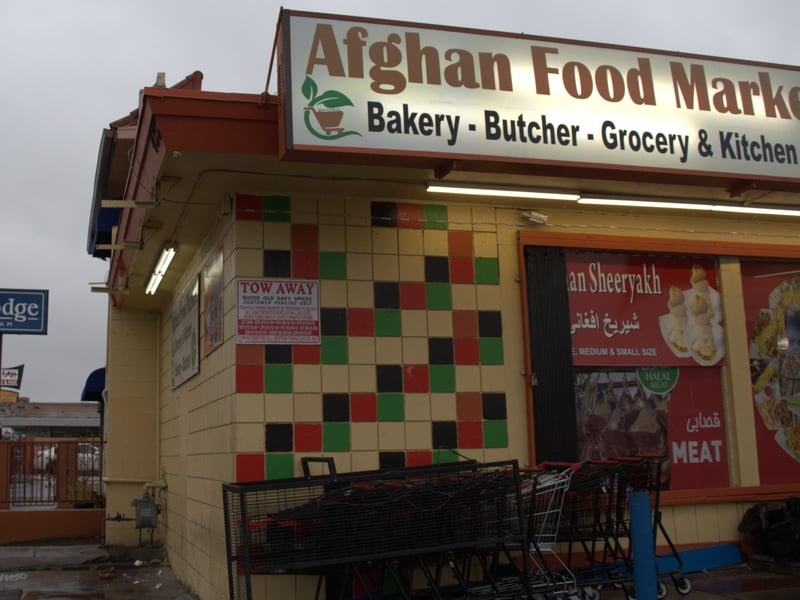
In this San Diego suburb, many shops now cater to arrivals from across the Middle East and Afghanistan.
There’s Mal al Sham, a popular Syrian restaurant. There’s also Ali Baba, a restaurant that features Iraqi dishes like masgouf , a grilled and spiced fish dish. A grocer offers everything from Akkawi and Nabulsi cheeses to cans of stewed ful medames fava beans in the Lebanese and Palestinian styles.
“I always say: Once you love the food, you have to love the people who make the food,” Ahmed said in an interview in her office in February. “People come to El Cajon because they want to see the beauty of people living together from all of the different cultures, languages and religions.”
Facing death threats in Iraq, Ahmed, who is Kurdish, was granted political asylum in the U.S. in 2001, just five days before the September 11 attacks. In 2003, she founded License to Freedom, a nonprofit offering services like English classes, mental health care and domestic-violence support for refugees and asylum seekers.
When she first opened her doors, the majority of refugees she saw were Iraqis. Then came Syrians fleeing civil war, then Afghans fleeing the Taliban. What unites them all, she said, is shared experiences, values and a desire to build a new life in San Diego County.
“We’ve all been traumatized. We came from the war zone,” Ahmed said. “We didn’t choose to be refugees.”
According to Ahmed, a rise in nativist policies and rhetoric has made life feel precarious for some migrants in El Cajon.
Now back in office, President Donald Trump has threatened to sic U.S. Immigration and Customs Enforcement on communities like this one, with promises of mass deportations. The new administration has already televised immigration arrests.
El Cajon’s Republican mayor, Bill Wells, is a frequent guest on conservative television. After Trump’s victory, he introduced a city resolution declaring that El Cajon is not a sanctuary city. When 46 people turned up to speak against the proposal, the City Council voted it down. Ahmed was heartened. “This country is built by refugees and by immigrants,” she said. “We should not close the doors.”
Then, in February, the City Council passed a modified version of the measure, increasing cooperation with federal immigration enforcement.
Wells did not respond by press time to a request for comment.
To combat fear, License to Freedom has run know-your-rights classes. But fear persists: Scared they might be deported, even refugees and asylum seekers with legal status are wary of coming to events at all.
Ahmed hopes that residents of El Cajon will continue to get to know each other, listening, asking questions and breaking down stereotypes.
You can’t just say, ‘I love refugees,’” Ahmed said. “This is not love. You have to love everybody, and you have to have a heart for everybody.”
For Mansour Al-Laban, the brother of the owner of Mal Al-Sham, a popular Syrian restaurant in El Cajon, and a refugee from the Syrian Civil War, El Cajon is still safe.
“Here is safe. It’s like kind of community you know, it feels like everything is available here, but you cannot like make it the same feeling as like when you are at your own home, you know, it’s a different feeling,” he said, comparing El Cajon to Syria in Arabic through a translator, an employee at Mal Al-Sham.
It’s not just the food that’s distinctly Syrian. The decor includes a large green, white and black Syrian independence flag.
“Everybody is feeling like a person right now, like a human. Everybody has rights,” Al-Laban said of Syria after the fall of Bashar al-Assad this past November.
He might go back to visit the newly free Syria, but he doesn’t have any intention to return for good, he added.
On a wall at the local library, woodblock prints show a dove holding a placard that says “PEACE,” a clenched fist with the phrase “Save Palestine” and maps of Syria and the modern territories of Israel and Palestine.
Beside them, there’s a poem in Arabic and English. “If I must die, let it bring hope,” the poem reads. “O, homeland! I was born and raised in your wound. And the oak tree testifies, I spoke in my own voice.”
The poem and woodblocks are works by a group of young Arab refugees, asylum seekers and permanent residents here — part of a project called “Homeland and Homemaking” put on by Majdal, El Cajon’s Arab community center.
Syrian refugees started the center about seven years ago to help new arrivals with English, citizenship and acculturation, said Subrein Damanhoury, programs and communications coordinator for the center. From there, it branched out to offering cultural events like Palestinian tatreez embroidery workshops or woodblock printing.
The center does organizing, too. Recently, Damanhoury led an effort to register Arab-Americans to vote. Arabs aren’t well-represented in local politics, she said, and many immigrants eventually move inland in search of cheaper rent.
Despite challenges like high costs of living and migrant crackdowns, Damanhoury says El Cajon remains a hub for the Arab community in San Diego. Her father immigrated to San Diego from Palestine in the 1980s. “I can walk down the street and hear all the grandpas sitting around the coffee shops playing games and arguing about something,” she said. “It’s just a nostalgia for home.”
Isabel Mary O’Shana the manager and the daughter of the owner of Sultan Baklava, a Turkish inspired bakery in El Cajon, echoed Damanhoury’s sentiments.
“So for Middle Eastern people we have this tendency to get together and play cards or do something at coffee shops or restaurants, especially older people. That’s the way they grew up back home. That’s what they know. For us it is a part of the culture, to sit down, have a coffee, have dessert, spend some time with your loved ones, talk about life, share things that are going on,” O’Shana said.
O’Shana, who’s Iraqi Chaldean, said her mom’s bakery has become a hub for the entire community — not just one ethnic group.
“People like to come and sit down and order a coffee and talk with their friends and just spend some time, especially in this world that is very very uncertain. I’m seeing more and more a lot of people sit at Starbucks and at coffee shops and just talk about their problems because it makes them feel better,” she said.
Damanhoury agreed. Like License to Freedom, she believes Majdal’s goal is to continue building that sense of belonging and togetherness. “All we have is community,” she said. “Without community, it’s a miserable life.”
Subscribe to our free newsletters
Our weekly newsletter Closing Arguments offers the latest about ongoing trials, major litigation and rulings in courthouses around the U.S. and the world, while the monthly Under the Lights dishes the legal dirt from Hollywood, sports, Big Tech and the arts.