
 Search Articles


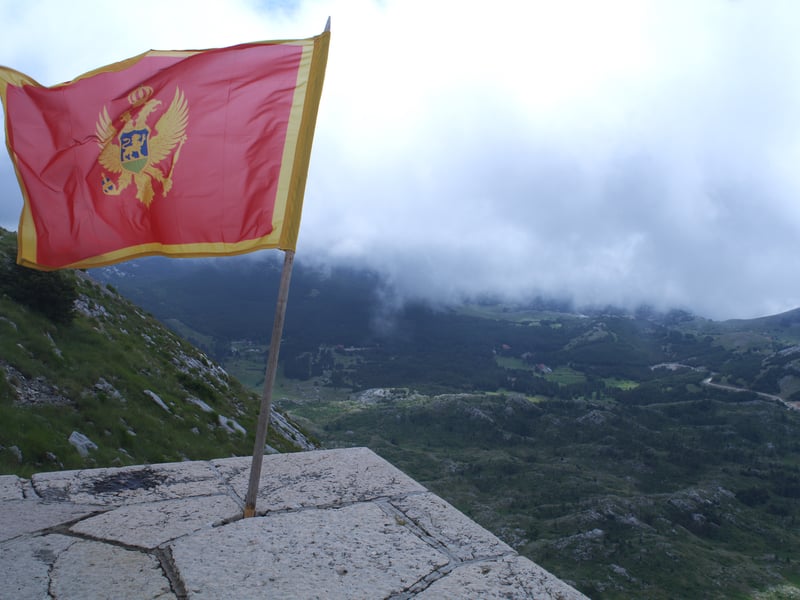
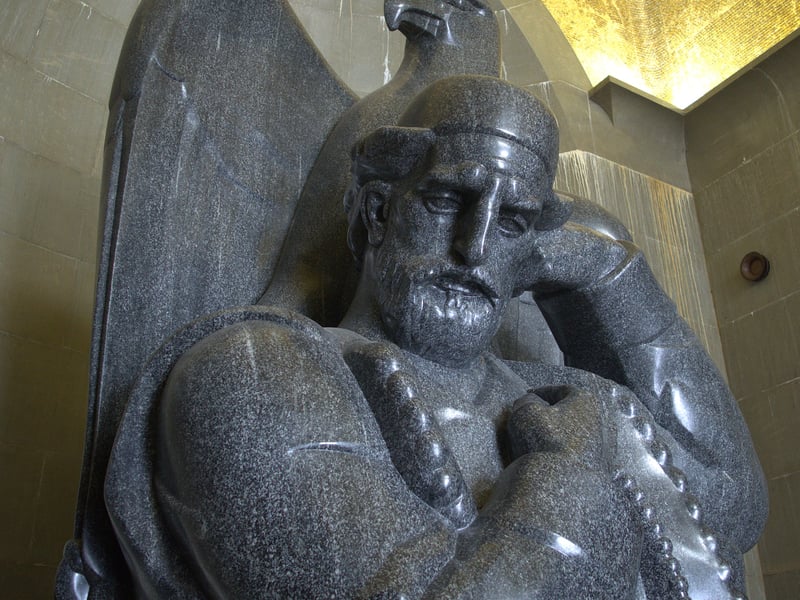
MOUNT LOVĆEN, Montenegro (CN) — On a cloudy ridge atop this silent mountain lie the remains of Petar II Petrović. Better known as Njegoš, Petrović was a revered 19th century poet, Serbian nationalist and the founding father of this tiny European nation.
This mausoleum — sitting atop a mountain Petrović loved — is riddled with symbolism. An almost spiritual place of national pride, it’s frequented by foreign tourists and watched over by security officers and cameras.
This site “is very important for us because Njegoš — our bishop, poet, philosopher, our first ruler — built first a little chapel up here in 1845,” guide Ivana Copitovich explained as she worked a souvenir shop below the monument.
“Njegoš spoke five languages: French, English, Russian, Italian and Montenegrin,” Copitovich continued. “He’s a very, very important person for Montenegro.”
With its sweeping views, Mount Lovćen is also a fitting place to contemplate the future of Europe.
Much of that future, after all, will play out in this unassuming Balkan nation. That’s despite Montenegro’s small stature: With fewer than one million citizens and a territory about the size of Connecticut, it’s one of Europe’s poorest countries.
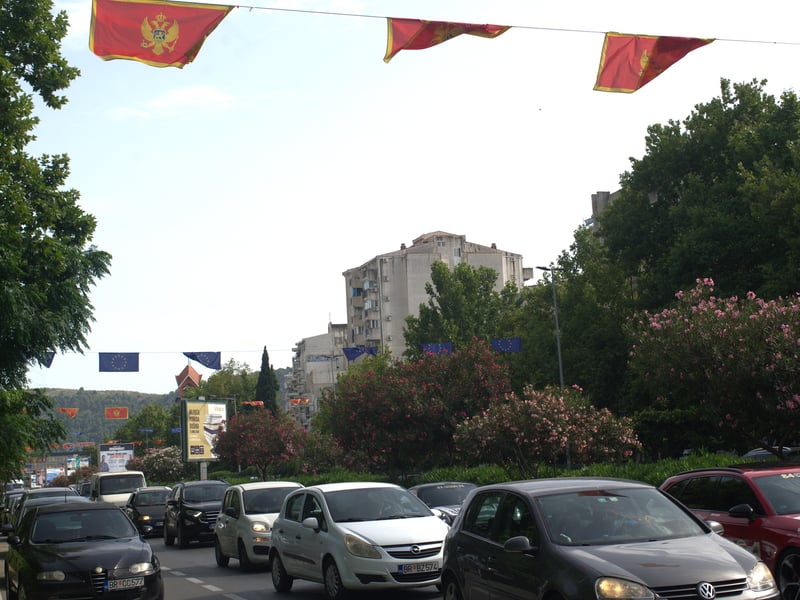
To the West, the United States and the European Union hope to court Montenegro into joining theAmerican-inspired democratic union. The country is already moving in that direction, adopting the euro currency in 2002, becoming aNATO member in 2017 and making other legal and economic reforms needed for membership.
To the East, there’s Montenegro’s historic ties with Russian empires.
It was a Russian czar who in 1833 first legitimized Njegoš as prince-bishop, helping create his fledgling mountain state. Russia’s pull can still be felt in Montenegrin culture, including in the Eastern Orthodox monasteries that dot its landscape. Even the double-headed eagle in Montenegro’s red flag carries Russian symbolism.
Montenegro shares cultural ties with neighboring Serbia, and the two countries were one until an independence referendum in 2006. Many here still feel allegiance to Serbia, and by extension to Russia.
Wealthy Russians — including those linked to organized crime — have poured investment into Montenegro and called it home. There was even a Russian-backed coup attempt here in 2016, apparently aimed at stopping the country from joining NATO.
So it has been in Montenegro for years, as the country balances uneasily between East and West.
Since Russia’s invasion of Ukraine, questions of where Montenegro fits into the European political landscape have gained a new urgency.
Back at the mausoleum, Copitovich turned circumspect when asked about Montenegro’s chances of joining the EU.
“Maybe,” she said, “but I don’t know when.”
Look at a map of Europe, and Montenegro’s contradictions come into focus. A big chunk of the Balkans — Serbia, Montenegro, Bosnia-Herzegovina, Albania, Kosovo, North Macedonia — sits just outside the Western European bloc, as if other great powers took a bite out of an EU map.
“The Balkans is somehow within the European Union, surrounded by European Union member states but not integrated fully into the European Union,” Vesko Garčević, a former Montenegro ambassador in Brussels and a European studies professor at Boston University, said in a telephone interview. “Therefore, it can also be seen as a weak underbelly of the European Union.”
This rugged corner of Europe — long a land of blood feuds, religious conflict, foreign invasions and violent nationalism — helped light the fuse of World War I. It’s something of a canary in the coal mine of European history.
With a major war once again raging in Europe, experts fear more trouble could lie ahead.
Most worrisome is thedanger of armed conflict breaking out among Montenegro’s neighbors, Serbia and Kosovo.
Both were part of Yugoslavia until the brutal Yugoslav wars of the 1990s, and the region still carries scars from that conflict. Even today, conflict is simmering in Bosnia-Herzegovina as Serbs in the semi-autonomous Republika Srpska region of the country clamor to break away.
Underlying these conflicts are Russia’s historical ties and interests across the Balkans. Under strongman President Vladimir Putin, Moscow has tried to once again exert influence over this patchwork of countries and keep them out of the EU.
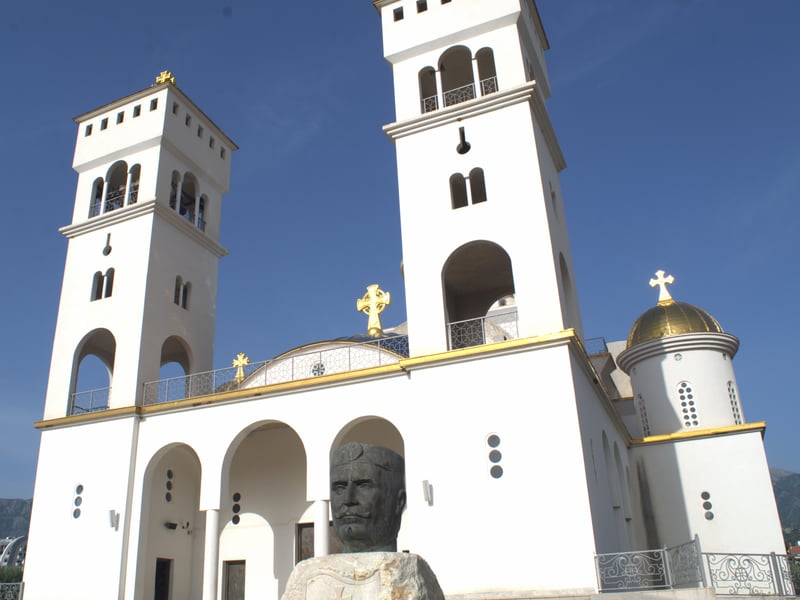
Then there’s Turkey’s footprint: After centuries of Ottoman rule, it is even bigger than Russia’s. That history can be seen in mosques, traditions and foods across the Balkans — and in recent years, Turkey has further boosted its economic, cultural and military ties here.
Add to this heady mix the world’s newest superpower, China. Beijing has beenworking hard to make the Balkans, and especially Serbia, its bridgehead into Europe, building railways, highways and factories.
The United States is a big presence too, of course, with amajor military base in Kosovo andanother in Albania. Every country in the region except for Bosnia-Herzegovina and Russia-allied Serbia are NATO members, though Bosnia-Herzegovina maintains very close ties to the Western military alliance.
All that fueled tensions even before major hostilities broke out in Ukraine in 2014 and again in 2022. A full-on war has shown EU officials that it “needs its Western Balkan countries back in the fold,” Nina Vujanović, a Montenegrin economist who works with the World Bank and Central Bank of Montenegro, said in an email. By moving to include Montenegro, she said the EU wants “to prevent other foreign and malign influences from this region, arising as the result of EU fatigue.”
The term “EU fatigue” describes the frustrations many here feel about the long road to becoming EU citizens.
EU officials call this region the Western Balkans. For more than 15 years, multiple countries here have been in stalled talks with Brussels concerning membership.
Croatia, Montenegro’s northern neighbor, became the last new EU member in 2013. Since then, the EU’s appetite for further enlargement dried up.
Following the fall of the Berlin Wall, the EU underwent two decades of frenzied growth that saw it absorb much of what once lay behind the Iron Curtain. From 12 Western European states, it grew to an unwieldy 28-nation bloc that stretches from the Baltic republics on Russia’s border to Cyprus in the eastern Mediterranean Sea. (After Brexit, that figure now sits at 27.)
This huge expansion fit with the founding idea of the EU: After two world wars, many Europeans believed peace and stability lay in uniting Europe’s economies and societies. But rapid expansion also brought new problems. Vast underdeveloped areas needed EU funds for better infrastructure, low-wage workers migrated in large numbers into richer Western Europe, and geopolitical tensions continued to rise, especially as disruptive political actors like far-right Hungarian Prime Minister Viktor Orbán started walking the halls of power in Brussels.

With war in Ukraine and global tensions on the rise, enlargement has once again become top-of-mind for officials in Brussels. After more than a decade with no new members, the EU is now pushing ahead with plans to expand not only in the Balkans but also in Ukraine, Moldova and Georgia.
Little Montenegro is seen as a first crucial step in this strategy. “There is this push for a small Balkan state to be this example of how enlargement can work,” Jelena Dzankic, an expert on the Balkans at the European University Institute in Florence, Italy, said in a phone interview. “The whole idea of the European Union started as a sort of idea that would help integrate European markets,” she explained, “and thus help secure the European continent through a closer integration of economies.”
As soon as 2030, some experts optimistically predict that Montenegro could become the newest EU member.
After all, the country has done more than most to adopt rules and laws required for membership. These run the gamut from intellectual-property protections and food standards to protections for minority groups and judicial independence.
But as Montenegro faces a range of issues, some experts say it’s far too early to say when or even if Montenegro will make it into the EU due to a host of issues. “Montenegro has made good progress towards EU membership, but there is still work to do,” said Kenneth Morrison, a historian at De Montfort University in England and author of several books about the region. “They are on track, but being on track guarantees nothing.”
Montenegro’s two biggest hurdles to EU membership are deeply entrenched corruption, as well as strong factions inside the political establishment who harbor pro-Serbian and pro-Russian allegiances.
“Overcoming these obstacles is the biggest internal challenge facing Montenegro” as it works to join the EU, Morrison said in an email.
As far as corruption is concerned, it hasn’t helped that one man and his party dominated Montenegro’s politics for more than 30 years.
Starting in 1991, Milo Djukanović, a founder of the Democratic Party of Socialists, served four terms as Montenegro’s prime minister and two terms as president. He only left office last year, after he was defeated in a run-off by a reform candidate.
Over 32 years, Djukanović and his party oversaw Montenegro’s shift toward the West, embracing independence from Serbia and membership in NATO and the EU. But Djukanović and his allies also used their power to enrich themselves, allowing corruption to flourish and turning Montenegro into what critics called an authoritarian kleptocracy.
Djukanović and his cronies were accused of enabling a colossal cigarette smuggling racket in Italy, colluding with organized crime groups and turning Montenegro into a hotspot for money laundering. “The institutions of the state and also the economic system [were] captured by a certain part of, let’s say, the political elites,” said Dzankic, the Balkans expert.
The Djukanović regime began crumbling in 2020, after a law transferring property from the Serbian Orthodox Church to the Montenegrin state prompted mass protests.
Those protests led the Democratic Party of Socialists to lose parliamentary elections in 2020. Finally, in 2023,Djukanović was ousted from the presidency.
Since then, Montenegrin authorities have made a number of high-level arrests in an effort to root out corruption. Among those who have been charged are aformer chief special prosecutor, a former police chief and the head of the anti-corruption agency.
“Much work has been done to tackle corruption, and to expose the links between some politicians and organized criminal entities,” Morrison said.
But Montenegro’s two main mafia groups, the Kavač and Škaljari clans, have been engaged in deadly gang war since 2015 and remain powerful. In late June, a remotely detonated bomb exploded in Cetinje, Montenegro’s old capital at the foot of Mount Lovćen, killing two Škaljari members.
Ironically, the fall of Djukanović fueled anti-EU parties and brought about an era of political instability, further stymieing Montenegro’s efforts at EU membership.
For now, the government is led by a new centrist pro-business party called Europe Now — but the ruling coalition continues to rely on support from Serbian nationalists who advocate closer ties with Moscow and Belgrade. “The government is a patchwork of several parties that have different ideologies, including some of them very pro-Russian and very pro-Serbian,” Garčević said. “Underneath the surface you will find that some of them actually don’t give a damn” about joining the EU.
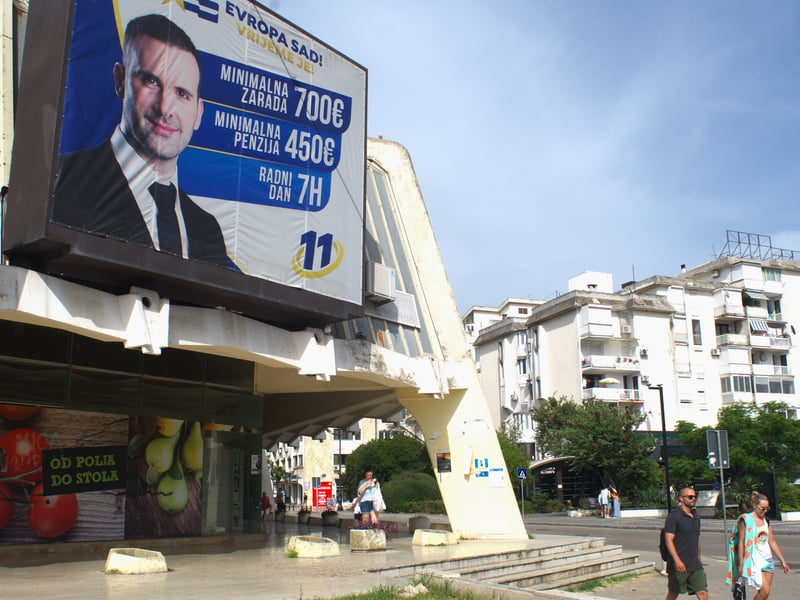
“They know that they need to speak about European Union membership because this will please the West,” Garčević added. At the same time, “if they can slow down the process, or if they can put the process on hold for some time, they don’t mind. They think that can also work in their favor.”
This strategy came into focus this summer, when Montenegro’s parliament — under pressure from pro-Serbian parties — passed a resolution condemning concentration camps run by Croatian fascists in World War II. The vote was seen as a response to a United Nations resolution passed in May, which condemned the Srebrenica genocide committed by Serbians against Bosniaks in 1995.
While Montenegro’s nonbinding resolution was symbolic, it enraged Croatia, which — as an EU member — has say over whether Montenegro is admitted. Troublingly, the political drama “came literally a day after the European Union approved benchmarks for Montenegro to move on in the process” toward membership, Dzankic said.
Nonetheless, the EU is eager to keep the door open to Montenegro — a move some hope will stop the country’s drift towards Moscow and Beijing. The small Balkan state is an “almost an ideal candidate,” Garčević said.
With its small population, the EU “can absorb this country easily,” he explained. “Even if the whole of Montenegro moves out of the country” for countries like France and Germany, “they will not notice it.”
Garčević argues that welcoming Montenegro would also send a positive signal to other prospective members. It’s “an inspiration [and] incentive for other countries … to speed up their reforms to be able to join the European Union,” he said. It signals to other EU hopefuls that “enlargement is still alive, [and] you can be the next one.”
For Montenegro, Garčević said, EU membership would bring a range of benefits, incorporating the small country into a common market and making its government more democratic, liberal and law-abiding. At the same time, he argues, it would also benefit leaders in Brussels and D.C. “It would cement its orientation towards the West,” he said. “It would have a profound impact on society in the long run.”
Courthouse News reporter Cain Burdeau is based in the European Union.
 Follow @cainburdeau
Subscribe to our free newsletters
Our weekly newsletter Closing Arguments offers the latest about ongoing trials, major litigation and rulings in courthouses around the U.S. and the world, while the monthly Under the Lights dishes the legal dirt from Hollywood, sports, Big Tech and the arts.