Search Articles


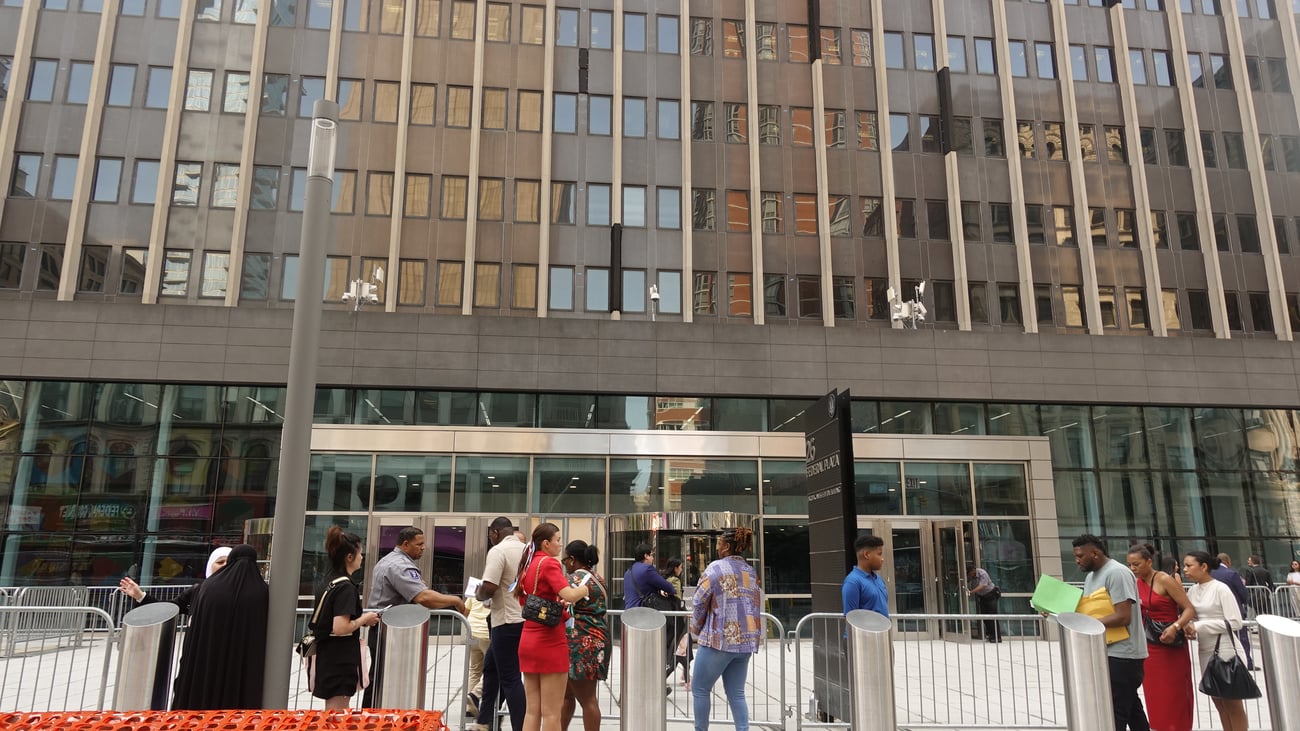
MANHATTAN (CN) — At the height of ICE’s immigrant detention campaign in New York City last summer, the agency regularly crammed well over 100 people at a time into a holding facility in Lower Manhattan, according to a class of detainees suing over their treatment.
Health issues permeated throughout the facility, even according to employees of U.S. Immigration and Customs Enforcement.
“This week has been one gross contagion after another,” Nancy Zanello, an assistant field office director for ICE in New York, wrote in a 2025 email about the facility, shown to a federal judge on Wednesday. She added there were “multiple” instances of detainees needing hospital care for “cardiac and seizures.”
Heather Gregorio, an attorney representing the plaintiffs, told the court that someone with tuberculosis was held in the jam-packed facility for six days.
“And we have a guy with monkeypox,” Zanello wrote in a text shown to the court, punctuating it with a facepalm emoji.
The evidence was presented Wednesday as part of a bench trial over the conditions of what’s become perhaps the most infamous ICE holding jail in the country. Nestled on the 10th floor of 26 Federal Plaza — which also houses Manhattan’s largest immigration court, where many noncitizens have been arrested following hearings — are four jail cells that ICE claims are solely designed for short-term stays.
But the suing detainees claim many of them were held for days on end. Several were held for more than 20 days, and one for more than 30.
Senior U.S. District Judge Lewis Kaplan has already issued several temporary orders in the case that required the government to shore up the treatment of 26 Federal Plaza detainees. Wednesday’s arguments come as the detainees seek a permanent injunction to make those requirements stick.
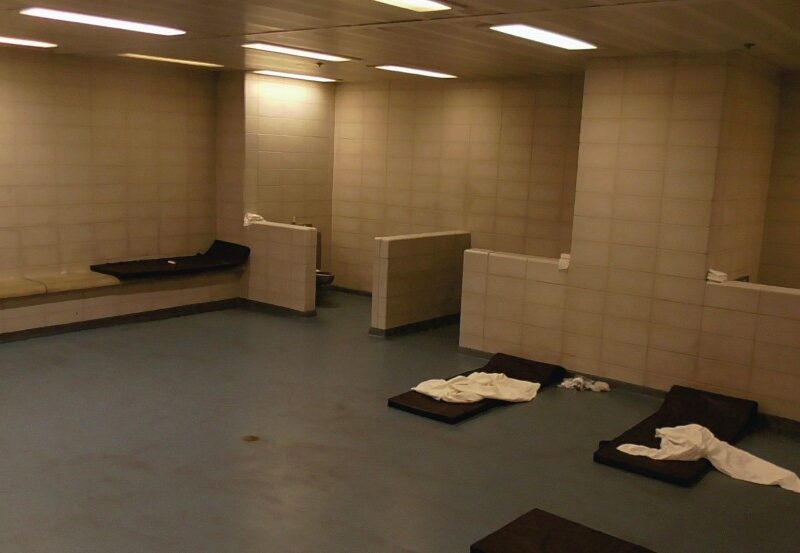
The facility’s overcrowding has been one of the key areas of focus for the plaintiffs throughout the case. Gregorio said Wednesday that some of her clients were detained while the room was between seven and eight times its capacity, often so crammed that there was not enough room for detainees to lay down.
According to Gregorio, this was a “crisis of the defendants’ own making” that had “catastrophic consequences” on detainees.
“This is insane,” one ICE employee wrote to another in an email shown to the court. “We desperately need to get some detainees out of 26 Fed.”
ICE’s New York Deputy Field Office Director William Joyce said in his deposition that the facility was “not quite as crowded as a subway car” but “certainly” more full than he wanted it to be.
The court also saw photographs of the scrutinized holding rooms which, until Wednesday, have not been viewed publicly. The four windowless cells varied in size, but each featured bright fluorescent lights that some detainees have claimed stayed on all night as they tried to sleep.
They also each contained at least one toilet. Some detainees said others used them to wash themselves, in the absence of showers and access to clean clothes.
In August 2025, Kaplan issued an order that capped the capacity of 26 Federal Plaza and required ICE to give those inside hygiene supplies, a clean bedding mat and a private space to call their attorneys. But the Bill Clinton appointee noted on Wednesday that the agency has appeared to skirt parts of his order since then.
He called an ICE declaration “egregiously misleading” for claiming there were only eight people in the holding rooms on a given day last summer. The agency’s own logs show there were actually more than 20.
“What’s the defense of that?” the judge barked. He added that it took ICE several months until it offered a place for private phone calls, not until after the plaintiffs first threatened the agency with contempt.

Kaplan took a particular interest in the food served inside the facility, which detainees called inedible and inadequate in various court filings. Jeffrey Oestericher, chief of the civil division for the U.S. Attorney’s Office for the Southern District of New York, said the meals were similar to ready-to-eat packages provided to soldiers, which could be heated up from their bags.
“What are they supposed to do to heat them? Rub two detainees together?” Kaplan joked from the bench.
The judge didn’t immediately rule following the arguments. He said he might order additional testimony or evidence from the parties prior to issuing his final ruling.
Outside of the courthouse, Make the Road New York attorney Harold Solis, who is on the plaintiffs’ legal team, decried the “deplorable conditions” detainees face while at 26 Federal Plaza.
“The evidence confirms everything that our clients and our witnesses have talked about,” Solis said.
Flanking Solis was a man named Carlos, who himself was a detainee at 26 Federal Plaza for several days last summer. Speaking to reporters in Spanish, he recalled sleeping in a holding room packed with 40 to 50 people and being misled by ICE agents, who encouraged him to self- deport.
“We were given food twice a day,” he said. “Water was very limited. The hygiene conditions were appalling. I couldn’t bathe, there were no showers or toothbrushes.”
The controversial holding facility has become one of the Trump administration’s centerpieces of its unprecedented detention campaign against noncitizens. Numerous New York electeds have spoken out about the scrutinized conditions inside the holding cells, as well as the arrests at immigration court that happen just upstairs.
Those arrests have since been deemed illegal by another federal judge in Manhattan.
 Follow @Uebey
 Follow @uebey.bsky.social
Subscribe to our free newsletters
Our weekly newsletter Closing Arguments offers the latest about ongoing trials, major litigation and rulings in courthouses around the U.S. and the world, while the monthly Under the Lights dishes the legal dirt from Hollywood, sports, Big Tech and the arts.