
 Search Articles


Turns out comet 2I/Borisov, only the second known interstellar visitor to have passed through our solar system, is very different from our local comets.
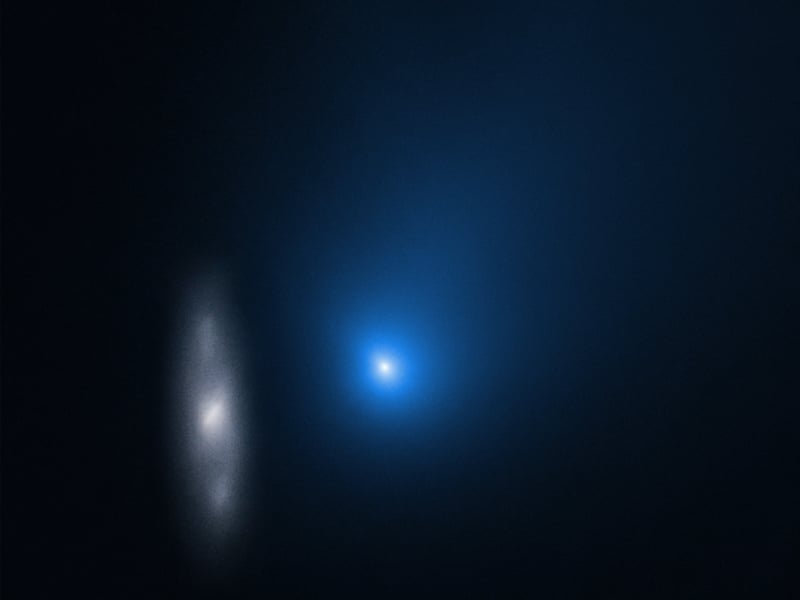
(CN) — While comets have long been thought to consist mostly of a frozen water core, research released Monday finds that one comet may instead hold a larger amount of carbon monoxide, helping astronomers better understand where it may have formed.
In two papers published in the journal Nature Astronomy, scientists revealed that 2I/Borisov, the first interstellar comet to enter the solar system, consists of a large amount of carbon monoxide in its coma, a gas cloud surrounding a comet’s nucleus as it travels closer to the sun.
Although water is consistently found to be the most abundant molecule in comets in our own solar system, 2I/Borisov is estimated to have 0.7 to 1.7 times more carbon monoxide than water, more than three times the amount of any previously measured comet. Researchers were able to determine its composition using data collected from the Hubble Space Telescope.
Its unique composition helps astronomers understand where the mysterious stranger to our system might have originated from.
“As the comet is so rich in CO, the authors suggest it originated in a very cold region far from its home star where CO could be frozen onto the comet’s nucleus,” the scientists said in a statement.
Read the papers: The carbon monoxide-rich interstellar comet 2I/Borisov Unusually high CO abundance of the first active interstellar comet
2I/Borisov was first discovered Aug. 30 of last year. Astronomers determined it to be 14 times the size of Earth as it came within 180 million miles of the sun. As it leaves our solar system, it is expected to be visible until at least September.
The study’s authors said the icy origins of the comet could help explain its composition.
“Following the ejection of 2I/Borisov from its original environment, the cold temperatures of interstellar space would have preserved its chemical make-up for millions or even billions of years until the warmth of the sun eventually caused the ice to vaporize,” the researchers said.
Subscribe to our free newsletters
Our weekly newsletter Closing Arguments offers the latest about ongoing trials, major litigation and rulings in courthouses around the U.S. and the world, while the monthly Under the Lights dishes the legal dirt from Hollywood, sports, Big Tech and the arts.