
 Search Articles


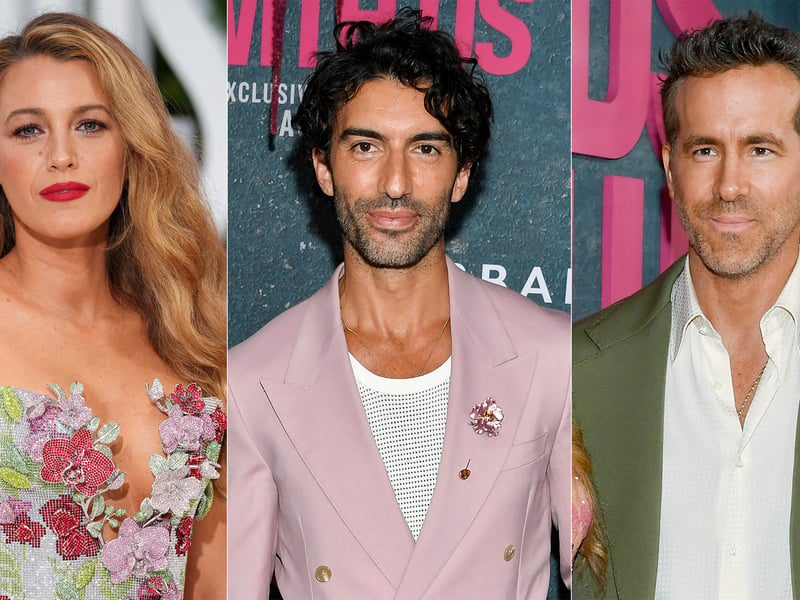
MANHATTAN (CN) — A federal judge on Friday quashed subpoenas from “Gossip Girl” star Blake Lively, who seeks the phone records of fellow Hollywood A-lister Justin Baldoni in a polarizing legal dispute between the actors.
Lively had submitted subpoenas this month to AT&T, Verizon and T-Mobile for “call logs, text logs, data logs, and cell site location information” of phones associated with Baldoni and his production company Wayfarer Studios from Dec. 1, 2022, to the present.
Lively’s legal team hoped the subpoenas would reveal evidence to bolster their claim that Baldoni targeted her in an unlawful smear campaign as retaliation for claiming he had sexually harassed her.
But U.S. District Judge Lewis Liman, a Donald Trump appointee in the Southern District of New York, ruled Friday that the subpoenas are “overly intrusive and disproportionate to the needs of the case.”
“This request implicates legitimate privacy interests,” the judge wrote in a six-page order. “Even though Lively has narrowed her request to exclude the content of calls or messages, the phone records themselves would still contain sensitive information regarding which doctors, psychologists, or even acquaintances the Wayfarer parties spoke to, and when.”
Lively accuses Baldoni of sexual harassment on the set of the 2024 romance drama “It Ends with Us,” in which Baldoni was her co-star and the film’s director. She claims Baldoni then launched a smear campaign against her in an effort to discredit the harassment claims.
Baldoni, in turn, accuses Lively and her husband Ryan Reynolds of civil extortion and defamation. He claims the superstar couple conspired to smear him by sharing phony sexual misconduct claims with The New York Times as revenge for unsuccessfully taking over the rollout of “It Ends With Us.”
Baldoni’s legal team had called Lively’s subpoenas a “massive fishing expedition” since they sought phone records that dated back years before the actors’ feud began.
“It’s hard to overstate how broad, invasive and atypical these subpoenas truly are,” Baldoni’s lawyer Mitchell Schuster argued in a court filing this month.
The judge acknowledged the broad time frame as one of his reasons for quashing the subpoenas Friday.
“Lively mainly argues that the subpoenas will help to identify ‘the larger network of individuals’ who perpetuated a negative media campaign against her,” Liman wrote. “But according to Lively’s complaint, this negative campaign did not begin until approximately August 2024. It is therefore unclear how communications to and from Wayfarer Parties in 2022 and 2023 would reveal individuals who participated in the campaign.”
Liman quashed the subpoenas without prejudice, allowing Lively to more narrowly tailor the requests to get the evidence she seeks.
He also shot down an argument from Baldoni, who claimed non-parties should be exempt from Lively’s subpoenas. The judge ruled that, while Baldoni has standing to assert a privacy interest in his own phone records, he has “not provided any basis” for arguing the same for non-parties.
The tense public spat between the actors started in December 2024, when The New York Times published a story sourced by Lively detailing allegations of sexual harassment by Baldoni on the set of “It Ends With Us.” Lively claimed Baldoni improvised unwanted kissing while shooting the film, discussed his sex life and walked into her makeup trailed uninvited while she was breastfeeding her child — accusations Baldoni has denied.
Courts got involved on Dec. 26, 2024, when celebrity publicist Stephanie Jones sued Baldoni in New York Supreme Court for conspiring to launch a smear campaign against Lively that was outlined in the article.
Baldoni responded with a lawsuit of his own against the newspaper, which he claimed ran a one-sided story that damaged his reputation with falsehoods. The New York Times stood by its reporting and is fighting the case alongside Lively. On Jan. 16, Baldoni brought the case to federal court with a sprawling 179-page lawsuit accusing Lively of fabricating the sexual assault claims to get back at him for refusing to relinquish control of his movie. The earlier cases have now been folded into the federal lawsuit, which is set to go to trial in 2026.
 Follow @Uebey
 Follow @uebey.bsky.social
Subscribe to our free newsletters
Our weekly newsletter Closing Arguments offers the latest about ongoing trials, major litigation and rulings in courthouses around the U.S. and the world, while the monthly Under the Lights dishes the legal dirt from Hollywood, sports, Big Tech and the arts.