
 Search Articles


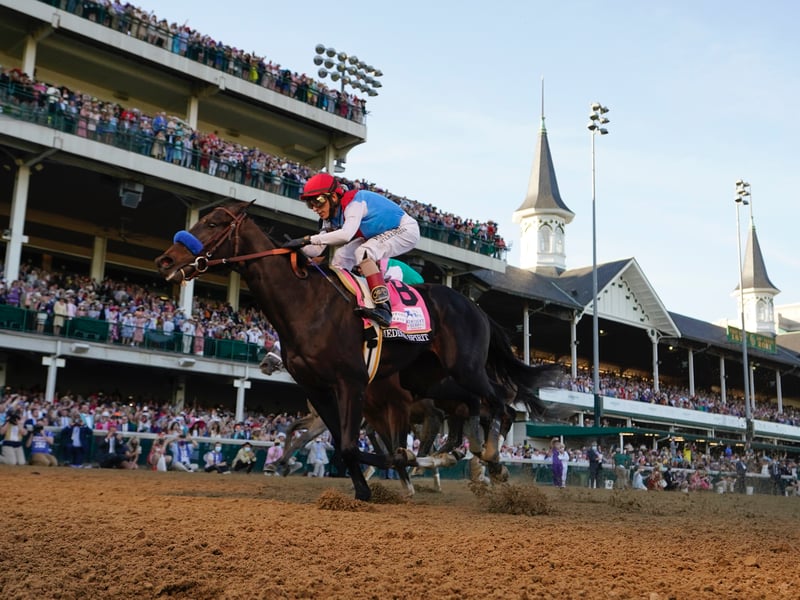
GREENSBORO, N.C. (CN) — A day after a Fourth Circuit panel bowed out, a federal judge on Tuesday dismissed claims brought by a North Carolina horse owner over the U.S. Department of Agriculture’s internal adjudication process.
The USDA attempted to fine Joe Manis more than $20 for violations of the Horse Protection Act, raising claims against the horse owner and beginning an internal adjudication process against him in 2023. He entered a “sore” horse — one that has been burned or injured to cause an exaggerated gait coveted in trained Tennessee Walking Horses — into a Virginia horse show in 2022, according to the USDA’s Animal and Plant Health Inspection Service.
One of the agency’s administrative law judges found this past February that Manis violated the Horse Protection Act, and imposed a $10 fine and a one-year disqualification from showing or exhibiting any horse in a horse show, exhibition, sale or auction. Manis asked the USDA, which has its own internal administrative process, to adjudicate his case with a full hearing, then filed a lawsuit in North Carolina claiming he was deprived of his Seventh Amendment right to a trial. The USDA’s judicial officer stayed the agency’s case while the litigation progressed.
Manis asked the lower court to prevent the USDA from enforcing the Horse Protection Act against him and halt the administrative process, saying that it imposes a “here-and-now constitutional injury” on him. The court denied Manis’ request for a preliminary injunction, finding that his arguments were not indicative of success in his case.
He then asked the Fourth Circuit to intervene. A panel declined Monday, finding that Manis failed to prove he is facing irreparable harm.
On Tuesday, U.S. District Judge William Osteen Jr. dismissed all of Manis’ claims after finding Manis’ challenges to the USDA adjudication process “attack the constitutionality” of the very structure of the USDA.
Osteen granted the defendants, the USDA, Secretary Brooke Rollins and Michael Watson, the administrator of the Animal and Plant Health Inspection Service, their motion to dismiss, denying Manis’ motion for summary judgment.
“While we are disappointed in the court’s ruling, Mr. Manis brought this case to defend not only his own rights, but the rights of all Americans to a fair trial in an independent court,” said Pacific Legal Foundation attorney Joshua Robbins, who represented Manis pro bono. “This fight underscores the need for continued scrutiny of in-house agency adjudication, where private citizens face government penalties without a jury or the other due process protections of an independent court.”
Manis is considering appealing, a person familiar with the matter said.
Manis had claimed that the USDA’s judicial officer “unconstitutionally exercises principal officer power” in violation of Article II of the Constitution. The tenure protection of USDA’s administrative law judges violates the separation of powers, he said, and the in-house adjudication process violates a citizen’s Seventh Amendment right to a jury trial, and Article III of the Constitution.
Meanwhile, the defendants argued the USDA’s secretary is rightfully assisted in her duties by other USDA officials and said Manis was attempting to dismantle a longstanding system.
Osteen found the USDA’s judicial officer position exercises inferior officer power and the appointment of the officer by the secretary of agriculture is constitutionally valid.
The judge noted Rollins has the power to remove the judicial officer — John Walk — at will, or block his rulings before they take effect. Walk is also subject to “extensive administrative oversight” and while Rollins may have delegated power to the judicial officer, she retains her ability to exercise that power and can modify a civil penalty following an administrative adjudication under the Horse Protection Act.
“Even if this court were to find that the secretary is restricted from reviewing the judicial officer’s decisions, it is a restriction imposed by and within the full control of the secretary herself. The judicial officer is delegated final decision-making power by regulation. The secretary of agriculture can, at any time, prospectively revoke the delegation of final decision-making power,” Osteen wrote.
The judicial officer “need not have been nominated by the president and confirmed by the Senate and instead could appropriately be appointed by the head of an executive department, such as the secretary of agriculture,” Osteen found.
He also rejected Manis’ claims that since the judicial officer is an inferior officer, the agency’s administrative law judges are not supervised by a properly appointed officer.
“Whether the removal restrictions that protect ALJs are in fact unconstitutional is an unsettled question of law,” he said. “But even if the ALJ removal restrictions are unconstitutional, it does not necessarily follow that any one ALJ’s actions are improper.”
Because Manis’ adjudication before a USDA judge has concluded, his request for injunctive relief to stop the process is moot, and his request for declaratory judgment that the adjudication process violated the Constitution is retrospective, Osteen said.
“This court declines to reach the constitutional question of whether the USDA ALJ removal protections are unconstitutional because in the absence of possible relief for plaintiff, the question becomes ‘wholly academic’ and ‘the judicial restraint principles of constitutional avoidance’ convince this court to ‘not answer it,’” he said.
Osteen also declined to find on Manis’ Seventh Amendment claim, but found that the case fell under the public rights exception for cases that arise between a private actor and the government, which allows for actions to be resolved outside of judicial courts and by regulatory agencies.
“Even assuming the Seventh Amendment applies to the Horse Protection Act enforcement action, this court is satisfied that the action may properly be ‘determined exclusively by [the USDA],’” he said. “ Although the HPA action does not appear to fit within a recognized historical public rights exception, it is… a cause of action that brings with it ‘no common law soil.’”
Manis’ case was properly heard through the USDA’s adjudication process, notwithstanding any potential application of the Seventh Amendment, Osteen found.
A circuit split exists over the ability to remove federal agencies’ administrative law judges. The Ninth Circuit has found their removal constitutional, but the Fifth Circuit disagreed when it came to the U.S. Securities and Exchange Commission’s administrative law judges.
Counsel for the defendants didn’t respond to a request for comment.
 Follow @SKHaulenbeek
 Follow @shaulenbeek.bsky.social
Subscribe to our free newsletters
Our weekly newsletter Closing Arguments offers the latest about ongoing trials, major litigation and rulings in courthouses around the U.S. and the world, while the monthly Under the Lights dishes the legal dirt from Hollywood, sports, Big Tech and the arts.