Search Articles


LOS ANGELES (CN) — A Los Angeles Superior Court judge expressed deep skepticism Thursday over a cross-complaint filed by Southern California Edison against a range of governmental entities, including LA County, over the Eaton Fire.
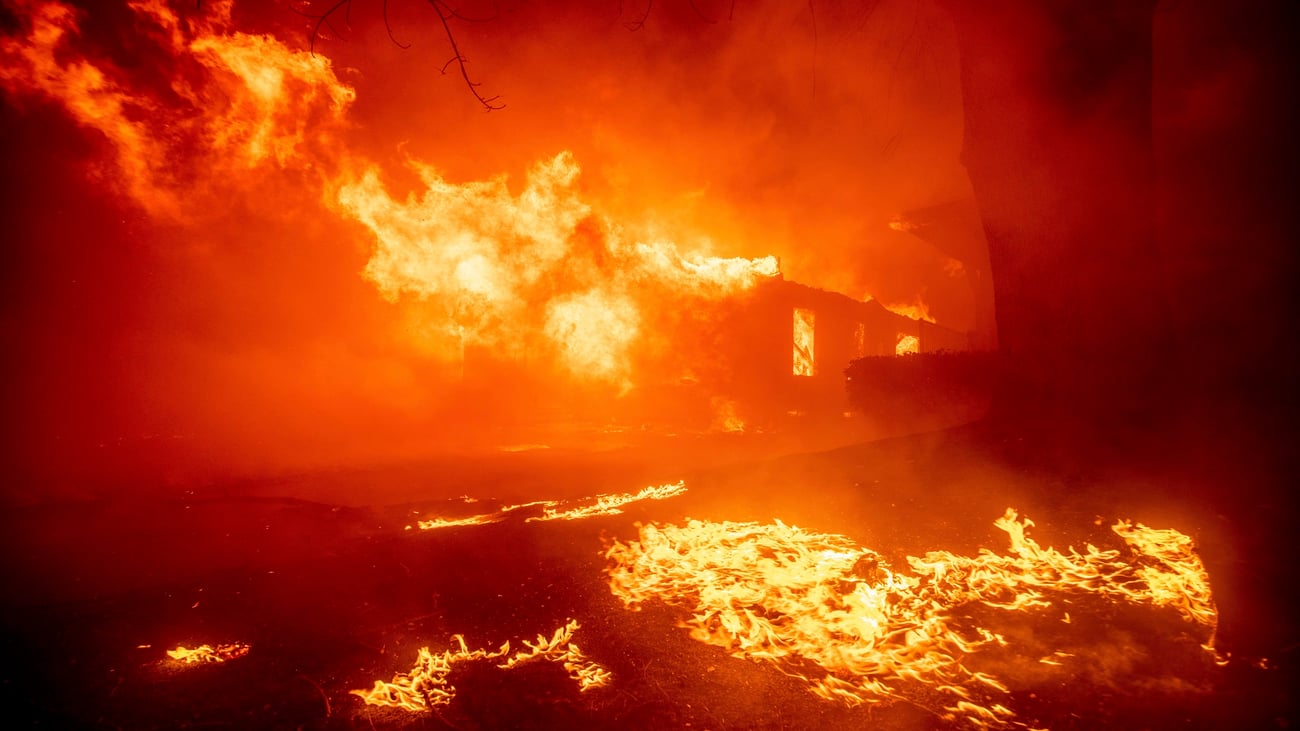
The 2025 fire, which killed at least 19 people and destroyed more than 9,000 buildings and most of the Altadena neighborhood, has been largely blamed on the electrical utility’s faulty power lines — though the company denies any liability. More than 10,000 plaintiffs have sued Edison in an action that has been consolidated into one mass tort proceeding in downtown LA. The U.S. Justice Department has also sued Edison in federal court, while hundreds of plaintiffs have also sued State Farm, accusing it of underpaying claims.
Adding to the tangled web of litigation was a lawsuit filed by SoCal Edison against LA County, the sheriff’s department, fire department, the cities of Pasadena and Sierra Madre and several water companies. Those entities, Edison said in its cross-complaint filed in January, “contributed to the severity of the Eaton Fire and its resulting damage” by failing to “issue timely evacuation alerts,” manage “overgrown brush throughout publicly owned land” and “properly allocate resources to fire suppression.”
In its demurrer, LA County expressed dismay at the cross-complaint, writing, “Edison — the company whose electrical infrastructure ignited the Eaton Fire — now seeks to deflect responsibility onto the very first responders who risked their lives to save Altadena.”
On Thursday, Superior Court Judge Laura Seigle sounded unimpressed at Edison’s legal arguments and said she would likely sustain the demurrer. She cited California government code 850, which grants broad immunity to public entities and employees from liability for injuries that happen during the course of firefighting. And she similarly looked askance at Edison’s argument that the county was liable because it had failed to clear brush in and around Eaton Canyon, a popular hiking spot in the Angeles National Forest.
“That would mean that all throughout California, there would be a duty to go clear the brush,” Seigle told Edison’s lawyers. “That is impossible. I just don’t see how there could be such a duty, at all. And it would have all sorts of implications for nature and for wildlife. … There’s a reason to have nature be nature and not have it all cut down.”
Edison has argued the county is liable for not issuing evacuation orders to the western side of Altadena until 3:25 a.m., more than nine hours after it had already done so to the eastern side of the neighborhood. “All but one of the reported Eaton Fire deaths in January 2025 occurred within a roughly 1.25-square-mile area west of Lake Avenue,” Edison wrote in its cross-complaint, adding that since the evacuation orders weren’t part of the county’s fire-suppression efforts, it wasn’t immune from that cause of action.
“That only affects the people who are injured or died because they didn’t get evacuated fast enough,” Seigle pointed out. “It doesn’t affect property damage. … [And] the complaint does not specify the people to whom that duty applied.”
Dixon argued that because of the heavy rains in 2024, Eaton Canyon was overgrown with vegetation. The county, he said, had allowed a dangerous condition to develop.
“Does it have to go to the park and wipe out all the trees then?” a rather disbelieving Seigle asked. Dixon said those were “details” that could be worked out after discovery. At the very least, he said, the county had a duty to evaluate the area and possibly to designate it a high fire severity zone.
“So it’s your allegation that no property would have burned down if there had been a very high fire severity zone? Seigle asked. “Which properties were affected by this? Every single one? Only some?”
Only some, Dixon answered — but more than half of the properties in the 75 cases that have been selected as the first bellwether cases to go to trial.
“Edison caused a fire that devastated Altadena and its surrounding areas,” Mira Hashmall, the county’s lawyer, told the judge. “Instead of taking responsibility, they are literally trying to blame first responders.”
Hashmall also pointed out that Edison hadn’t cleared the brush on its own property, near its electrical equipment. “It defies common sense.”
To allow Edison to conduct discovery into their legal theories, she said, would be to allow for an “improper fishing expedition.”
The judge did not issue a final ruling and said she was unlikely to do so until July. In the meantime, the lawsuit will proceed through discovery and numerous other pretrial motions, including a motion for summary judgment, scheduled for July 1.
 Follow @hillelaron
Subscribe to our free newsletters
Our weekly newsletter Closing Arguments offers the latest about ongoing trials, major litigation and rulings in courthouses around the U.S. and the world, while the monthly Under the Lights dishes the legal dirt from Hollywood, sports, Big Tech and the arts.