
 Search Articles


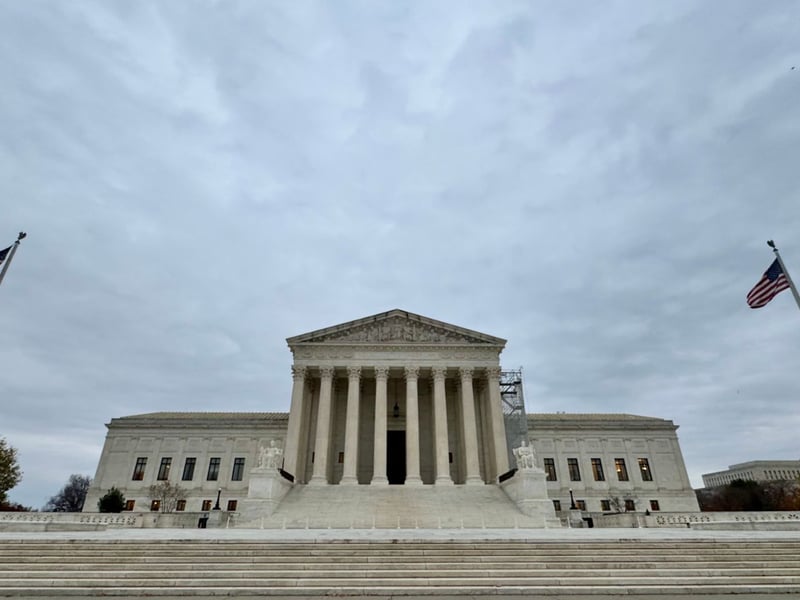
WASHINGTON (CN) — The Supreme Court on Tuesday said that the government doesn’t have to**** cover costs for more low-income patients at safety net hospitals.
Under the disproportionate share hospital or DSH program, the government compensates medical centers that serve large percentages of low-income patients, who are typically costlier to treat.
How much money hospitals get is calculated with a formula tallying patients who are “entitled to benefits.” In 2022, the justices said “entitled to benefits” means being eligible for or qualifying for the Medicare program. Whether the same logic applied to elderly and disabled patients receiving Supplemental Security Income or SSI benefits was left open until now.
In Becerra v. Empire Health Foundation , the court treated the word “entitled” in the Medicare statute as synonymous with “qualifying” or “being eligible” for benefits.
Because eligibility for an SSI payment is determined on a monthly basis, the justices ruled that a person is entitled to such benefits for Medicare purposes only when they are eligible to receive a cash payment during the month of their hospitalization.
“As the D.C. Circuit observed, ‘it makes little sense to say that individuals are ‘entitled’ to the benefit in months when they are not even eligible for it,’” Justice Amy Coney Barrett, a Donald Trump appointee, wrote for the majority opinion.
They noted that while Medicare provides automatic, ongoing health insurance that “never goes away” absent diminished disability, SSI benefits require recipients to be deemed eligible, and recipients can fluctuate in and out of eligibility based on monthly income and resources.
“The hospitals’ broader reading of ‘entitled to [SSI] benefits’ fails,” Barrett wrote.
The government said the SSI program is different from Medicare. The Department of Health and Human Services claimed that hospitals could only receive payments for patients who were entitled to SSI benefits for the month when they were hospitalized.
SSI qualifications are based on income and resources. Once enrolled, people must be reassessed each month to receive cash payments. In contrast, patients are entitled to Medicare benefits if they’re older than 65 or suffer from a long-term disability.
The justices emphasized that SSI is considered a cash benefit and rebutted the position of several hospitals that such benefits should cover vocational rehabilitation services and continued Medicaid coverage.
In most states, eligibility for SSI benefits qualifies an individual for Medicaid health coverage. So, if a person earns excess income and loses their eligibility for SSI payments, they generally also lose access to Medicaid.
However, a limited exception exists that allows certain blind or disabled people who are not eligible to receive SSI benefits in a given month to be treated as if they remain eligible so that they can continue receiving Medicaid benefits.
But this provision does not create an SSI benefit, as the hospitals argued, it merely aids in the administration of the Medicaid program, the justices wrote.
“That defies common sense,” Barrett wrote.
In a sprawling dissenting opinion, Justice Ketanji Brown Jackson wrote that the majority vastly misinterpreted Medicare’s disproportionate-share formula and how SSI’s cash-benefit program works.
The Joe Biden appointee wrote that whether an individual received a cash payment under the SSI program during the month of their hospitalization is “wholly irrelevant” and “arbitrarily undercounts” a hospital’s low-income patients.
Joined by Justice Sonia Sotomayor, a Barack Obama appointee, Jackson added that Congress intended for hospitals that have a disproportionate share of low-income patients to receive enhanced Medicare reimbursements.
“Because the majority fails to appreciate the programmatic nature of SSI, it reduces SSI’s benefit to the monthly check — and nothing more,” Jackson wrote.
“From that premise, the majority concludes that all Congress cared about when measuring a hospital’s low-income population for purposes of Medicare’s disproportionate-share formula was the number of patients who received a check during the month of their hospital stay,” she added.
Over 200 hospitals challenged the calculation of their reimbursements from 2006 to 2009. They claimed that the Centers for Medicare and Medicaid Services violated the disproportionate share hospital provision by limiting the number of SSI-entitled patients to those who actually received cash payments for the month of their hospital stay.
The hospital argued that all patients who qualified for the SSI program during their hospital stay should be counted, regardless of whether they were receiving cash payments at the time.
Hospital advocacy groups told the court that the government has systematically undercounted disproportionate share hospital compensation, costing health care facilities more than $1 billion per year for the relevant years.
 Follow @KelseyReichmann
 Follow @kelseyreichmann.bsky.social
Subscribe to our free newsletters
Our weekly newsletter Closing Arguments offers the latest about ongoing trials, major litigation and rulings in courthouses around the U.S. and the world, while the monthly Under the Lights dishes the legal dirt from Hollywood, sports, Big Tech and the arts.