
 Search Articles


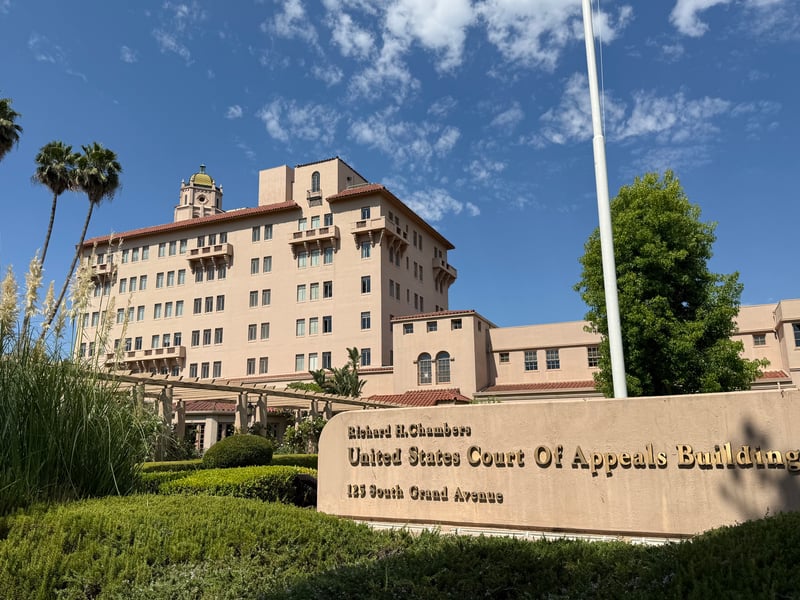
PASADENA, Calif. (CN) — Los Angeles County on Friday asked the Ninth Circuit Court of Appeals to put an end to a lawsuit that requires the county to correct numerous “systemic failures” of its foster care system under the supervision of a federal judge.
The county specifically requested that the three-judge appellate panel overturn a ruling last year by U.S. District Judge John Kronstadt in LA that denied the county’s motion to dismiss the putative class action for lack of jurisdiction. A federal judge, according to the county, cannot override policy judgments made by state and local governments about how to care for foster youth.
“Article III standing is based on a single, basic idea — the separation of powers,” Farbod Moridani, an attorney for the county, argued at the hearing in Pasadena, California, referring to the constitutional article that delineates the jurisdiction of the federal courts. “And the Supreme Court has said time and again that federal courts have no jurisdiction to exercise general, ongoing oversight over the other branches.”
Moridani said running a foster care system is a complex task involving tough choices about limited resources and services, and argued there’s no reason to think a federal judge could do better than state agencies and juvenile courts that make those calls daily.
Six foster youths ages 16 to 21 sued the county and state agencies in 2023, claiming their due process and other rights were violated by a lack of access to housing, mental health care and other necessary services.
Their complaint says the majority of foster children come from low-income families of color, many with trauma-related mental health conditions or disabilities related to complex trauma. Some are also young parents seeking stability for themselves and their children as they enter adulthood.
Because of the county’s failures to meet its legal obligations, the plaintiffs claim, many foster children face the prospect of living on the streets.
“Transition age foster youth are forced into couch surfing, tents on city streets, dangerous adult temporary shelters, and vehicular homelessness,” they argue. “With no reliable places to sleep, shower, or keep their belongings, it is virtually impossible for these youth to pursue higher education or hold down a job.”
The appellate panel gave no hint of how it would rule but voiced concern about the unusual posture of the case. The trial judge allowed the plaintiffs to file a second amended complaint before granting the county permission to pursue an interlocutory appeal of his earlier refusal to dismiss the first amended complaint.
“I have to say this seems very, very irregular,” Senior U.S. Circuit Judge Jay Bybee, a George W. Bush appointee, said. “It certainly has sown a lot of confusion in my chambers. I’m really struggling to figure out what we’re supposed to do with the second amended complaint.”
In response, Grant Davis-Denny, an attorney for the foster youths, told the panel that the filing of the second amended complaint made the county’s appeal moot.
Bybee also expressed his reservations with what he said was the very high level of abstraction of the plaintiffs’ complaint.
“I have a very difficult time understanding what precisely it is that you want,” he told the lawyer. “I need you to tell me why isn’t this an ongoing audit of the foster care system in Los Angeles.”
Davis-Denny explained that systemic problems — such as the purported practice of screening out applications for transitional housing from youths who have mental health disabilities — cannot be addressed on a case-by-case basis by juvenile courts, where there’s no opportunity to introduce evidence about widespread practices.
“The district court could, for example, set a requirement that the county develop a sufficient number of placements to deal with the population,” the attorney suggested.
Bybee, however, seemed skeptical that a federal judge could require LA County to start building its own housing for possibly thousands of foster youths at the cost of hundreds of millions of dollars. In particular, the judge noted that the parties who would have to provide the money are not part of the lawsuit.
The other two judges on the panel were Senior U.S. Circuit Judge Richard Clifton, also a George W. Bush appointee, and U.S. Circuit Judge Kenneth Kiyul Lee, a Donald Trump appointee.
 Follow @edpettersson
Subscribe to our free newsletters
Our weekly newsletter Closing Arguments offers the latest about ongoing trials, major litigation and rulings in courthouses around the U.S. and the world, while the monthly Under the Lights dishes the legal dirt from Hollywood, sports, Big Tech and the arts.