
 Search Articles


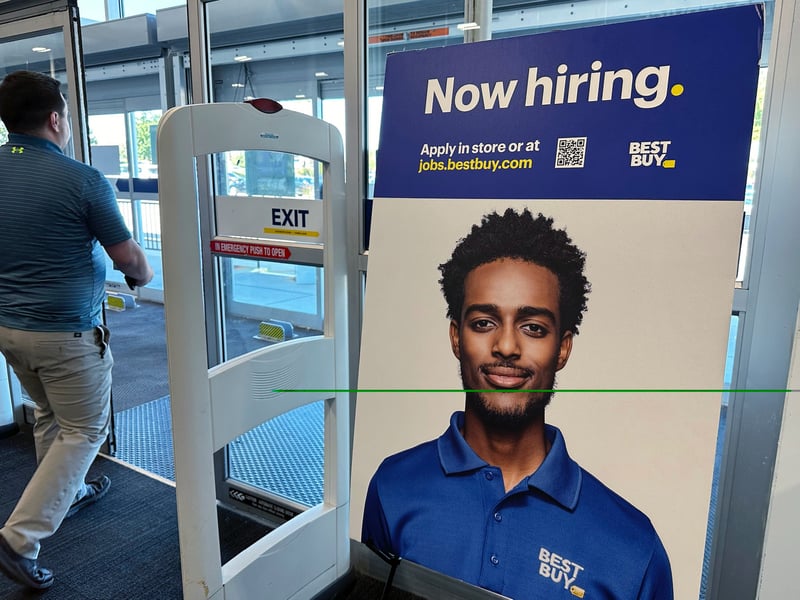
MANHATTAN (CN) — The U.S. economy didn’t add as many jobs as expected last month but unemployment declined slightly.
The January employment report by the Bureau of Labor Statistics shows a gain of 143,000 jobs last month, missing the consensus forecast by about 25,000 jobs. Revisions to the two previous employment reports netted the labor market an additional 100,000 jobs, taking some of the sting out of the January print.
The good news is that the unemployment rate dropped to 4%, surprising analysts who expected it to hold steady at 4.1%. The latest data released Thursday by the Labor Department show 219,000 initial claims were filed the week ending Feb. 1, more than economists had expected.
Health care, retail, and government jobs all saw significant increases of 44,000, 34,000, and 32,000, respectively. Most other industries saw little change or slight decreases.
Stephen Brown, deputy chief North America economist at Capital Economics, wrote in an investor’s note that the print was “nothing to worry about” and that the Los Angeles wildfires and cold weather likely had an impact on the number, despite the agency saying otherwise.
“Overall, this was a positive report,” Brown wrote, noting that the revisions to previous reports and the 0.5% increase in hourly earnings showing a fairly strong labor market.
Unlike the federal jobs report, payroll company ADP’s private sector employment report, released on Wednesday, beat out expectations, showing an increase of 183,000 private sector jobs last month compared with the 150,000 jobs forecast.
The number was entirely represented by service industries — most notably leisure and hospitality, as well as trade and transportation — while manufacturers lost 6,000 jobs in January. Mid- and large-sized companies also had the bulk of job gains, while employers with fewer than 50 workers gained just 39,000 jobs.
“We had a strong start to 2025, but it masked a dichotomy in the labor market,” Nela Richardson, ADP’s chief economist, said in a statement. “Consumer-facing industries drove hiring, while job growth was weaker in business services and production.”
Revisions to ADP’s previous reports show an ascendent labor market. Bill Adams, chief economist at Comerica, noted that private job growth averaged 119,000 jobs per month during the first half of 2024, with 170,000 jobs per month during the second half.
The job market was even stronger during the last quarter of 2024 following interest rate cuts, Adams noted, with a monthly average of 187,000 jobs during that time. “Businesses’ hiring intentions are firming, and the latest hiring data in hand show them following through with action,” he said.
Job openings also surprisingly dropped to 7.6 million in December, according to the latest JOLTS report from the Bureau of Labor Statistics, well below the 8 million consensus forecast. The 4.5% job openings number included a 180,000-job decline in health care companies, which have been a major driver of job growth in recent months, as well as 225,000-job decline in the professional and business service sectors.
Experts say the data still suggest the labor market is healthy but that the drop in job availability could impact hiring trends in the coming months. “While it is too early to anticipate a broader shift in the labor market, the JOLTS data call for caution,” Quasar Elizundia, a strategist at Pepperstone, wrote in an investors note.
 Follow @NickRummell
Subscribe to our free newsletters
Our weekly newsletter Closing Arguments offers the latest about ongoing trials, major litigation and rulings in courthouses around the U.S. and the world, while the monthly Under the Lights dishes the legal dirt from Hollywood, sports, Big Tech and the arts.