Search Articles


(CN) — For some of Earth’s earliest animals, life was easy. Perhaps too easy.
Scientists suggest in a new study that the way the planet’s first animals reproduced may have slowed evolution for millions of years. By cloning themselves instead of reproducing sexually, ancient organisms faced little competition, limiting the pressures that drive species to adapt and diversify.
Researchers from the University of Cambridge analyzed fossils dating back 574 million years and found asexual reproduction likely slowed the pace of evolution until environmental stress and competition pushed animals toward sexual reproduction, causing a burst of diversification.
The findings were published Tuesday in the journal Nature Ecology & Evolution.
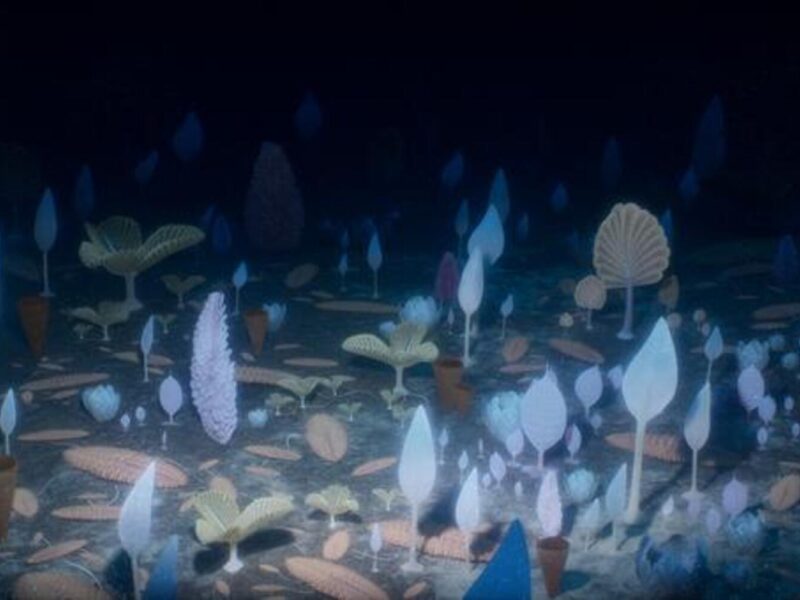
The study focuses on the Ediacaran period, between 635 million and 539 million years ago, when the first large and complex animals appeared after billions of years dominated by microscopic life.
Many of these organisms looked nothing like modern animals. Some resembled ferns, had no mouths or organs, and absorbed nutrients directly from surrounding water.
Scientists previously determined many Ediacaran animals reproduced asexually by sending out clones through structures similar to the runners used by modern strawberry plants.
“Life was pretty nice during the Ediacaran, so the need for sex was rather limited,” lead author Emily Mitchell of the University of Cambridge’s Department of Zoology said in a statement. “There was relatively little competition, so there was no real pressure to change anything.”
To investigate how those reproductive strategies affected evolution, Mitchell and co-author Professor Andrea Manica studied fossils from Mistaken Point in Newfoundland, one of the world’s richest sources of Ediacaran fossils.
Using laser scanning, spatial analysis and artificial intelligence, they examined how ancient animal communities were organized. Then they built computer models simulating different reproductive strategies and compared the results with patterns preserved in the fossil record.
Their simulations showed asexual reproduction limited how far offspring spread and reduced competition between neighboring organisms. As a result, early animal communities remained relatively low in diversity for millions of years.
“If you’re connected to your neighbor by these runners, then you’re sharing nutrients and you don’t need to compete with them,” Manica said.
That changed as animals expanded into shallower waters, where tides, storms and fluctuating environmental conditions created new pressures.
“If you’re suddenly in an environment where you’re essentially getting killed a couple of times per year, then that changes everything,” Mitchell said. “Stress essentially leads to sexual reproduction, and when that happens, we can see a massive increase in dispersal distances as animals attempt to colonize new areas due to an increase in competition.”
The researchers believe sexual reproduction allowed offspring to spread farther from their parents, creating more competition for resources. That competition helped drive a second wave of diversification during the Ediacaran period.
The trend continued into the Cambrian period, when animals became mobile and evolution sped up even more.
The findings may explain a longstanding mystery in paleontology: why some of Earth’s earliest animals changed very little for millions of years before biodiversity suddenly took off.
 Follow @JeremyYurow
Subscribe to our free newsletters
Our weekly newsletter Closing Arguments offers the latest about ongoing trials, major litigation and rulings in courthouses around the U.S. and the world, while the monthly Under the Lights dishes the legal dirt from Hollywood, sports, Big Tech and the arts.