
 Search Articles


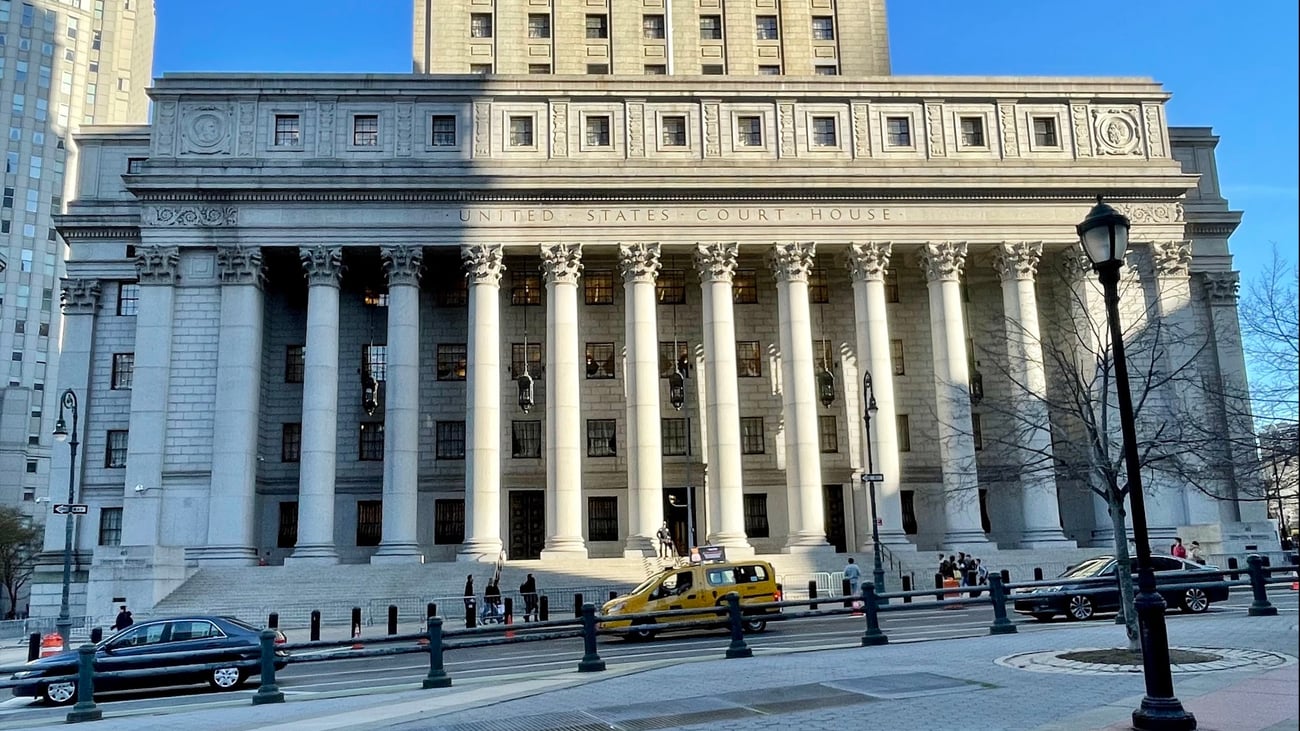
MANHATTAN (CN) — New York City landlords, real estate brokers and industry groups lost their attempt to revive a challenge to a city law that took effect last year, prohibiting landlords from passing on broker fees to their tenants.
Since taking effect in June 2025, the Fairness in Apartment Rental Expenses Act has eliminated a mandatory fee, typically 10% to 15% of annual rent, that landlords typically pay to brokers. Landlords and real estate groups appealed to the Second Circuit after a federal judge dismissed their December 2024 lawsuit and denied their request for a preliminary injunction.
A three-judge panel affirmed the lower court’s ruling.
The judges found the city had shown that broker fees genuinely harm housing affordability and mobility and that the FARE Act helps alleviate those harms. They also found the law does not unnecessarily burden speech.
“[B]rokers are not banned from posting open listings — they simply cannot charge tenants fees when they openly list an apartment for rent,” U.S. Circuit Judge Barrington Parker, a George W. Bush appointee, wrote in the 58-page ruling.
U.S. Circuit Judge Debra Ann Livingston, a fellow appointee of the younger Bush, and U.S. Circuit Judge Maria Araújo Kahn, a Joe Biden appointee, joined Parker.
A spokesperson for the city offered a brief comment: “The city is pleased with the court’s ruling.”
James Whelan, president of the Real Estate Board of New York, said the group remains set on its efforts to challenge the FARE Act.
“We are disappointed by the appellate court decision and will explore pathways to continue our legal challenge against this misguided law. The FARE Act has already reduced transparency and access to housing for New Yorkers, while rents continue to climb to record levels," Whelan said in a statement.
Attorney Sean Marotta of Hogan Lovells US argued for the landlord trade group, joined by the New York State Association of Realtors and several brokerage firms.
During oral arguments, Marotta said the FARE Act required “rigorous tailoring” to meet the city’s stated goals of addressing housing mobility and rental costs without unlawfully regulating the real estate industry’s commercial speech rights.
“If you can achieve the goal without burdening speech or burdening less speech, that’s what you have to do,” he told the panel, citing the 2002 Supreme Court case Thompson v. Western State Medical Center as precedent.
The plaintiffs argue in their complaint that “both brokers and landlords will likely stop advertising ‘open listing’ apartments, which not only infringes on the First Amendment rights of brokers and landlords, but will have the net effect of reducing the level of advertising of open listings — making it even harder for consumers to find affordable apartments.”
New York City contended that although realtors call the challenged FARE Act provision a “publication bar,” it does not prevent anyone from publishing anything.
“Instead, it merely provides that if a broker lists an apartment with the landlord’s permission, the broker cannot, later on, engage in the conduct of collecting the fees in the broker,” New York City Law Department lawyer Jamison Davies told the panel during oral arguments. “It’s a conduct regulation, not a speech regulation.”
In the lower court, U.S. District Judge Ronnie Abrams ruled the challenge was mostly rooted in policy disagreements, rather than constitutional questions.
The law went into effect June 11, 2025, one day after Abrams’ ruling in the Southern District of New York.
It was introduced by Brooklyn City Council Member Chi Ossé and passed the City Council by a veto-proof count of 42 in favor to 8 opposed.
 Follow @NinaPullano
 Follow @ninapullano.bsky.social
Subscribe to our free newsletters
Our weekly newsletter Closing Arguments offers the latest about ongoing trials, major litigation and rulings in courthouses around the U.S. and the world, while the monthly Under the Lights dishes the legal dirt from Hollywood, sports, Big Tech and the arts.
Additional Reads


 Prenatal exposure to acetaminophen July 13, 2026