Search Articles


(CN) — Researchers at Caltech have discovered a new chemical reaction that could explain how life on Earth — and potentially life elsewhere — began.
In the study published in the journal Icarus, researchers think the reaction could explain the formation of the building blocks of DNA and RNA, the molecules that encode life’s functions, more than 3 billion years ago.
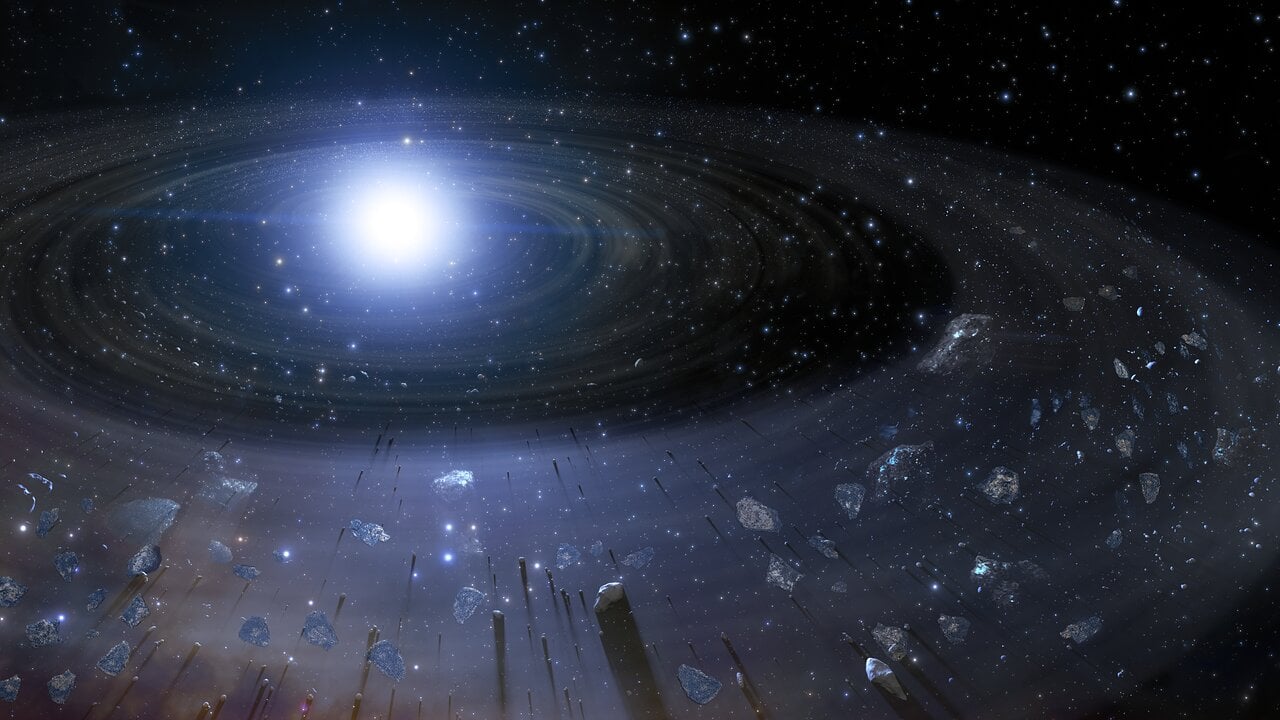
The planet then was a vastly different and more volatile place, with frequent asteroid impacts, active volcanoes pumping gases into the atmosphere and lifeless oceans that stretched across its surface.
The study describes a straightforward chemical pathway that simple molecules could take to create the biological precursors on Earth. The researchers said that this pathway could have been driven by sunlight on the ocean’s surface and asteroid impacts to produce the key molecular components of life on Earth and, potentially, on Mars too.
Led by former Caltech scientist Jeehyun Yang, the study examines the building blocks of the building blocks — tracing the molecular breadcrumbs that ultimately became the first living organisms on our planet.
The study shows how a newly discovered chemical reaction with benzene could explain the formation of nucleobases — adenine, thymine, guanine, cytosine and uracil — which make up the nucleotides, which in turn create the nucleic acids known as DNA and RNA.
Yang and his team first sought to identify these building blocks through the use of computational software. The team used this software to determine which molecular structures were common to all five types of nucleobases under conditions thought to exist on early Earth when life began to form.
Yang found the usual chemical elements that would be expected during this period, such as nitrogen, carbon dioxide and methane. But one chemical surprised him: benzene.
Yang demonstrated that benzene could have reacted with hydrogen cyanide, or HCN, to incorporate nitrogen atoms in its structure and thus create the precursors to nucleobases.
“This is a possible scenario for what could have happened in the early Earth’s atmosphere,” Yang, who is now at the University of Chicago, said in a statement. “Benzene could have met with HCN and, spurred on by photochemical energy from ultraviolet light or lightning, carried out the reaction to incorporate nitrogen into the carbon structure. The resulting structure would be soluble in water and could have dissolved into the ocean, where we suspect life first originated.”
Previously suggested chemical reactions to build these nucleobases out of hydrogen cyanide were complicated and required unlikely chemical reactions, researchers said. The new pathway, facilitated by benzene, offers a more simple explanation for the formation of nucleobases.
If benzene and hydrogen cyanide were continuously available in these environments billions of years ago, these chemical reactions could have provided a steady source of prebiotic molecules that would have ultimately formed early single-cell organisms on Earth. However, it’s unclear how often that chemistry would be needed to occur, researchers said.
“These reaction pathways can be activated by either ultraviolet photoexcitation or episodic impact-driven thermal energy, and we extend this framework to implications for both early Earth and early Mars,” the researchers write in the study. “In particular, our model suggests that the proposed reaction pathways may have served as a significant endogenous source of nucleobase precursors, with implications for prebiotic chemistry.”
The study also supports the effort to return Martian sediment samples back to Earth known as the Mars Sample Return program. However, that project died earlier this year due to budgetary concerns.
Yang and his team next plan to show how these reactions can occur in a lab environment.
The study, published May 14, is one of the final papers from the laboratory of Yuk Yung, a professor of planetary science at the Jet Propulsion Laboratory, which Caltech manages for NASA. Yung, an award-winning scientist who studied planetary evolution and the origins of life, passed away in March 2026.
Subscribe to our free newsletters
Our weekly newsletter Closing Arguments offers the latest about ongoing trials, major litigation and rulings in courthouses around the U.S. and the world, while the monthly Under the Lights dishes the legal dirt from Hollywood, sports, Big Tech and the arts.