
 Search Articles


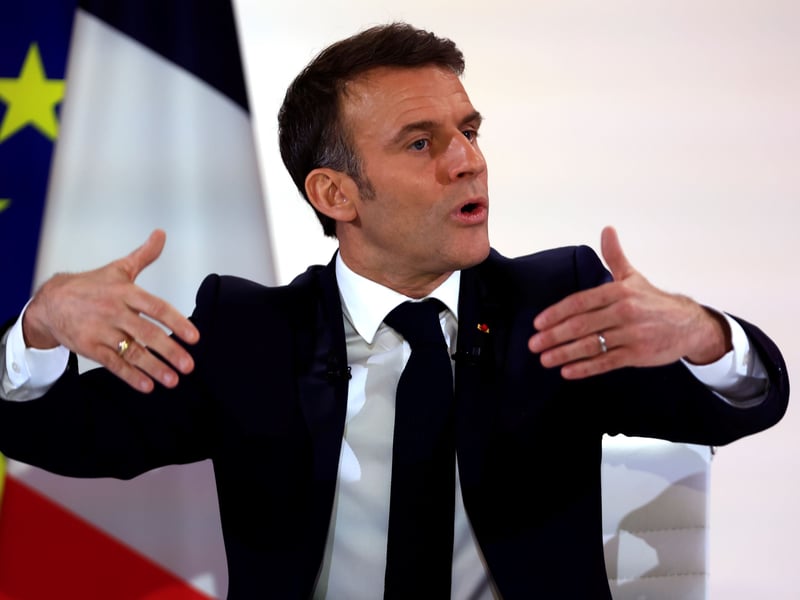
MARSEILLE, France (CN) — French President Emmanuel Macron met right-wing politicians during a new round of talks Wednesday amid a political stalemate that has paralyzed the government.
Macron started the second round of discussions on Tuesday about the formation of France’s next parliament — and specifically to agree on a prime minister — more than seven weeks after calling snap elections. Though a left-wing coalition won the most seats, no political group garnered an absolute majority.
The composition of France’s next government remains very much up in the air as Macron keeps his cards close to his chest. This is the longest period that France has been led by a caretaker government; acting Prime Minister Gabriel Attal resigned but remains in power.
Critics have likened the talks to a form of procrastination and political theater. And the longer the search for a leader drags on, the deeper the rifts are becoming across the political spectrum.
Before meeting for talks at the Elysée, Rachida Dati — France’s minister of culture and member of the center-right Les Républicains — called for an alliance between her party and Macron’s Ensemble! coalition, which markets itself as centrist but has been criticized for drifting to the right in recent years.
“I’m calling on the women and men of state, of my political family, to participate in this coalition,” Dati said.
Three dominant political groups emerged from the elections: the left New Popular Front, centrist Ensemble! and the far-right National Rally, led by Marine Le Pen and her protégé Jordan Bardella.
The French left had been fractured long before Macron called for snap elections, largely because of Jean-Luc Mélenchon, the controversial leader of France Unbowed. But ever since they united surprisingly quickly under the New Popular Front, Macron has been accused of trying to splinter the coalition.
The first round of talks, which lasted Friday through Monday, ended with the New Popular Front fuming over Macron’s refusal to name its candidate, Lucie Castets, prime minister. The president cited a need for “institutional stability” and claimed the divided parliament wouldn’t approve a left-wing government.
The New Popular Front refused to participate in the second round of talks, while the far-right National Rally was excluded from the negotiating table after engaging in the first round of discussions.
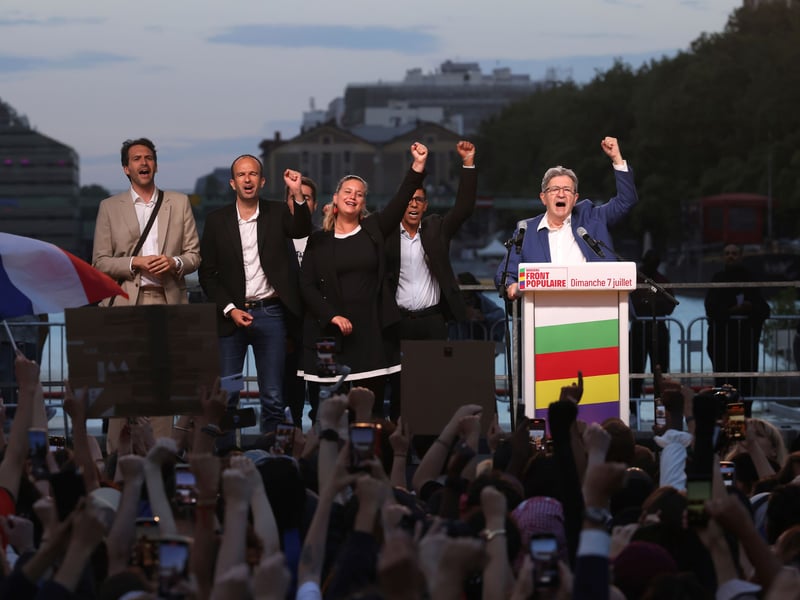
The left is organizing nationwide protests, calling for supporters to hit the streets on Sept. 7. They argue that since they won the most seats in the National Assembly — taking 180 out of 577 — Macron’s refusal to appoint Castets is undemocratic. The New Popular Front was far from winning an absolute majority, which would be needed to effectively pass legislation.
According to Luc Rouban, a senior research fellow at Sciences Po Paris, Macron’s decision not to name Castets isn’t undemocratic in a technical sense but reveals a difference between political and institutional logic. Constitutionally, Macron has the power to choose the prime minister regardless of the election results.
“In reality, you have two opposing logics: You have the purely political logic of the New Popular Front saying, ‘We came out on top, so we have to appoint a prime minister,’” Rouban said. “And then you have the purely institutional logic of the president who says, ‘All of that is very good, but I am the guarantor of the stability of the institutions of the republic, so I have to be careful that the government will be stable and solid and will not fall after a few days.’”
Macron is expected to name a new prime minister in the coming days; the government must present a budget for 2025 in roughly one month.
Rouban believes Macron has the best shot at forming an effective government if he unites the center and right-wing parties.
“With a center-right government, you’ll find the Macronists, who still have a lot of deputies; Les Républicains; and at least a passive agreement of the National Rally, who won’t do anything to stop them,” he told Courthouse News. “That’s what we’re going to have.”
Throughout much of his presidency, Macron has been unfavorably compared to French monarchs with a history of passing unpopular legislation and reforms.
On Wednesday morning, André Bergereau sat in the central Charles de Gaulle square in Marseille, smoking a pipe. Reflecting on the state of the government, he shook his head and rolled his eyes.
“Macron has to be fired,” he told Courthouse News. “He’s the only one that makes decisions, the only one running things.”
He echoed the common criticism that Macron is a one-man show. Although France has a parliament, its president retains much more power than leaders in Britain or Germany.
Rouban said of Macron, “He’s in a logic that is very particular, but he has an interpretation of the constitution that is very constitutional. He has a lot of decision-making power, but politically he doesn’t have much support.”
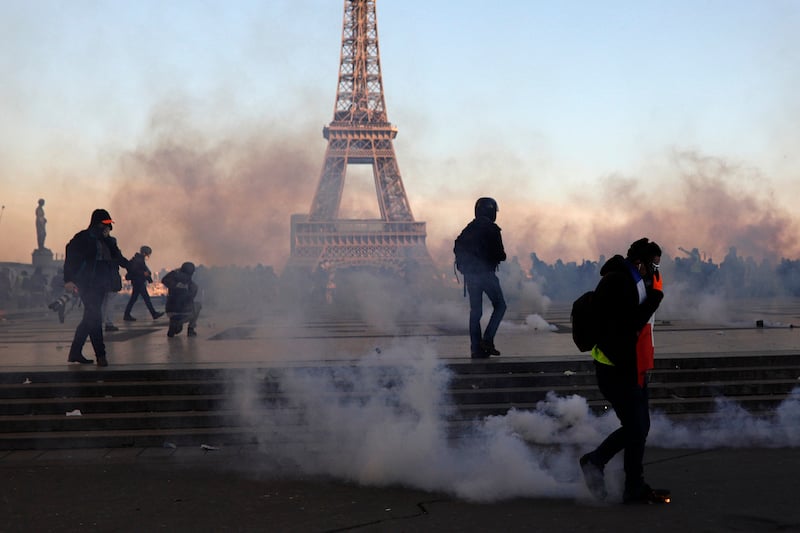
In recent years, Macron has become an increasingly controversial figure in France, marked by the Yellow Vest protests and unpopular pension reforms that sparked widespread nationwide protests for weeks in 2023. Both the left and the right have advocated for repealing some of the president’s biggest reforms.
Rouban argues that Macron believes he was elected on a mandate that included these initiatives and doesn’t want to let them go.
“He’s still in his very personal perspective to lead his program of reform of French society,” he said. “And he doesn’t want to compromise on that.”
 Follow @lilyradz
Subscribe to our free newsletters
Our weekly newsletter Closing Arguments offers the latest about ongoing trials, major litigation and rulings in courthouses around the U.S. and the world, while the monthly Under the Lights dishes the legal dirt from Hollywood, sports, Big Tech and the arts.