Search Articles


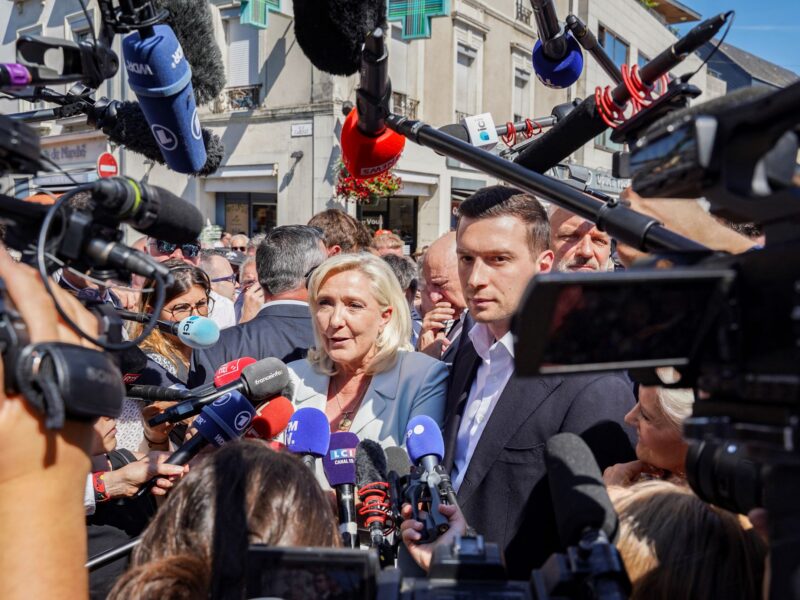
PARIS (CN) — Marine Le Pen was born into a party long considered off limits in France’s mainstream political sphere.
The National Front’s overtly antisemitic and xenophobic rhetoric, propagated by its founder — her late father, Jean-Marie Le Pen — led most people to see the family as a threat to the country’s value system.
Now, after narrowly maneuvering around an embezzlement conviction that threatened her eligibility as a candidate, she’s a leader in the country’s 2027 presidential election polls. But this shift in public opinion didn’t happen organically. Experts describe a deliberate, yearslong normalization campaign that has reached new heights — even if core policies haven’t changed.
“In her political style and way of behaving, Marine Le Pen really wanted to introduce a more moderate, more traditional and less extremist style,” Gilles Ivaldi, a researcher at Sciences Po’s Center for Political Research specializing in the far right, said. “Normalization … isn’t so much about changing the party’s policies, but rather changing the way they’re presented so that they’re more acceptable.”
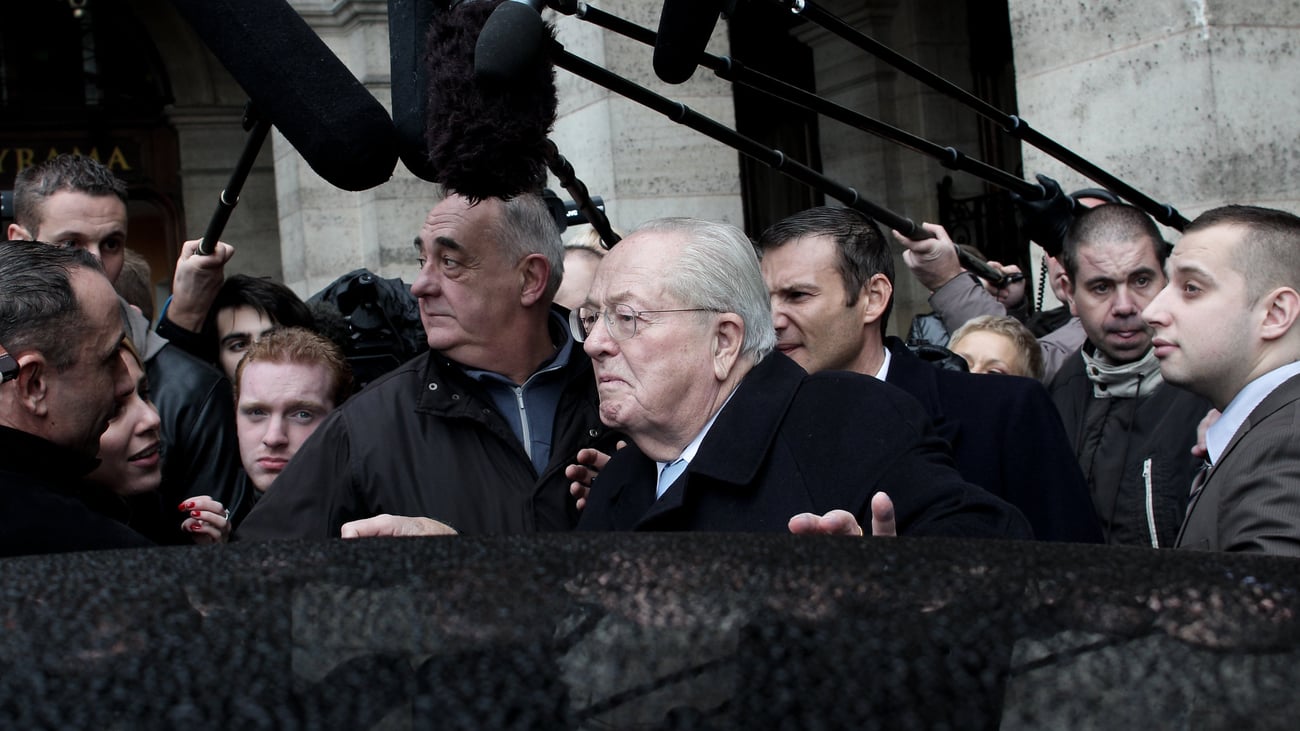
Jean-Marie Le Pen founded the National Front in 1972 as a coalition of far-right groups that didn’t have a voice in the mainstream media, according to Tristan Boursier, a postdoc researcher specializing in contemporary far-right movements.
By 1987, Le Pen père earned the nickname “the Devil of the Republic” after saying the gas chambers used in the Holocaust were a “detail” of history.
“It should be remembered that before 2011, during the Jean-Marie Le Pen era, nearly 80% of French people considered this party to be a danger to democracy,” Jean-Yves Camus, co-director of the Observatory of Political Radicalism at the Jean-Jaurès Foundation, said. “He voiced opinions and judgements that were on the one hand punishable by law, and on the other hand seemed inconceivable to the vast majority of people.”
In 2002, however, the elder Le Pen made it to France’s presidential election runoff with 17% of the vote. But the widespread protests that followed reflected his standing in the French imagination, and he ultimately lost to Jacques Chirac.
Around this time, Marine Le Pen was appointed vice president of the party. According to Yann Wernert, a senior policy fellow at the Jacques Delors Center, this is when she began to envision a different future.
“Marine Le Pen was developing this idea that in order to win majorities, they had to go through this process of de-demonization to solidify that core electorate and appear more acceptable to the general public,” Wernert said.
Marine Le Pen wanted to broaden the electoral base to gain power, rather than target a niche electorate. Her father, on the other hand, was less motivated by power than “making himself heard on the national stage” and amplifying the voices of far-right groups, according to Boursier.

Le Pen began to impart her vision when she became the party’s president in 2011. However, Ivaldi said “de-demonization” wasn’t so much about changing the National Rally, known as the RN, but more about changing the way that people saw the party.
“The RN has kept many of its radical policies on immigration, security and Europe,” he said. “But the whole effort has been to present these policies in a more nuanced way, or at least to dress them up so that they appear more respectable.”
Perhaps the most obvious change was rebranding the party from the National Front to the National Rally in 2018; Le Pen said that the former had become a “psychological barrier” for voters when she explained the new name.
More nuanced efforts, according to Ivaldi, included cutting ties “as much as possible” with ultra-right factions that existed within its ranks.
“[Changes] also involved all of the RN’s behavior in the National Assembly — legitimizing themselves, behaving with the utmost respectability and not engaging in transgressive or extremist behavior,” he said. “This is often called the suit-and-tie strategy, meant to remind people that they’re lawmakers who truly want to look like any other lawmaker.”
Policy-wise, the RN stopped championing a “Frexit” and toned down its anti-EU rhetoric. Reinstating the death penalty, which used to be one of the party’s objectives, was also taken off the table. However, Ivaldi explained how Le Pen has been reframing noncontroversial principles to fit her narrative — like secularism, which has traditionally been championed by the left.
In his view, Le Pen used the idea of secularism to criticize Islam and Muslims as a “threat” to national values.
“That’s something very smart because indeed, secularism is a value that enjoys broad consensus,” Ivaldi said. “So relying on that rather than on a more ethnic, cultural or religious rejection is ultimately a way to normalize the party.”
Le Pen uses a similar logic with feminism, as a way to “stigmatize Islam and the idea that [it’s] a backward religion that enslaves women and is a danger to women in general,” Ivaldi added.
One of the National Rally’s long-held beliefs has been that French people should have first dibs on jobs, housing and social benefits, in a policy they had called “national preference.” Le Pen transformed this into “national priority.”
“It’s exactly the same thing,” Ivaldi said. “But she simply changed the term so people would no longer associate it with the term that was used by Jean-Marie Le Pen, which was much more extreme.”
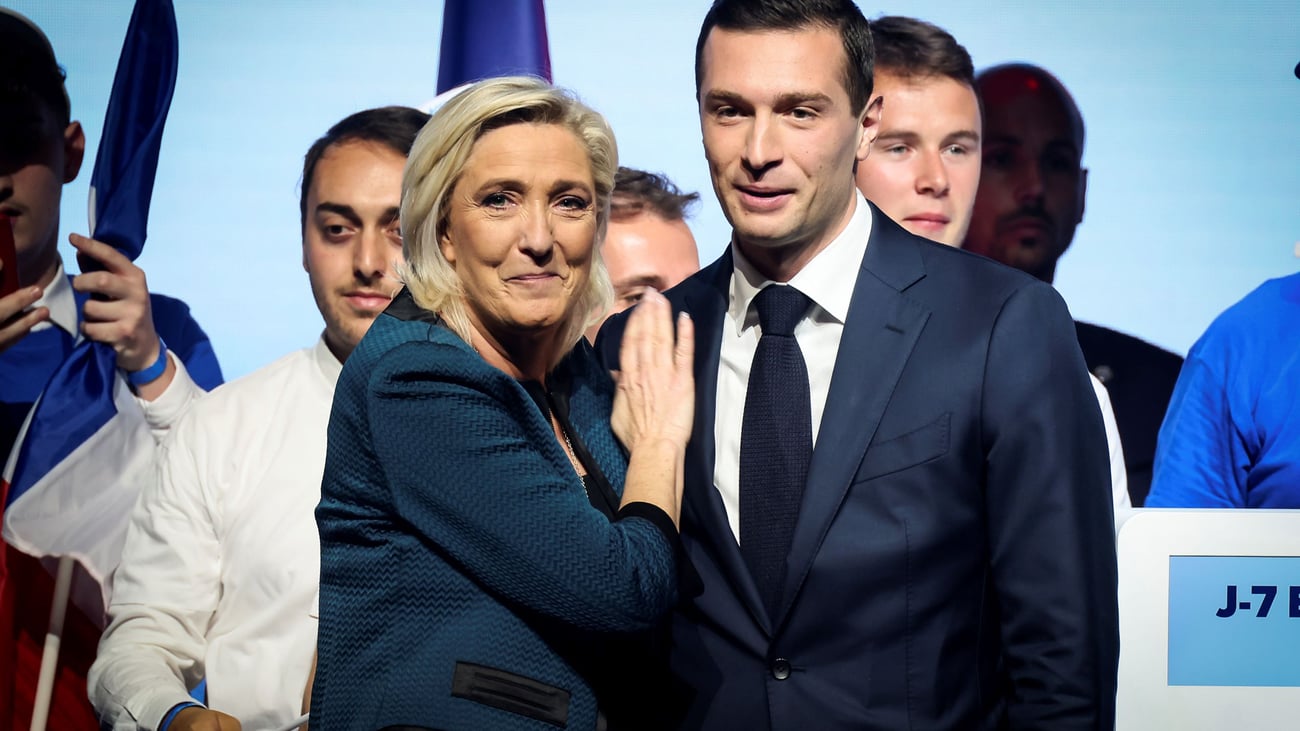
One of the RN’s biggest normalizing factors has not been a narrative shift, but a person — Jordan Bardella, Le Pen’s 30-year-old protégé. His influence on the party has been so strong that she’s presenting her presidential campaign as a dual ticket, with Bardella becoming prime minister should she be elected.
“It’s a dynastic party,” Boursier said. “So when people who were completely outside of the family wanted to climb the ranks in the story, they generally failed.”
But Bardella’s distance from the Le Pen family name has contributed to the RN’s newfound success.
Boursier said her name is still a liability for Le Pen, who emphasizes her first name, Marine, on campaign posters. Bardella’s 2.3 million TikTok followers have also given the party reach into a generation it previously struggled to capture.
“It’s not just the fact of being present [online], but also the way that he’s present, portraying himself as someone who is friendly, close to the people, who goes to the markets, who drinks wine like everyone else, and who eats candy like everyone else,” Boursier said. “The fact of seeing him a bit behind the scenes before a rally, seeing him joke around with Le Pen — all of those elements make people forget about the political platform and see him as a likable person.”
Boursier said the RN’s reputation has changed radically even since France’s last presidential elections six years ago.
“To tell you a little anecdote, in opinion polls, when we called people to ask who they planned to vote for, we had to inflate the voting intentions for the RN because people were ashamed to say they were voting for [them],” he said. “Now people are no longer afraid; they’re even proud.”
 Follow @lilyradz
Subscribe to our free newsletters
Our weekly newsletter Closing Arguments offers the latest about ongoing trials, major litigation and rulings in courthouses around the U.S. and the world, while the monthly Under the Lights dishes the legal dirt from Hollywood, sports, Big Tech and the arts.
Additional Reads
 Ongoing missions July 10, 2026
 Big Brother Pumpkinhead censors science July 10, 2026
 Seventh Circuit upholds Illinois assault rifle ban July 9, 2026