
 Search Articles


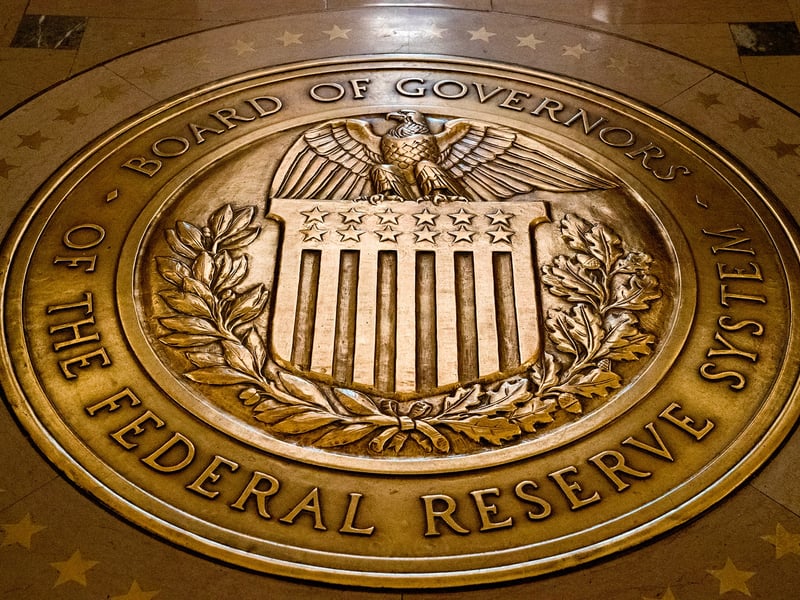
MANHATTAN (CN) — It is clearer than ever the U.S. labor market is splintering, but investors remain focused almost entirely on whether they get an interest rate cut soon.
The S&P 500 finished the week’s trading up 21 points, closing on a new record high, while the Nasdaq gained 245 points for the week. The Dow Jones Industrial Average was left out of the week’s winning, dropping 143 points.
Data released this week show that while the U.S. economy is not in a recession, the manufacturing sector certainly is. Another dismal jobs report — coupled with further downward revisions to previous employment reports — showed the manufacturing sector lost 78,000 jobs since January and 42,000 since the “Liberation Day” tariff announcement.
The jobs report was bad news for Main Street, but Wall Street was only slightly perturbed with investors convinced the Federal Reserve will cut interest rates by at least 25 basis points in two weeks.
“The Federal Reserve’s free pass on the labor market has ended,” said Jamie Cox, managing partner for Harris Financial Group. “[This week’s] employment data give the Fed all the reasons it needs to shift its balance of risks and lower rates in two weeks.”
It is likely the Fed lowers interest rates when it next meets, but the future of the central remains in flux, with one governor having left and another under attack by the White House.
Stephen Miran was nominated by President Trump to replace Adriana Kugler—who left her post suddenly and without explanation—and awaits confirmation by the Senate.
“In my view, the most important job of the central bank is to prevent depressions and hyperinflations,” Miran said in prepared remarks to members of the Senate Banking Committee on Thursday. “Independence of monetary policy is a critical element for its success.”
During the hearing, however, Miran also said he would not immediately leave his position on the White House Council of Economic Advisers while also claiming he was “not at all” a Trump puppet for the central bank.
Trump, who has repeatedly called for massive interest rate cuts, may soon get another nomination to the Fed as the Justice Department ramped up its probe into Governor Lisa Cook over mortgage fraud accusations. Cook does not sit on the Federal Open Market Committee, the 12-member group of Fed officials that set the federal funds interest rate.
Wall Street may be focused on interest rates, but Main Street still focuses on the topsy-turvy tariff landscape, particularly since the U.S. Court of Appeals for the Federal Circuit ruling on Aug. 30 that voided many tariffs.
Tariff-related price increases were reported by nearly all of the Fed’s 12 districts in the latest Beige Book, which charts economic activity across the nation.
“While some firms reported passing through their entire cost increases to customers, some firms in nearly all districts described at least some hesitancy in raising prices, citing customer price sensitivity, lack of pricing power, and fear of losing business,” the Beige Book noted.
The latest manufacturing and services data from the Institute of Supply Management also point to tariff-caused economic pain.
On the services’ side, the index grew for the third consecutive month and hit 52%, indicating economic expansion. However, the manufacturing report contracted for the sixth straight month, with the imports index hitting 46%, 1.6 percentage points lower than July’s report.
Tariffs are to blame, according to most respondents in ISM’s manufacturing report. One respondent from the trucking industry noting the “current environment is much worse than the Great Recession of 2008-09” and said the company’s backlog is “100% attributable to the current tariff policy and the uncertainty it has created.”
 Follow @NickRummell
Subscribe to our free newsletters
Our weekly newsletter Closing Arguments offers the latest about ongoing trials, major litigation and rulings in courthouses around the U.S. and the world, while the monthly Under the Lights dishes the legal dirt from Hollywood, sports, Big Tech and the arts.