Search Articles


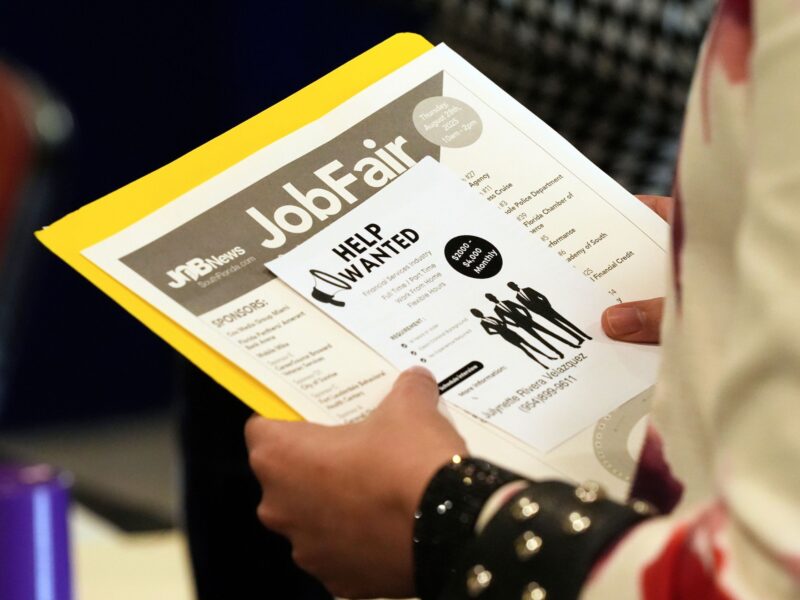
MANHATTAN (CN) — U.S. stocks took a few lumps this week, as a surprisingly positive jobs report and other strong economic data indicate interest rate hikes may be coming.
For months, Wall Street has resigned itself to the idea the Federal Reserve would cut interest rates no more than once in 2026. However, strong jobs data have dampened hopes for even a single cut.
A Friday sell-off in artificial intelligence chip stocks sent the Nasdaq tumbling, leaving the index down 1,263 points for the week. The Dow Jones Industrial Average and S&P 500 also fell, losing 166 and 197 points, respectively.
Investors were disappointed by the May employment report, which showed the economy added a surprisingly strong 172,000 jobs last month, more than double many analysts’ forecasts. Revisions to the prior two reports added another 93,000 jobs onto the scale.
The report was comforting for Main Street and many workers who have been worrying about the effects of artificial intelligence on the labor pool, but it was more cold water for Wall Street’s hopes of an interest rate cut later this year.
In fact, experts say the strong jobs data likely means the Fed will ignore the labor market and focus mainly on the other of its twin mandates: inflation. Some even believe the central bank may impose a rate hike later before the year ends, despite the dovish Kevin Warsh now chairing the central bank.
“With Fed officials sounding more hawkish than we originally anticipated and downside labor market risks rapidly diminishing, we now expect the Fed to hike interest rates this year,” Stephen Brown, chief North America economist at Capital Economics, wrote in an investor’s note.
A number of economic reports this week further support the importance of addressing inflation over other factors.
The Institute for Supply Management’s services report expanded again in May, even as price pressures climbed to their highest level since August 2022 and the employment index remained in contraction territory.
ISM’s manufacturing index rose to a four-year high and topped the 50-point mark for a fifth straight month, signaling continued expansion in the sector.
Still, several commenters in the report cited supply chain delays, saying the closure of the Strait of Hormuz has squeezed businesses and delayed shipments.
The Beige Book, released this week, found that most districts reported higher inflation than in the prior period, largely driven by energy costs tied to the conflict with Iran.
Despite the headwinds, the report also noted employment continues in a “low hire, low fire” landscape, and economic activity increased slightly in 10 of the 12 Fed districts.
“We may be at a crossroads, as credit conditions appear to be weakening,” said Jeffrey Roach, chief economist at LPL Financial. “Although the economy continues to perform well, certain variables remain too fragile to withstand additional geopolitical shocks beyond what they have already endured.”
 Follow @NickRummell
Subscribe to our free newsletters
Our weekly newsletter Closing Arguments offers the latest about ongoing trials, major litigation and rulings in courthouses around the U.S. and the world, while the monthly Under the Lights dishes the legal dirt from Hollywood, sports, Big Tech and the arts.