
 Search Articles


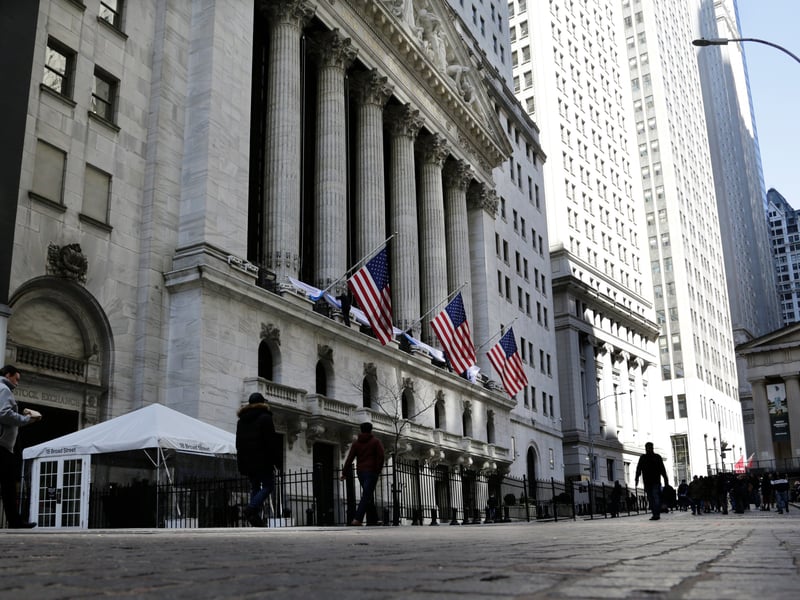
MANHATTAN (CN) — Wall Street put recent losses in the rearview mirror this week, showing one of its best weeks in a year in the face of positive inflation data.
The consumer price index and producer price index, both released by the U.S. Bureau of Labor Statistics this week, came in better than predicted, spurring the rally.
All three U.S. indices popped on Wednesday following the PPI release and continued through to the closing bell on Friday, with the Dow Jones Industrial Average gaining 1,549 points for the week. The S&P 500 and Nasdaq also had large weekly gains, picking up 189 points and 469 points, respectively.
The PPI showed a 0.2% increase in wholesale prices last month — half the 0.4% many analysts had forecast — despite a 10% increase in gasoline and the jump airfare prices. Core PPI, which excludes energy and food prices, showed no increase in prices for December.
The CPI, which is followed by investors more closely since it reflects consumer spending more directly, also brought good news for markets though overall it was more of a mixed bag.
Headline inflation was 0.4% for December as expected by most economists, but core inflation came in less than expected at 0.2% versus the 0.3% consensus forecast.
“Core inflation isn’t accelerating and that’s the story,” Jamie Cox, managing director for Harris Financial Group, said on Wednesday. The market may have had its hair on fire about inflation running away again, but the data do not support that conclusion.”
With the two reports, the Federal Reserve’s preferred measure of inflation, the personal consumption expenditures, is now under the 2% target, giving investors hope the central bank will keep on pace for at least two more interest rate cuts.
“After a brief resurgence in inflation pressures in September and October, that means price pressures have now been running at a below-target pace again for the last two months,” Paul Ashworth, chief North America economist at Capital Economics, wrote in in investor’s note.
Similarly, the monthly retail sales report by the U.S. Census Bureau came in lower than expected, increasing 0.4% last month compared with the 0.5% forecast. However, taking out gasoline and motor vehicle sales, core retail sales increased by 0.7%, well above estimates.
Other good news came on Tuesday from the National Federation of Independent Business, which reported a jump in small-business optimism. The group’s index increased to 105.1, the second consecutive month the index has risen above the 51-year average of 98 points.
“Optimism on Main Street continues to grow with the improved economic outlook following the election,” NFIB chief economist Bill Dunkelberg, said in a statement. “Small business owners feel more certain and hopeful about the economic agenda of the new administration.”
 Follow @NickRummell
Subscribe to our free newsletters
Our weekly newsletter Closing Arguments offers the latest about ongoing trials, major litigation and rulings in courthouses around the U.S. and the world, while the monthly Under the Lights dishes the legal dirt from Hollywood, sports, Big Tech and the arts.