Search Articles


PARIS (CN) — When Jane Rosenberg gets a big assignment, she has to clear her calendar for an unknown amount of time — a week, a month or more. Doctor appointments get shuffled around as she makes sure she has enough paper and pastels on hand.
On an average day, she might spend hours closely observing the fine lines and jowls on President Donald Trump’s face or concentrating on the “Blind Sheikh” Omar Abdel-Rahman, convicted of seditious conspiracy over the World Trade Center bombing in 1993, who she said was wearing something resembling a Santa Claus hat during trial.
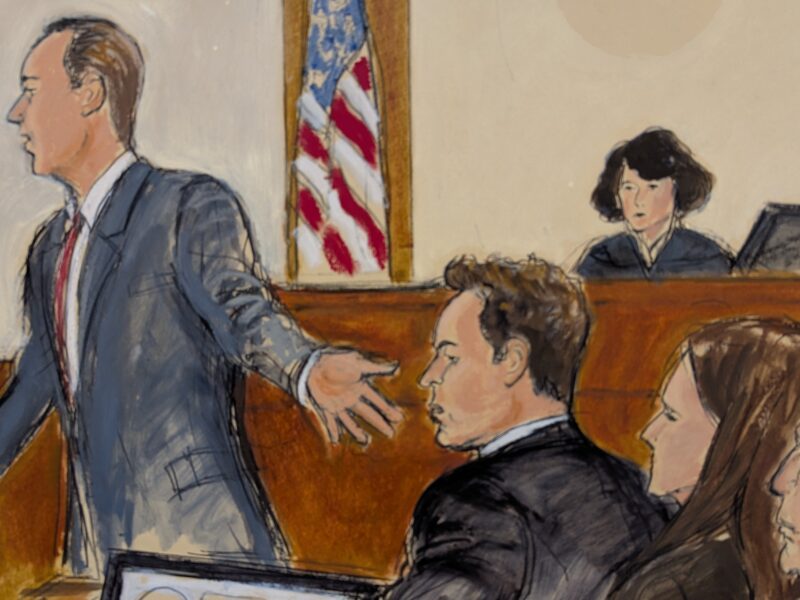
Courtroom artists are not embroiled in courtroom hearings the way defendants, judges or lawyers are. But they’re often at the center of them, sitting just inches away. Unless a judge allows cameras into a courtroom, which they rarely do, no visual evidence of the proceedings will ever leave except for what these artists create.
“There are key moments in trials where the only images they have are the sketches by the artist who captured a specific moment,” explained Sylvie Guillot, a French courtroom artist. “For example, [serial killer] Guy Georges’ confession in Paris.”
“I was the one who sketched that moment, and it is unique,” she said. “There are no photos, no images other than my sketch.”
For many courtroom artists, the career starts with the same predicament: a passion for art and a need to pay the rent.
In the 1970s, Rosenberg had graduated from art school and was trying to make a living. She painted portraits of tourists on Cape Cod and drew sidewalk copies of Rembrandts. But she was tired of living as a starving artist and wondered how to develop a real career in portraiture. Then she listened to a lecture by the acclaimed artist Marilyn Church, a New York painter who built a respected career doing both fine art and courtroom paintings.
“Once I saw the courtroom art, I thought, ‘This is it,’” Rosenberg said. “I looked in the mirror, and I said, ‘I’m going after this. That’s it. I want to do this.’”
Others start more reluctantly. Elizabeth Williams was studying to be a fashion illustrator when one of her professors complimented her speed and her ability to capture facial expressions beyond clothing. He suggested that she consider courtroom illustration.
“I was like, ‘Oh God, yuck,’” she said. “How far afield can you get, from fashion to crime?”
“The court illustrations in the newspaper sucked. I mean, nobody wanted to do that,” she said. But Williams needed a way to make money — and at the time, fashion illustration was being overtaken by photography. “Fear is a great motivator, and it will change your view on things.”
Williams warmed to the idea when she saw some drawings by court artist Bill Robles. She was surprised by how fashion-forward they were.
“He was drawing these beautiful pictures of the Manson family,” Williams said. “Like, how can you make Charles Manson look like a movie star? And he did.”
“I mean, I love things that are fabulous,” she added. “I still do.”
Williams crossed paths with Robles while attending a high-profile trial in Los Angeles in May 1980. He put her in touch with local TV station KNBC, kicking off a decadeslong career.
Around that same time, Rosenberg was practicing her craft in New York City’s night court, drawing sex workers after they were arrested along the West Side Highway. She was determined to sell something and decided to try her luck at the Craig Crimmins “Murder at the Met” arraignment in 1980.
After calling CNN, which she described as a “start-up company” at the time, she turned to WNBC, the New York City NBC affiliate and a big player of the era. They invited her into their seventh floor offices, where a producer showed her around the newsroom.
“It was very stressful,” Rosenberg said, “but he showed me around and then he said, ‘Let’s see what you’ve got.’” Her drawing ran on the news that night.
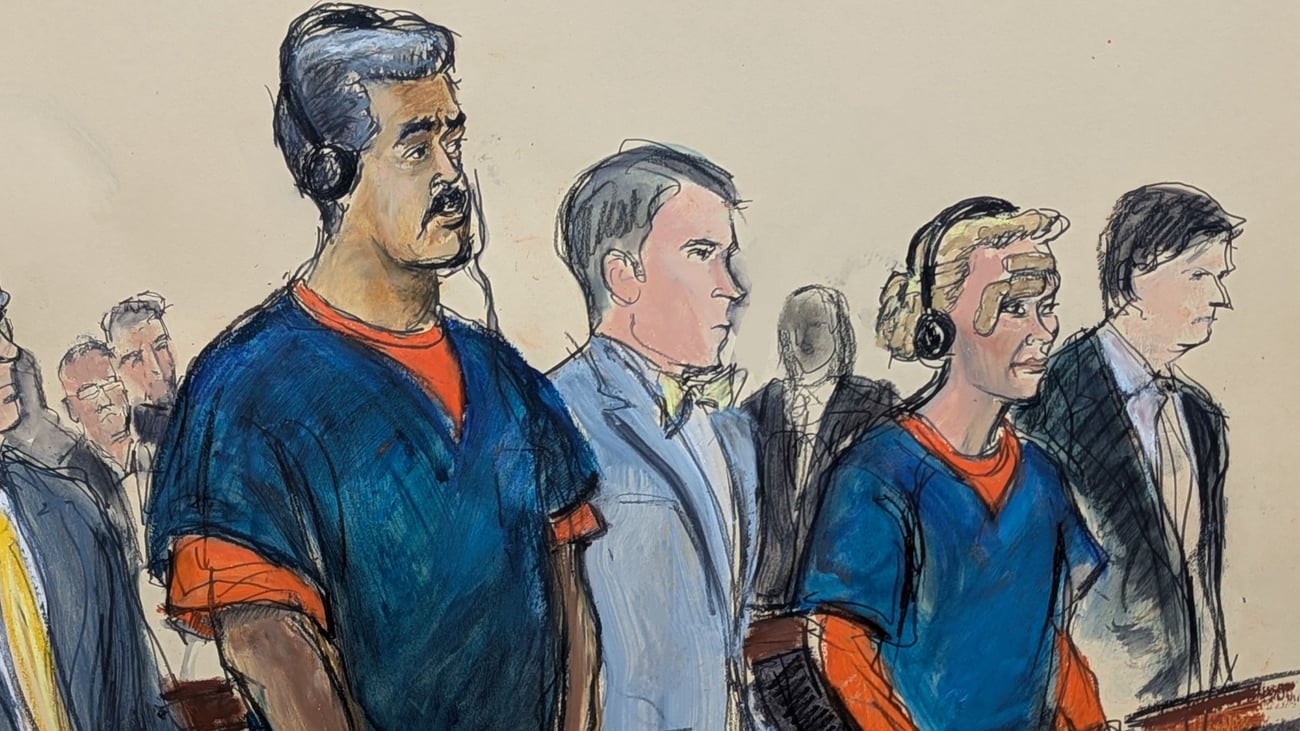
In court, artists like Rosenberg sit next to presidents and dictators, titans of industry and infamous drug traffickers. Instead of binders of documents, they bring art supplies like pots of water to rinse their paintbrushes.
Part of the job is to remain unseen. “We have to go unnoticed,” Guillot said. “We aren’t there to make any noise, especially when you’re below the bench [and] the presiding judge. You shouldn’t draw attention to yourself, so you have to work very discreetly without making a sound.”
Sometimes, though, people on the stand notice them anyway. One time, Rosenberg said, Donald Trump Jr. approached her while he was in court to testify in one of his father’s legal battles.
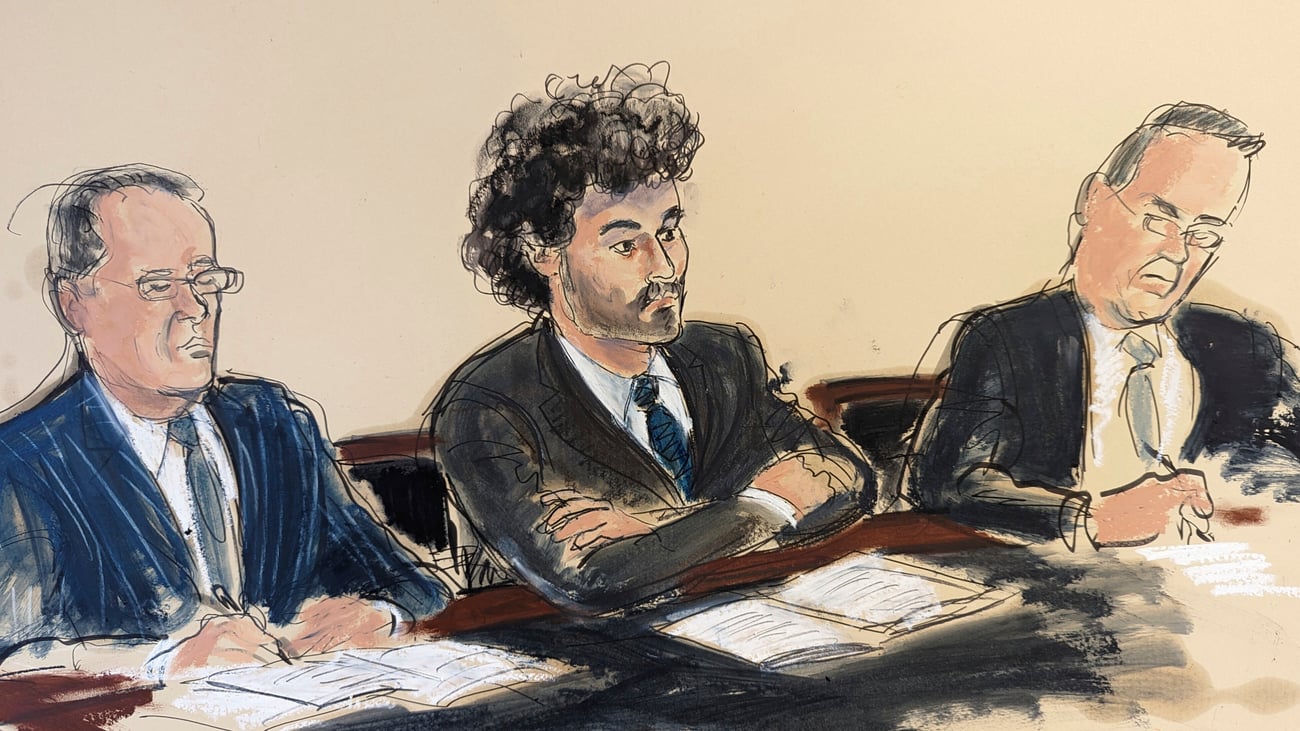
According to Rosenberg, Donald Trump Jr. pulled up a photo on his phone. It was an AI image depicting Sam Bankman-Fried’s 2023 fraud trial. “Look how they made Bankman-Fried look like a superstar,” she recalled him saying. “Why don’t you make me look sexy?”
It was hardly the only time something like this has happened. When Rosenberg covered Harvey Weinstein’s sexual assault trial, she said Weinstein asked her to give him more hair. She said Sean “Diddy” Combs asked her to soften him up a bit, yet also complained that one of her sketches made him look like a “koala bear.”
When Eddie Murphy was in court, he imitated her drawing him, sketching her back on a Post-It and giving it to her.
Murphy is not the only one to have turned the tables on her. When Ghislaine Maxwell was on trial for sex trafficking in connection to Jeffrey Epstein, she turned toward Rosenberg and started drawing her during the hearings.
“I sketched her sketching me,” Rosenberg said. Maxwell was wearing a face mask, with only her eyes visible — a detail known to the public because of Rosenberg’s depictions of the entire scene.

Elisabeth de Pourquery, a France-based artist, has covered former French President Nicolas Sarkozy’s legal entanglements over the past ten years. Although Sarkozy never made any artistic requests, she described how he always said hello and was consistently kind and pleasant to her.
“He’s a regular in the courts, if you can put it that way,” de Pourquery said. She recalled how, at one trial in 2021, Sarkozy’s wife, the musician and model Carla Bruni, approached her.
Bruni “came over to talk to me about her family, look at my drawings, tell me about their daughter, just stuff like that,” de Pourquery said. “It was a completely surreal scene.”
Courtroom artists face their own versions of legal bureaucracy.
Rules can vary based on the location. Some artists hold press cards, while others don’t.
Sometimes — especially in France — news outlets will handle accreditation procedures. Building relationships can also help. In Rosenberg’s case, she said she “knows the right people” after covering New York courts for years and doesn’t worry about access. She’s reluctant to travel for assignments, since she wouldn’t have that same familiarity with judges and court officials in other venues.
Once inside, seating arrangements are another crucial yet unpredictable factor.
“It’s still a criminal court — not an art school. We don’t always have a very practical spot,” Guillot said. “We might see fine, but sometimes we’re set up quite far away, because there’s never a designated seat for the sketch artist.”

By far the job’s biggest stress factor is speed.
Rosenberg, Guillot, Williams and de Pourquery all agreed on this. Drawing accurate portraits under time pressure is the essence of the job. And yet in court, people move around and sometimes have their faces partially concealed.
“It’s always about speed,” de Pourquery said. “I’m constantly doubting myself, all the time wondering if it’s going to be ready because there’s also the deadline.”
That challenge is even greater when a party has a plain look. Rosenberg quipped that when she covered Maxwell’s trial, at least she “had an interesting shape, hair and eyebrows and eyes.” That helped Rosenberg draw Maxwell distinctively even though she was masked. Not so when she covered former cop Derek Chauvin’s trial for killing George Floyd. “Chauvin was, like, a bald head and eyes and a mask.”
Drawing a compelling courtroom sketch means focusing on a whole different set of variables. A lawyer might listen carefully to a witnesses’ words, hoping to catch them in a contradiction. But words can be a distraction when one is focused on details that a lawyer could never use — for example, a defendant’s shifty eyes.
“What matters is everything the defendant doesn’t say,” de Pourquery explained. “When he’s on the stand, he has a certain body language. A way of lying or not lying on the stand — and you inevitably see it, when you draw a lot.”
“We’re used to drawing the way the body moves. The hands, the expression, the eyes, the face and all that,” she said. “Sometimes, you’re even able to tell if someone is lying or not, if they’re guilty or not.”
Other things cannot be so easily zoned out. Trials inevitably feature gruesome images and accounts of violence, and those can affect a courtroom artist just as they would others.
Guillot said she’s always felt weird drawing in such tragic circumstances. After all, she said, creating art is joyful practice. She created psychological distance by giving herself a mental “drawing bubble” inside the courtroom — but motherhood changed that.
“I stopped because I couldn’t listen to those horrors anymore,” she said. “I could no longer handle trials involving murders or acts of barbarity against children.” She quit working as a courtroom artist.
“It was affecting me more. It was disturbing,” Guillot added. “Before, I could handle them. It was grim, but it didn’t affect me as much.”
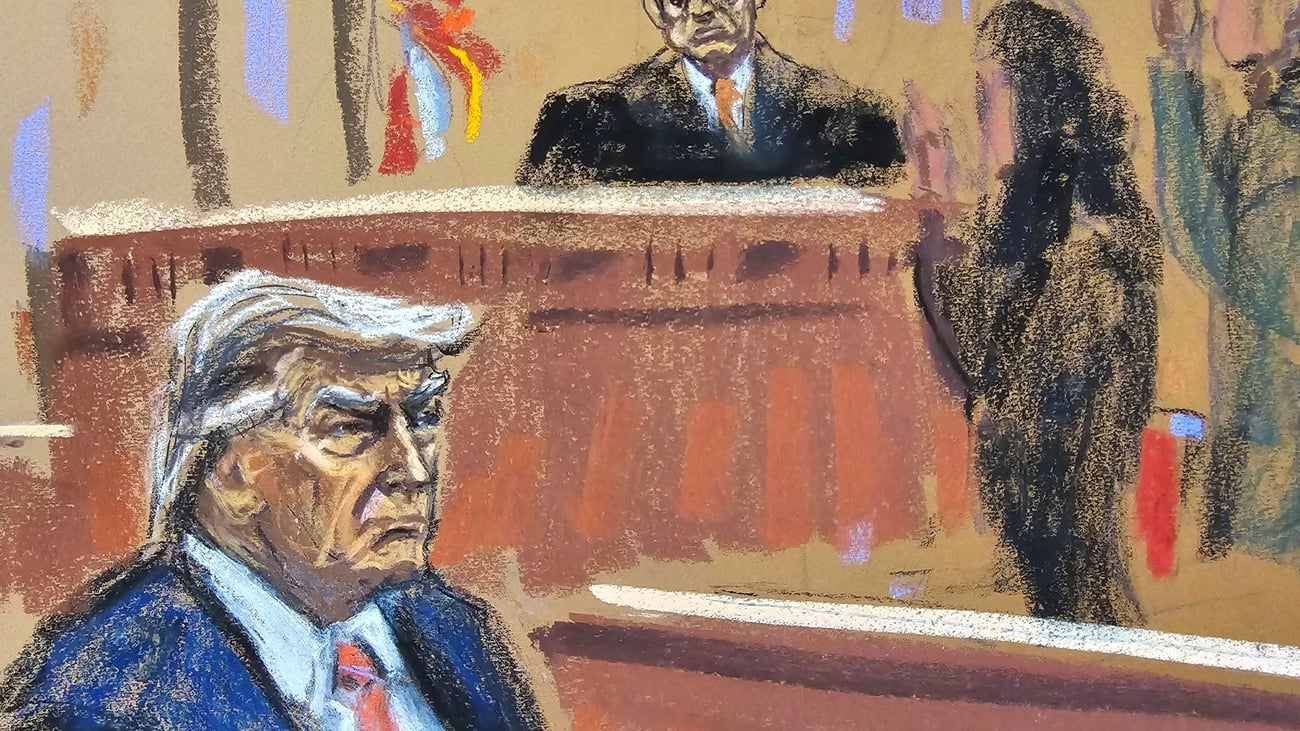
As they become regulars in courthouses, courtroom artists also see moments of hope. De Pourquery said that in 10 years of observing trials in France, she’s noticed serious changes in how cases involving violence against women are treated.
“Ten years ago, there were almost no trials for femicide — and what’s more, no one went to court. It was seen as pointless,” she said. “I have truly seen the transformation of judges, and the growing awareness of French society.”
While Sarkozy has been an interesting historical figure to depict, de Pourquery said her dream is to draw Trump.
“Sarkozy is very interesting because he moves all the time, he’s unbearable. He’s like a comic book character — that’s really what it is,” she said. “Trump is a bit like that, too. He’s a terrible character who moves all the time.”
Williams, who has drawn Trump in court, knows the pitfalls of depicting the controversial president. Over countless hours observing him, she’s been criticized for making him look too good — and for making him look not good enough.
What makes Trump so hard to draw? Williams’ guess: “Face work.” A visage that bears signs of age but also, she thinks, of plastic surgery.
“It’s hard to make somebody look old,” she said. “I mean, I’m not going to add lines and stuff where there aren’t [any].”
 Follow @lilyradz
Subscribe to our free newsletters
Our weekly newsletter Closing Arguments offers the latest about ongoing trials, major litigation and rulings in courthouses around the U.S. and the world, while the monthly Under the Lights dishes the legal dirt from Hollywood, sports, Big Tech and the arts.