Search Articles


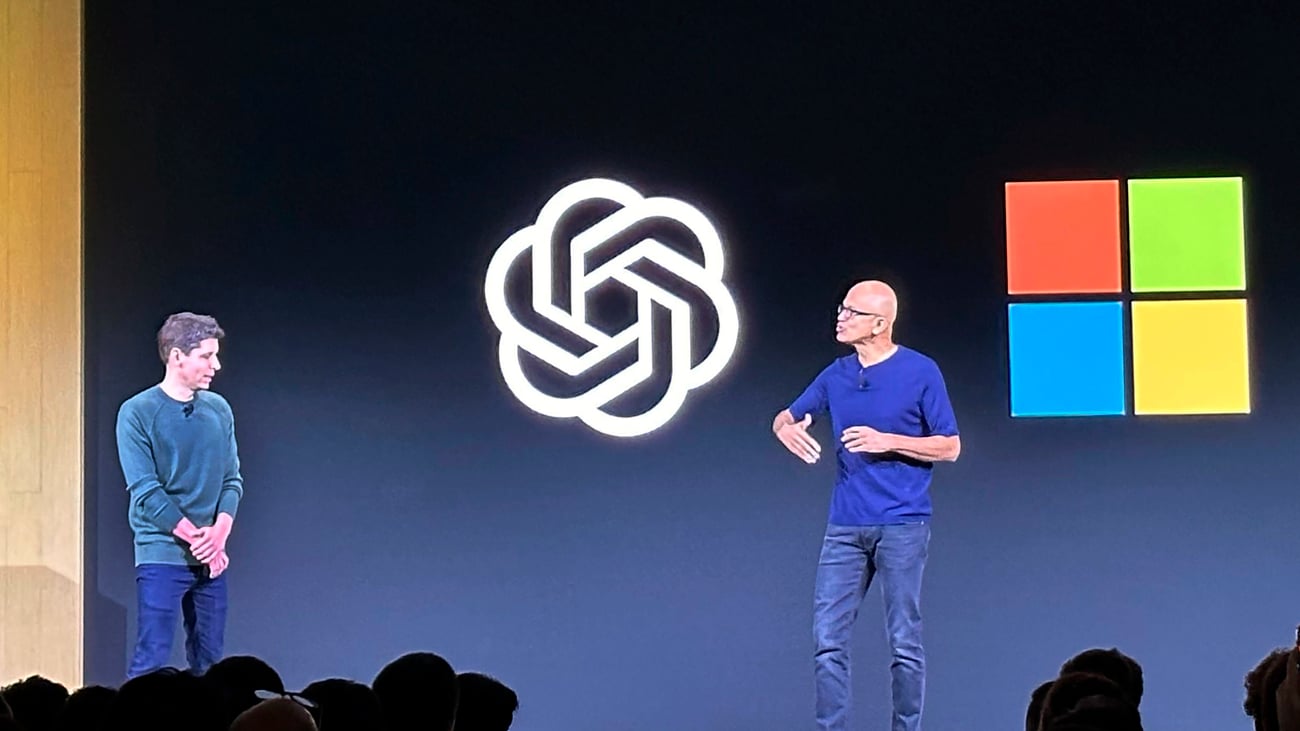
OAKLAND, Calif. (CN) — The CEO of one of the most profitable technology companies in the world testified in a jury trial Monday, discussing Microsoft’s partnership with OpenAI as the final week of witness testimony began in a feud between OpenAI, its executive team and the world’s richest person, Elon Musk.
Wearing a dark suit with a light blue necktie, Microsoft CEO Satya Nadella took the stand, telling the nine-person jury his reasons for inking several partnership agreements for almost a decade between Microsoft and OpenAI’s for-profit entity.
Under questioning by Microsoft attorney Russell Cohen, Nadella said when Sam Altman was fired on Nov. 17, 2023, from his position as OpenAI CEO by the board of directors, he had no prior knowledge of the ousting.
“I was pretty surprised, to say the least,” he said, mentioning how a member of OpenAI’s board should have contacted him before following through with the firing, as the company’s “largest investor and strategic partner.”
Nadella said it was “amateur city, as far as I was concerned,” at OpenAI during Altman’s ouster. He said he couldn’t get clear answers through discussions with board members about specifics of their decisions, noting there may have been some “jealousies.”
Those few days in November 2023 between Altman’s firing and reinstatement were concerning, said Nadella, especially after OpenAI’s chief technology officer Greg Brockman decided to leave with Altman; he worried employees would leave en masse, he said. Nadella said he tried to assure Microsoft customers on the continuity of services and to both hire Altman and Brockman at Microsoft and to stop them from creating a new AI company, working for Google or, incidentally, for Musk, at his own for-profit AI company, xAI.
“We wanted to hang on to the band,” he said.
Nadella was questioned by Musk attorney Steven Molo about a quote during a podcast interview with tech reporter Kara Swisher, where Nadella said, “It is not hands off; we are in there, we are below them, above them and around them,” about Microsoft’s possible control of OpenAI. Nadella said the quote was about the technology, saying the challenge during Altman’s firing and “the drama of what was going on” was the confidence in the technology and that, if OpenAI imploded, there would still be Microsoft’s position as a stakeholder in the AI being developed.
“It all just doesn’t disappear,” he said. “We have agency.”
Nadella was also questioned about Microsoft’s investments in OpenAI’s for-profit arm, equaling $13 billion over five years. He called it a “win-win” situation when Microsoft took on “all the risk” after Musk left OpenAI as a co-founder in 2018. He echoed a phrase OpenAI executives said, about how OpenAI’s nonprofit is currently “one of the best funded nonprofits in the world,” due to OpenAI’s 2023 restructuring to a public benefit corporation. The jury was also shown texts by Nadella and Altman discussing new OpenAI board members after Altman’s reinstatement and three of the four board members who approved Altman’s firing resigned.
Larry Summers joined OpenAI’s board in 2023 but resigned in November 2025 after the release of emails between him and convicted sex offender Jeffrey Epstein. Sue Desmond-Hellmann, the former CEO of the Bill & Melinda Gates Foundation, was elected to the board in March 2024.
Including Altman, there are currently eight board members on OpenAI’s nonprofit board, which is the same as its for-profit board, minus one member, Zico Kolter. Kolter is the chair of the AI safety committee, a necessary component of the nonprofit board but not the for-profit arm, said OpenAI chairman of the board Bret Taylor during his testimony Monday.
In his 2024 suit, Musk claims Altman and current OpenAI president Brockman deceived him about moving OpenAI from a nonprofit to a for-profit entity that no longer had a “fiduciary duty to benefit humanity.”
Musk, Altman, Brockman and former OpenAI chief scientist Ilya Sutskever co-founded OpenAI in 2015. Musk acrimoniously left the startup in February 2018.
He brings breach of charitable trust and unjust enrichment claims and seeks $150 billion in compensatory and punitive damages from OpenAI and Microsoft for betraying its original nonprofit mission. He also claims Microsoft aided and abetted the breach of charitable trust and that the company benefited from his early donations.
Sutskever, the former chief scientist, also took the stand Monday. In a distinct Russian accent, he testified he had no knowledge of any promises by Microsoft or Altman to Musk that OpenAI would remain a nonprofit. At one point during his questioning by OpenAI counsel Sarah Eddy, he said the early prospect of OpenAI forming a partnership or merger with Tesla “would kill a dream.”
Eddy mentioned an email by Musk that said OpenAI had zero chance of success without investment by a large player in the tech world, and presiding U.S. District Judge Yvonne Gonzalez Rogers asked Sutskever directly if that was true — if the technology was in such a nascent stage that it wouldn’t be possible to make it powerful without substantial capital.
“It’s the difference between an ant and a cat,” Sutskever answered.
“If there is no funding, there is no big computer,” he said, referencing the need for compute, or computing power, to fuel AI development.
Rogers, a Barack Obama appointee, was strict with both parties’ attorneys Monday before the jury came into the courtroom, disallowing most questions to Nadella and Taylor about the role the attorneys general of California and Delaware played during OpenAI’s 2025 recapitalization, or how much could be asked about last year’s recapitalization in general, since it took place after the lawsuit was filed.
“This is not a clear situation,” she said. “We are in mud right now.”
OpenAI Chair Taylor’s testimony continues Tuesday. Altman is also tentatively scheduled to testify Tuesday.
Subscribe to our free newsletters
Our weekly newsletter Closing Arguments offers the latest about ongoing trials, major litigation and rulings in courthouses around the U.S. and the world, while the monthly Under the Lights dishes the legal dirt from Hollywood, sports, Big Tech and the arts.