Search Articles


MINNEAPOLIS (CN) — A federal judge weighed dismissing a Trump administration lawsuit against Minneapolis Public Schools Wednesday, as the district defended its teacher diversity protections as a legal — and so far unused — tool for equity.
The federal government claims the school district’s 2022 contract provision is discriminatory and violates the Civil Rights Act by shielding teachers from layoffs based on race.
The lawsuit, filed in December 2025, is in step with President Trump’s campaign against diversity, equity and inclusion across all areas of the public and private sectors, as his administration continues withholding funds and pursuing legal action against institutions with such programs.
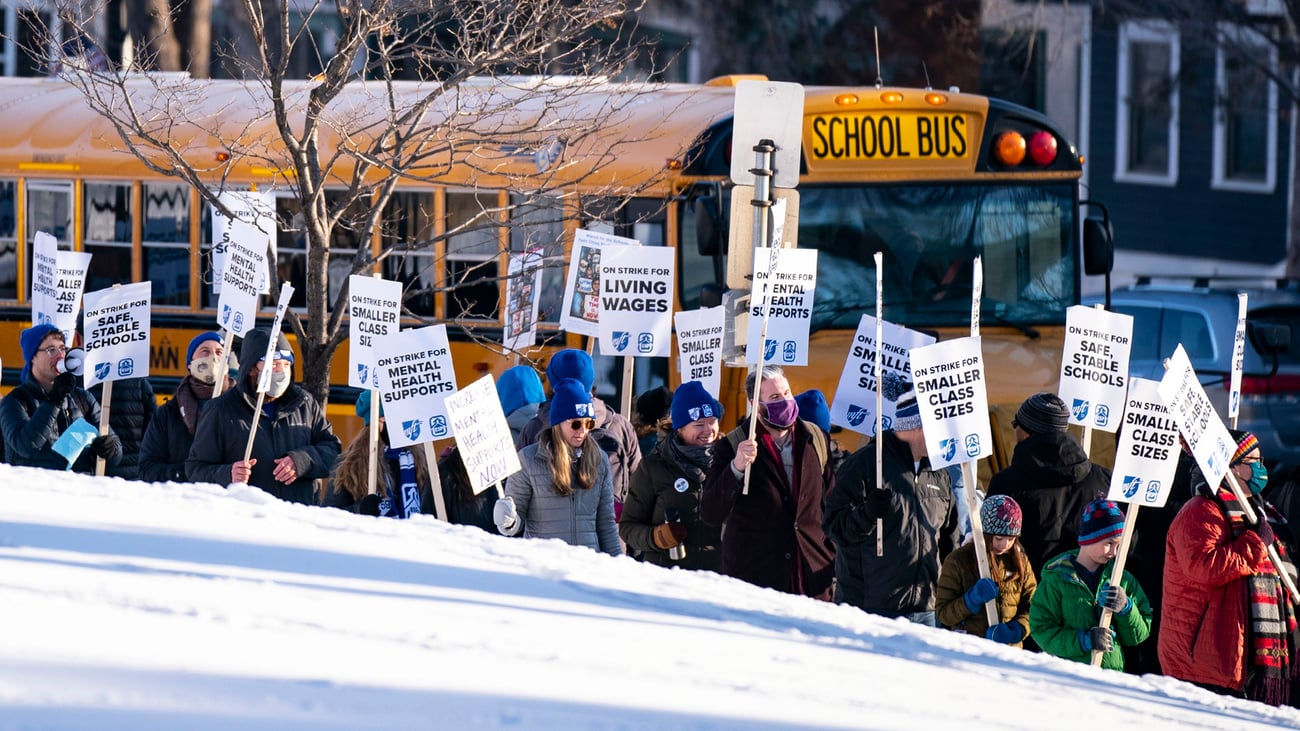
The Minneapolis policy, adopted four years ago following a strike by the Minneapolis Federation of Teachers, mandates the district skip over underrepresented teacher populations during seniority-based layoffs or reassignments. It also requires any reinstatement to prioritize that same population.
In court, Minneapolis Public Schools claimed the policy is intended to ensure the makeup of school district teachers represents the surrounding population, not necessarily to prioritize people of color.
Moreover, the school board, in its argument to dismiss the case, contends the policy has never been used, and not once has a teacher been discriminated against or claimed discrimination — making the case premature.
The Justice Department argues the use of “underrepresented” in the policy is just a way to give discriminatory preferential treatment to teachers of a certain race, color or national origin.
U.S. District Judge Patrick Schiltz seemed to agree as he badgered the school district’s attorney over what effect the policy, at its core, seems to have.
“It looks to me like what it means is we go to the least senior teacher, and if that person’s white, they get excessed [removed], and if that person’s Black, they don’t get excessed,” the George W. Bush appointee said. “What the government is alleging here is basically, if I am a white teacher in the Minneapolis school system, because of this CBA, I have weakened seniority rights compared to non-whites.”
While the school district’s attorney, Timothy Sullivan, emphasized no teacher has claimed their rights were violated by the agreement, Schiltz questioned whether they’d have to — as the government typically has the authority to challenge civil rights violations.
“If white employees got a $50,000 life insurance policy, and Black employees got $100,000, and nobody has died yet as part of this contract, you don’t think there would be standing to challenge this provision until one of the white employees died?” Schiltz asked.
A key dispute emerged over whether the policy can be considered a “pattern or practice,” which is required for the government to pursue the case under its chosen section of the Civil Rights Act.
The Justice Department argues the school’s policy constitutes a pattern because the contract explicitly requires the district to bypass seniority and favor certain races and genders during layoffs, making it a “contractual obligation” to discriminate.
The district, however, claims the policy is a “lawful discrimination” tool allowed under existing Supreme Court precedent to fix historical imbalances. Sullivan noted again the policy has never been applied since its 2022 implementation, so it can’t possibly be a systemic practice.
“The question here is whether the DOJ has the authority to say, just on its face, that the Supreme Court is wrong,” Sullivan said. “There is no pattern or practice because there has been no violation of law.”
Sullivan could not point to a specific, documented example of hiring or layoff discrimination in the school district before 2022 when Schiltz asked to prove historical imbalance.
“It’s one thing for us to sit at a table in a bar and say ‘man, the reason there aren’t any Black teachers in Minneapolis Public Schools is because of discrimination,’ but under the law, you need examples,” Schiltz said, noting the district can’t just say there was discrimination in the past with no evidence.
The government’s decision not to include the Minneapolis Federation of Teachers as a defendant may hold the case up, as the eventual decision could affect the union’s contract rights.
Schiltz noted he may allow, or require, the union to participate, as the government’s attorney could not answer whether the Minneapolis Federation of Teachers can bring its own legal action if the existing case did not go their way.
The government also sought to dismantle a union partnership agreement with Black Men Teach, a nonprofit aimed at increasing the number of Black male teachers — though Minneapolis Public Schools argues that agreement has since expired and has no intention of bringing it back.
Schiltz said it would likely be some time before he rules on the motion to dismiss given the complex nature of the school district’s policy.
Minneapolis Public Schools did not respond to a request for comment.
Subscribe to our free newsletters
Our weekly newsletter Closing Arguments offers the latest about ongoing trials, major litigation and rulings in courthouses around the U.S. and the world, while the monthly Under the Lights dishes the legal dirt from Hollywood, sports, Big Tech and the arts.
Additional Reads
 G7 decries 'economic coercion' in swipe at China May 6, 2026