
 Search Articles


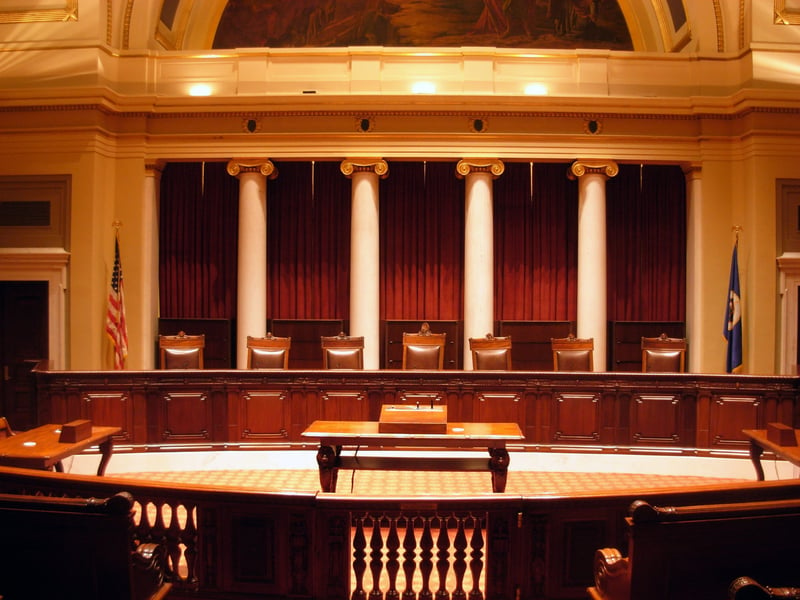
MINNEAPOLIS (CN) — A Minneapolis ordinance making it unlawful for landlords to use a potential tenant’s reliance on a public assistance program as a reason for refusing to rent their properties is unconstitutional, Minneapolis landlords argued to the state Supreme Court Wednesday.
Representing the landlords, attorney Tamara O’Neill Moreland of Larkin Hoffman, said the law violates the takings clause of both the state and U.S. Constitution that holds private property shall not be taken, destroyed or damaged without just compensation.
“The government needs to pay for what they take,” she told the high court. “The clause exists to prevent the government from forcing some people alone to bear public burdens, which, in all fairness and justice should be borne by all of us.”
“This is a fundamental right under our Constitution and the United States Constitution,” Moreland said, later adding that the law places an undue hardship on her clients.
The ordinance passed by the Minneapolis City Council in 2017 makes it a discriminatory practice for landlords to use a potential tenant’s reliance on Section 8 housing vouchers as a reason for refusing to rent to them.
Section 8 housing is a federal voucher program that assists low-income families, the elderly and the disabled to obtain and keep housing. Participants are only required to pay up to 40% of their monthly income for rent and utilities.
Kristen Sarff, attorney for Minneapolis, said Wednesday that the ordinance does have a route for landlords to claim undue hardship and potentially not rent to Section 8 tenants and that it only applies if their enrollment in that program is the only reason for denying them a rental property.
The city had previously won summary judgment from a federal court which ruled that the ordinance on its face was constitutional and did not take the property from the owners, either physically or regulatory.
However, Moreland argued Wednesday that their claim was not a facial challenge and should be narrowed to those injured by the ordinance, namely her clients.
“The city is forcing owners to participate in a voluntary federal program, a program that comes with many strings attached,” Moreland told the court.
However, Moreland’s own brief refers to their claim being a facial challenge, Kristen Sarff, attorney for Minneapolis told the court Wednesday.
Justices had several pointed questions for Moreland, most notably an exchange with Justice Paul Thissen regarding how the court would do a facial review of the law if Moreland is only arguing that the law adversely affects landlords not already participating in taking Section 8 housing tenants.
“How do we know who these people are after this ordinance goes into effect?” Thissen asked Moreland.
“Well, we know who they are because they didn’t participate before,” Moreland replied, later adding that a new landlord would express that they do not want to participate.
“So there’s only people that actually expressly say I don’t want to participate, then that would be within your class,” Thissen asked.
“No, it’s anybody who doesn’t want to participate,” she replied, later adding that the ordinance should be repealed because voluntary participation no longer exists or because the government should have to pay those landlords who do not want to participate.
Sarff said this was the first time that she heard the landlords argue their claim is only applied to a class as opposed to a facial claim.
“It could not be more obvious that this is a facial challenge throughout the seven years worth of litigation,” she said.
This is the second time the case has reached Minnesota’s highest court. Previously, the state Supreme Court confirmed an appeals panel correctly reversed a Minnesota district court judge’s order that granted summary judgment to the landlords under the guise that the ordinance violates their due process and equal protection rights.
The case was sent back to the district courts and the landlords changed their tactic, and claimed that the ordinance takes their property without just compensation and was preempted by the Minnesota Human Rights Act.
The landlords appealed the case to the Supreme Court again after the district court granted summary judgment to Minneapolis.
Subscribe to our free newsletters
Our weekly newsletter Closing Arguments offers the latest about ongoing trials, major litigation and rulings in courthouses around the U.S. and the world, while the monthly Under the Lights dishes the legal dirt from Hollywood, sports, Big Tech and the arts.