
 Search Articles


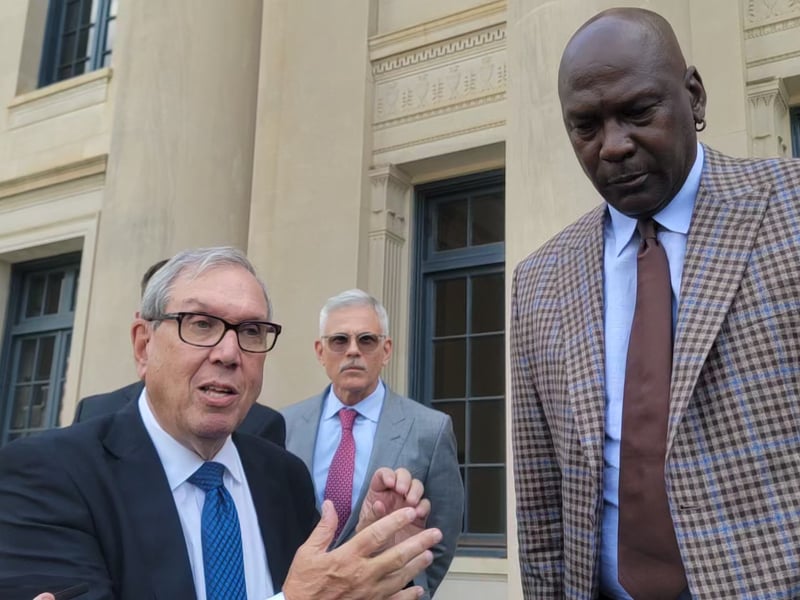
CHARLOTTE, N.C. (CN) — Attorneys traded insults in Charlotte court Thursday as NASCAR and two racing teams fought over charter agreements.
NASCAR has argued that it should be allowed to sell a charter previously contracted to one of the teams suing it, while Front Row Motorsports and 23XI Racing — a team partially owned by basketball legend Michael Jordan — asked the court to enjoin NASCAR from selling or transferring their six Cup Series charter agreements until trial is over.
Jeffrey Kessler, counsel for Front Row Motorsports and 23XI Racing, called NASCAR attorney Christopher Yates a liar while both parties presented fundamentally different interpretations of NASCAR’s cut for chartered teams.
In previously sealed documents made public in court, teams pursuing a new charter agreement initially asked for a cut of $720 million annually, which is a third of NASCAR’s operating profits, Kessler said, but teams that signed the 2025 charter agreement only get an annual payment of $430 million. Costs for each race car are around $20 million before drivers are paid, Kessler said. Both teams previously held three charters each.
“There’s no doubt there’s evidence this was not a good deal,” Kessler said, as U.S. District Court Judge Kenneth Bell warned the parties that “it’s all going to get unsealed.”
The teams want to compete under the charter agreement terms, saying in court documents that they are facing ruin if their six charters are sold. They’ve been competing as open teams, having to qualify for races, since the Fourth Circuit bashed a previous order granting them temporary chartered status.
“People would not be trying to buy these charters if the deal was so bad,” said Yates, who said private equity firms are “beating down NASCAR’s door” trying to get their hands on one.
The 2025 charters increased payments to teams by 62%, he said, and NASCAR now pays a higher percentage of operating costs, an amount that is more than Formula 1 pays its teams. He didn’t name the specific number.
But internal documents and deposition testimony show “irrefutable evidence” of anticompetitive conduct, Kessler said. NASCAR executives knew the teams had no alternative other than to accept the terms that it proposed, he said, and displayed text messages from former NASCAR President Steve Phelps saying the new charters have “zero wins for the teams."
“That was the great deal they were giving to the teams,” Kessler said. “A no-win. That is what the NASCAR exec said.”
NASCAR feared a competitor entering the industry, Kessler said, and entered into exclusivity agreements with Speedway Motorsports to prevent it from hosting competitive events on its tracks. NASCAR also owns the intellectual property for the Gen 7, dubbed the Next Gen Car, which it didn’t for the Gen 6 — a decision, Kessler said, to prevent a copycat racing series using existing car inventory.
NASCAR also planned for the possibility of replacing the teams with NASCAR-owned teams, Kessler said.
“This is part of a common scheme that is not competitive on the merits,” Kessler said.
NASCAR was just trying to make a plan if the teams boycotted, Yates countered.
“This case is really about greed. Greed about a sport that matters little to Mr. [Curtis] Polk and Mr. [Michael] Jordan,” Yates said, pulling up text messages from Polk calling the Cup Series “boring as shit” and “painful to watch.” Racing is just a hobby for the team owners, Yates said, like golf.
“The France family has spent the last 77 years building a sport that allows Mr. [Denny] Hamlin to fly in a private jet,” Yates said. Hamlin is a co-owner of 23XI Racing.
Bell didn’t seem fond of the idea of issuing the requested injunction, urging the parties to come to a settlement. He’d prefer not to make a public statement about the plaintiffs’ likelihood to succeed, he said, as it may impact jury selection.
“When we first started this whole process, I’ve always said that I wanted to fight for the betterment of the whole sport,” Jordan said after the hearing. “Even though they tried throwing out that we made some money, we’ve had a successful business, that’s not the point. The point is that the sport itself needs to continually change for the better. For the fans as well as for the teams.”
NASCAR wants to sell one of the teams’ charters for the 2026 season. Bell asked why the company couldn’t just create another one, but doing so would dilute their value, Yates said.
The teams aren’t facing real harm from not having charters in 2026, NASCAR contended, and not being able to sell any of the agreements would substantially harm it, as existing charter holders and teams racing in other motorsports are asking to buy them. If the fate of the charters is in limbo, it will not be possible for a new team to prepare for the 2026 season, it said.
Front Row and 23XI Racing had secured a preliminary injunction granting them chartered racing status, but NASCAR appealed to the Fourth Circuit, which found that the teams can’t claim NASCAR is behaving anticompetitively while simultaneously seeking better racing terms, striking the injunction down.
Having come full circle, they are once again asking the court to intervene. Bell declined to issue a temporary restraining order in the case, allowing them to continue racing as chartered teams in July, saying the teams had failed to prove they are facing imminent irreparable harm.
The teams decided not to sign new charter agreements in 2024. They were not happy with the terms, they said, and would be able to enter into much more profitable agreements if NASCAR didn’t control the premium stock car racing industry.
In another legal action ongoing between Legacy Motor Club and Rick Ware Race, Legacy secured success earlier in August before a Charlotte judge who prevented Rick Ware from selling the company — or two charters involved in litigation — until trial is over.
Bell said he is trying to give impacted parties as much certainty about the 2026 season as possible and that he plans to issue an order next week. He also warned counsel that he wouldn’t tolerate fighting during trial.
Counsel for NASCAR declined to comment after the hearing.
 Follow @SKHaulenbeek
 Follow @shaulenbeek.bsky.social
Subscribe to our free newsletters
Our weekly newsletter Closing Arguments offers the latest about ongoing trials, major litigation and rulings in courthouses around the U.S. and the world, while the monthly Under the Lights dishes the legal dirt from Hollywood, sports, Big Tech and the arts.