
 Search Articles


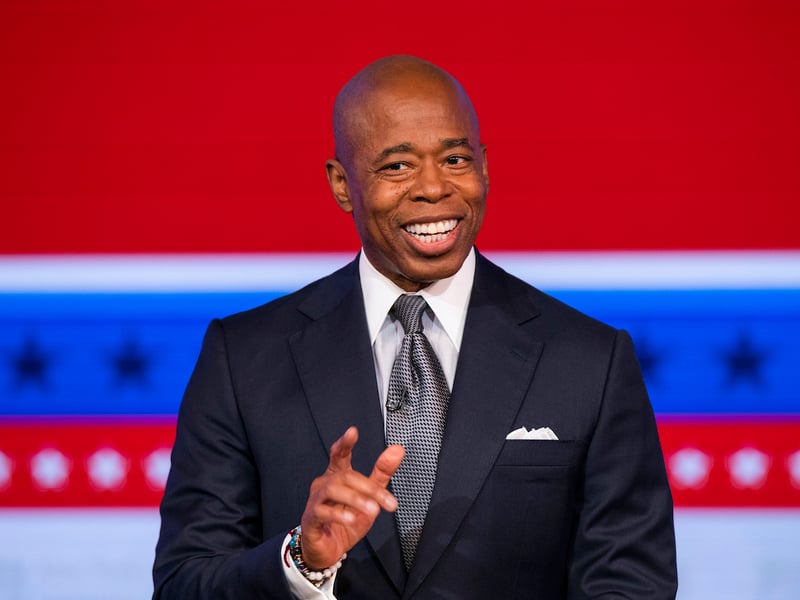
MANHATTAN (CN) — A New York judge on Thursday said he will dismiss a sexual assault case against New York City Mayor Eric Adams if Adams’ accuser misses one more scheduled deposition.
New York Supreme Court Justice Richard Latin partially granted Adams’ motion to dismiss the case, ruling that he’ll do so if Lorna Beach-Mathura fails to appear for a deposition in mid-October.
Adams’ attorneys previously accused Beach-Mathura, who filed a civil suit against Adams last year accusing him of a 1993 sexual assault, of slow-rolling the case. According to court filings, Beach-Mathura has missed four depositions so far — most recently on Sept. 6 after she told the court that she suffered an anxiety attack and a sinus infection before the appearance that required her to seek medical attention.
After that, Adams moved to dismiss the case. He accused Beach-Mathura of engaging in a “months-long pattern” of “willful delay and frustration of the discovery process.”
Later filings from Adams’ camp urged the court not to buy Beach-Mathura’s latest illness as an excuse to delay the case any further.
“Plaintiff seeks to avoid any consequences for her most recent willful failure to abide by a court order, placing blame on defendants and a sinus infection for her failure to appear for deposition,” Adams claimed in a filing from Sept. 24. “But plaintiff’s proffered excuses are neither credible nor legitimate reasons for flouting the court’s order while also failing to provide any advance notice or subsequent explanation.”
Adams added: “The court should not be fooled.”
Beach-Mathura attributed her health issues in part to the “emotional distress she has endured as a result of the attacks on her character” as Adams’ team continues to prod into her personal life and poke holes in her credibility.
“In addition to her physical illness, plaintiff’s suffered continuing anxiety and extreme emotional distress on September 5 about being deposed,” Beach-Mathura claimed in a filing last week.
The judge ruled Thursday that Beach-Mathura is to be deposed in either the New York or Florida office. Beach-Mathura, now a Florida resident, has until Oct. 2 to pick a location.
Neither Megan Goddard, who is representing Beach-Mathura in this action, nor Alex Spiro, who is defending Adams, could be immediately reached for comment on Thursday.
Beach-Mathura accuses Adams of “demanding a quid pro quo sexual favor” in exchange for helping her get a promotion while the pair worked at the now-defunct New York City Transit Police Department in 1993. According to her complaint, Adams offered to drive her home from work one night so they could talk about her prospects. Adams instead took her to an empty parking lot, Beach-Mathura claims, where he “began rubbing his penis through his clothes with his hand” and demanded oral sex from her. When she refused, she claims Adams began to masturbate and ejaculated on her leg.
The mayor has repeatedly denied the accusations.
Beach-Mathura filed her claim under the Adult Survivors Act, a law that gave New Yorkers a yearlong lookback window to file sexual assault claims that otherwise fell outside of the statute of limitations.
Thursday’s order was a small victory in an otherwise catastrophic week for the mayor, who was indicted Wednesday night on charges including conspiracy, bribery, wire fraud and solicitation of campaign contributions by a foreign national. Federal prosecutors are accusing Adams of a long-running conspiracy to take and conceal luxury perks and illegal campaign contributions from a Turkish government official and Turkish businessmen.
The illegal campaign contributions helped net Adams $10 million in matching public funds from a municipal program that matches small-dollar donations from city residents, U.S. Attorney for the Southern District of New York Damian Williams told reporters on Thursday.
Adams denies those allegations, too. He is the first mayor in New York City history to be indicted while in office.
 Follow @Uebey
 Follow @uebey.bsky.social
Subscribe to our free newsletters
Our weekly newsletter Closing Arguments offers the latest about ongoing trials, major litigation and rulings in courthouses around the U.S. and the world, while the monthly Under the Lights dishes the legal dirt from Hollywood, sports, Big Tech and the arts.