
 Search Articles


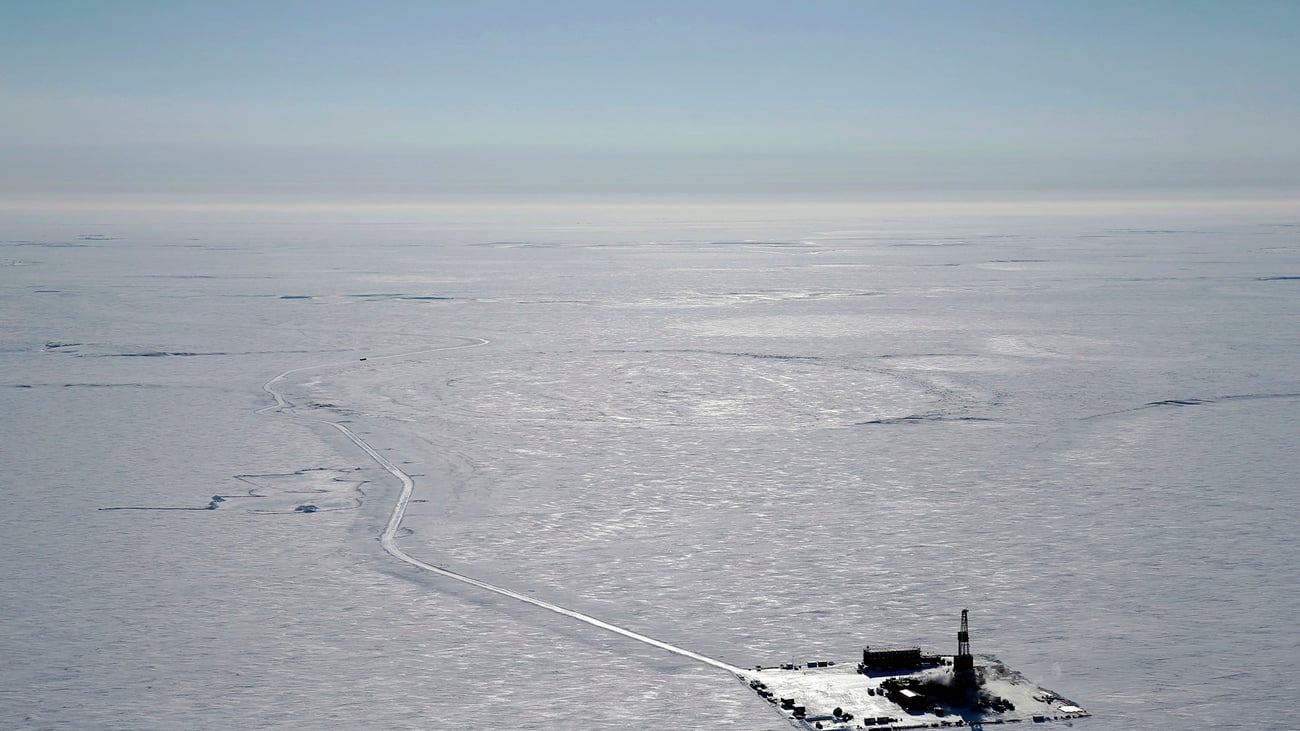
(CN) — A Ninth Circuit panel determined on Wednesday that no federal law requires petroleum well data from an oil and gas company to remain private.
A lower court ruled previously Alaska’s Oil and Gas Conservation Commission couldn’t release data about wells ConocoPhillips Alaska, Inc. wanted shielded because federal law preempts a state statute requiring the disclosure.
But U.S. Circuit Judge Eric Miller, a Donald Trump appointee, writing for the three-judge panel, said no supremacy clause issues exist with the Alaska petroleum reserve.
That clause means federal law trumps state statute when there’s a conflict, but Miller didn’t see any “express” conflict.
“ConocoPhillips argues that the Production Act expressly preempts Alaska law,” Miller said. “That argument gets off to a difficult start because the Production Act does not have a preemption clause.”
The company conceded that point, but argued the act incorporates a preemption clause from another law.
The panel was unconvinced. Miller wrote that the Production Act incorporates certain conditions listed in another law — data-submission requirements — and nothing else.
States have no power to collect data from companies operating on the Outer Continental Shelf, Miller wrote. But Congress included provisions making that information, given to the federal government, available to the states. The federal government can share that data, though states can’t disclose it.
“On the Reserve, by contrast, Alaska has its own authority to gather — and disclose — data collected from oil and gas exploration, authority that it exercised even before Congress opened the Reserve to private exploration,” Miller wrote.
ConocoPhillips leased federal land on the National Petroleum Reserve–Alaska and obtained permits from the state to drill there. Federal law required the company to submit well data to the U.S. Interior Department, while state law required it to send some of that data to the commission.
However, the company claimed handing over that data would reveal trade secrets. It asked the state to shield that data for two years, though the request was denied.
ConocoPhillips also argued “obstacle” preemption, where Congress makes no explicit statement about the preemption of state law but it can still occur if such a law serves as an obstacle to Congress’ intention.
The company argued if the Production Act didn’t expressly preempt state law, Interior Department regulations did. It pointed to a rule — any data determined by the Bureau of Ocean Energy Management’s director as exempt under the Freedom of Information Act can’t be made public without the consent of the lessee, in this case ConocoPhillips.
“The regulation no more preempts state law than does the statute it implements,” Miller wrote.
He added that a federal regulation can’t preempt state law unless it falls under a federal agency’s authority. Also, the agency must have intended to preempt the state law, Miller wrote.
“In any event, section 552.6(b) governs only the Department of the Interior’s handling of information submitted to it,” the judge added. “Nothing in that provision purports to regulate the state’s handling of information that it received independently.”
Additionally, ConocoPhillips argued the Alaska law faced preemption because it is a hurdle in front of the federal Production Act. It also argued state law conflicted with the Production Act by interfering with the federal government, as the state commission could disclose data before federal officials.
Miller wrote that the act states nothing about data confidentiality.
“Alaska’s confidentiality and disclosure laws give the state no control over federal operations, and, as we have explained, the Production Act reveals no purpose that is obstructed by those laws,” Miller added.
Attorneys for either side couldn’t be reached for comment.
The panel was rounded out by U.S. Circuit Judges Jay Bybee, a George W. Bush appointee, and Michelle Friedland, a Barack Obama appointee.
Subscribe to our free newsletters
Our weekly newsletter Closing Arguments offers the latest about ongoing trials, major litigation and rulings in courthouses around the U.S. and the world, while the monthly Under the Lights dishes the legal dirt from Hollywood, sports, Big Tech and the arts.
Additional Reads


 Judge blows final whistle in FIFA bribery case May 27, 2026