Search Articles


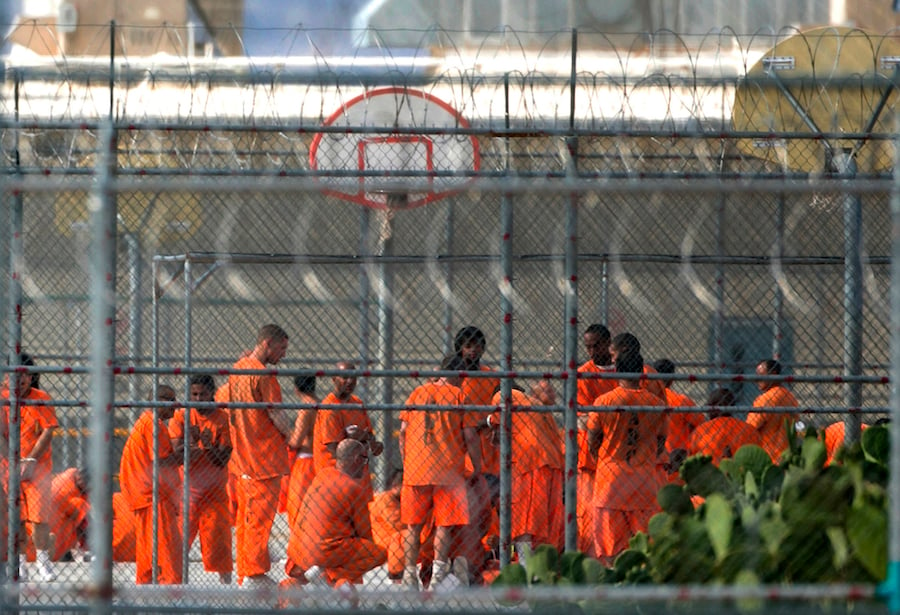
PHOENIX (CN) — A Ninth Circuit panel afforded little patience to Arizona state officials asking it on Monday to remand a federal judge’s order mandating more than 600 new medical staff, among other reforms, at nine state-run prisons.
In a federal courtroom in Phoenix, state attorney Andrew Pappas asked the three-judge panel to order U.S. District Judge Roslyn Silver to “make meaningful findings” in compliance with the Prison Litigation Reform Act of 1996.
“You’re asking us to anticipate in advance that when she makes the findings, she will do so in an insufficient manner,” U.S. Circuit Judge Andrew Hurwitz said to Pappas. “We’re dealing with a district judge who’s served here for 30-something years.
“You’re asking us to say, ‘Because the department thinks you’re stupid, we’re instructing you in advance how to make the findings,’’ Hurwitz added. “I must tell you I’m not inclined to do that.”
In ordering a 2025 staffing study intended to fulfill the obligations of a 2024 permanent injunction against the Arizona Department of Corrections, Rehabilitation and Reentry, the department says Silver, a Bill Clinton appointee, went beyond what the Prison Litigation Reform Act requires be the most narrowly drawn, least intrusive action to achieve the granted relief.
The department says she never reached those findings in her final order and should be required to go back and do so.
“In making those findings, the district court may discover that in fact the relief this orders is not narrowly drawn,” Pappas told the panel.
Hurwitz, a Barack Obama appointee, said Silver clearly found the order in compliance with the Prison Litigation Reform Act, else she wouldn’t have rejected the department’s objections under those very grounds.
Pappas said no legal precedent exists that establishes the rejection of a party’s objection as a finding of statute compliance.
“At a minimum, what the district court must do is explain why the relief in this staffing plan which adds more than 600 new employees to the tune of $100 million and why this very granular approach is the narrowest means of vindicating the rights of the plaintiffs,” Pappas said.
U.S. Circuit Judge Marsha Berzon, a Clinton appointee, grew as frustrated as Hurwitz.
“She’s explained many times why the granular approach is necessary,” she interrupted Pappas. “She’s explained it and she’s explained it and she’s explained it.”
After vacating the settlement of a class action in 2021 because the Department of Corrections failed to follow its terms, Silver found at trial that the department failed to provide adequate medical and mental health care to its prisoners. In addition to requiring better staffing, Silver’s resulting injunction required improvements in several areas, including better medical record documentation, patient confidentiality protections and regular and timely delivery of medications.
In 2024, Silver found the department still hadn’t cleaned up its act and ordered a six-month pilot program in which it needed to fill medical staff vacancies at just two of its nine prisons. She later ordered full compliance with a larger staffing plan in June 2025.
The department complained throughout the process that it doesn’t have the money to follow Silver’s orders. Now it says Silver’s failure to mention the statute in her final order requires it be vacated.
Hurwitz likened the mistake to forgetting to check a box.
“I want to inject a little common sense into this,” he said. “We all know beyond a shadow of a doubt that Judge Silver meant to comply with PLRA because she did so so many times before. If we send this back to Judge Silver, she’ll simply make the findings.”
Once Silver amends her order, Hurwitz said the department could return to the Ninth Circuit to challenge the sufficiency of the findings.
“Once we get to the sufficiency of the findings I think we approach them with the whole history of the litigation in mind knowing how badly your client has acted over 20 years,” he said.
Representing the plaintiff class, American Civil Liberties Union attorney Corene Kendrick requested haste.
“If you do that quickly, that would be great so we can get this show on the road because people are continuing to suffer,” she told the panel.
The panel suggested it would give Silver 30 days if needed to remand.
Kendrick argued that it didn’t.
“Judge Silver is acutely aware of her responsibilities under the PLRA,” Kendrick said.
She said Ninth Circuit precedent set by similar cases allows the panel to affirm the order without it explicitly explaining its compliance with the statute.
“You can certainly tell her to say the 32 magic words," Kendrick said. “Or you can look at cases like Kelly v. Wengler where the Ninth Circuit affirmed an order where [Prison Litigation Reform Act] was not cited or quoted or mentioned at all by the district court in Idaho.”
U.S. Circuit Judge Milan Smith Jr., a George W. Bush appointee, rounded out the panel. It didn’t indicate when it would rule.
 Follow @JournalistJoeAZ
Subscribe to our free newsletters
Our weekly newsletter Closing Arguments offers the latest about ongoing trials, major litigation and rulings in courthouses around the U.S. and the world, while the monthly Under the Lights dishes the legal dirt from Hollywood, sports, Big Tech and the arts.