Search Articles


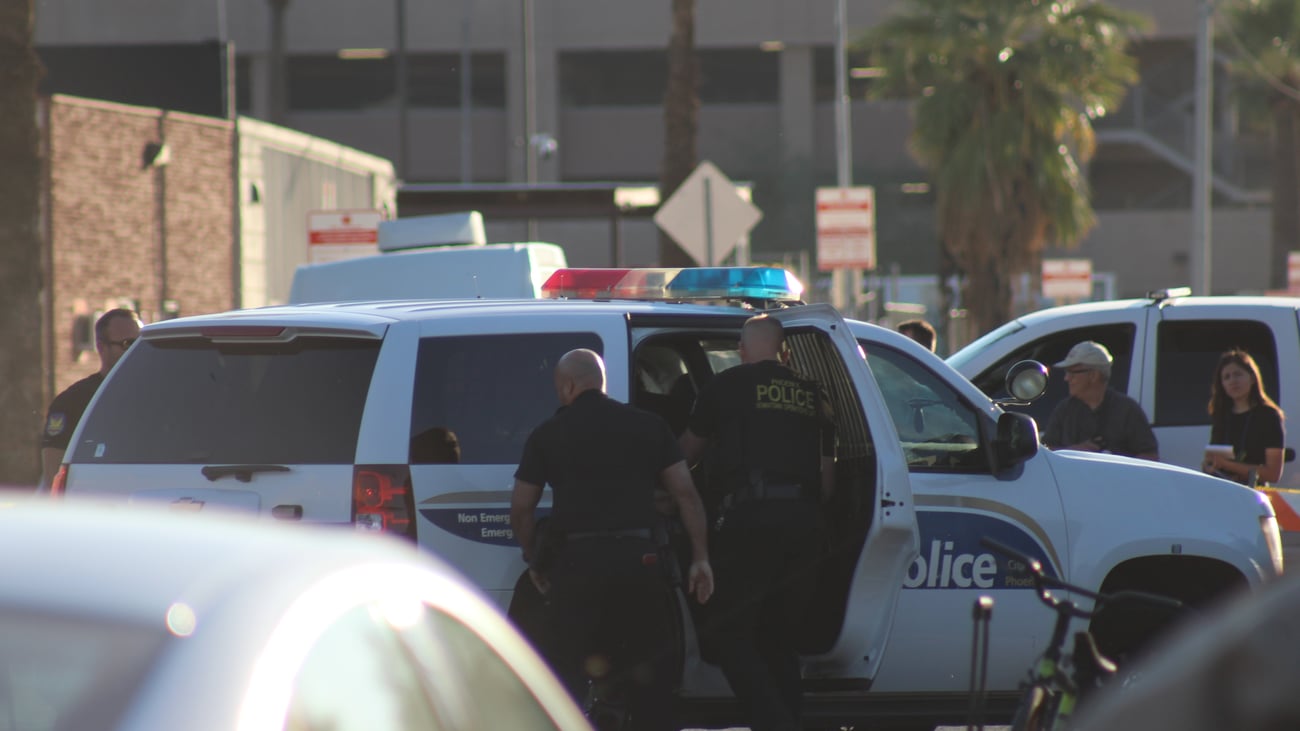
PHOENIX (CN) — Two protesters who say they were wrongfully arrested at a Phoenix protest will get another shot at trying their case thanks to a Ninth Circuit reversal of a previous dismissal order.
Last year, a federal jury acquitted Phoenix Police Lt. Benjamin Moore of First Amendment retaliation for ordering the arrest of Phil Martinez and Jorge Soria. But the trial judge dismissed their Fourth Amendment unlawful arrest and excessive force claims before a jury could review them, citing claim preclusion from a similar action dismissed in state court.
In an unpublished memorandum, a Ninth Circuit panel found that the state court dismissal did not preclude the federal action.
Under Arizona law, claim preclusion requires, among other elements, a “final judgment on the merits.” The plaintiffs’ state law case was dismissed for violating the notice of claim statute, not on the merits of the claims.
“The state court orders here do not comply with Rule 54(c),” the panel wrote in the memorandum posted Monday morning. “The order in Soria’s case cited Rule 54(c), but did not include the requisite language that ‘no further matters remain pending.’ The order in Martinez’s case included language indicating that ‘no further matters remain pending’ but cited Rule 54(b) rather than Rule 54(c).”
“In light of Arizona’s strict approach to Rule 54(c), neither order constitutes a final judgment under Arizona law,” the memorandum reads. “Without a final judgment, claim preclusion cannot apply.”
Soria and Martinez were arrested in June 2019.
Soria participated in the Lights for Liberty protest downtown, waving a Soviet Union Flag that labeled police “child killers.” Martinez, a well-known critic of the department, happened to be riding the light rail and was forced to get off to walk past the protest to the next stop. He cursed at officers as he went by, recording on his phone. Multiple dispersal orders had been issued.
Martinez stood near Soria when police arrested them both for obstruction of a public thoroughfare and unlawful assembly following a dispersal order.
The men say Moore ordered their arrests in retaliation for their constitutionally protected anti-police speech and let others who violated the dispersal order go free. Moore was acquitted in January 2025.
The trial began seven months after the U.S. Department of Justice declared the Phoenix Police Department engaged in patterns of civil rights violations and excessive force. The findings were largely barred from evidence. The DOJ retracted the findings two months after the verdict.
In a February appeal hearing in Phoenix, the city argued that the panel should affirm the dismissal of the Fourth Amendment claims anyway because the arresting officers were entitled to qualified immunity.
“Qualified immunity does not apply here; accepting as true the facts as alleged in the complaint, the officers violated clearly established law by arresting the plaintiffs,” the panel wrote.
Because a judge must accept the complaint as true at the dismissal stage, the panel could not find evidence that the arresting officers had probable cause.
“First, nothing plaintiffs allege about their conduct — speaking with a journalist and walking down a sidewalk — suggest that either of them created an ‘unreasonable inconvenience or hazard’ by ‘recklessly interfer[ing]’ with a public thoroughfare,” the panel wrote. “Second, per the plaintiffs’ account, the Lights for Liberty vigil was a peaceful and lawful assembly, devoid of violence or threats of violence. Based upon the facts alleged, the dispersal order that gave rise to Martinez’s and Soria’s arrests was improperly issued.”
The city argued that the officers who arrested the plaintiffs did so under direct orders from a superior. It says the law doesn’t clearly establish a need for an officer to find probable cause independent of a superior’s order.
“But it has long been clearly established that inferior officers ‘have an ongoing duty to make appropriate inquiries regarding the facts’ and directions received from their superiors,” the panel rebutted.
Though qualified immunity protects officers from liability in most situations, those following arrest orders can be held liable for constitutional violations if those orders are “objectively unreasonable.”
The parties didn’t reply to a request for comment.
 Follow @JournalistJoeAZ
Subscribe to our free newsletters
Our weekly newsletter Closing Arguments offers the latest about ongoing trials, major litigation and rulings in courthouses around the U.S. and the world, while the monthly Under the Lights dishes the legal dirt from Hollywood, sports, Big Tech and the arts.
Additional Reads

 ‘Blah blah blah’ in court record May 26, 2026
 School board president unfairly ousted May 26, 2026