Search Articles


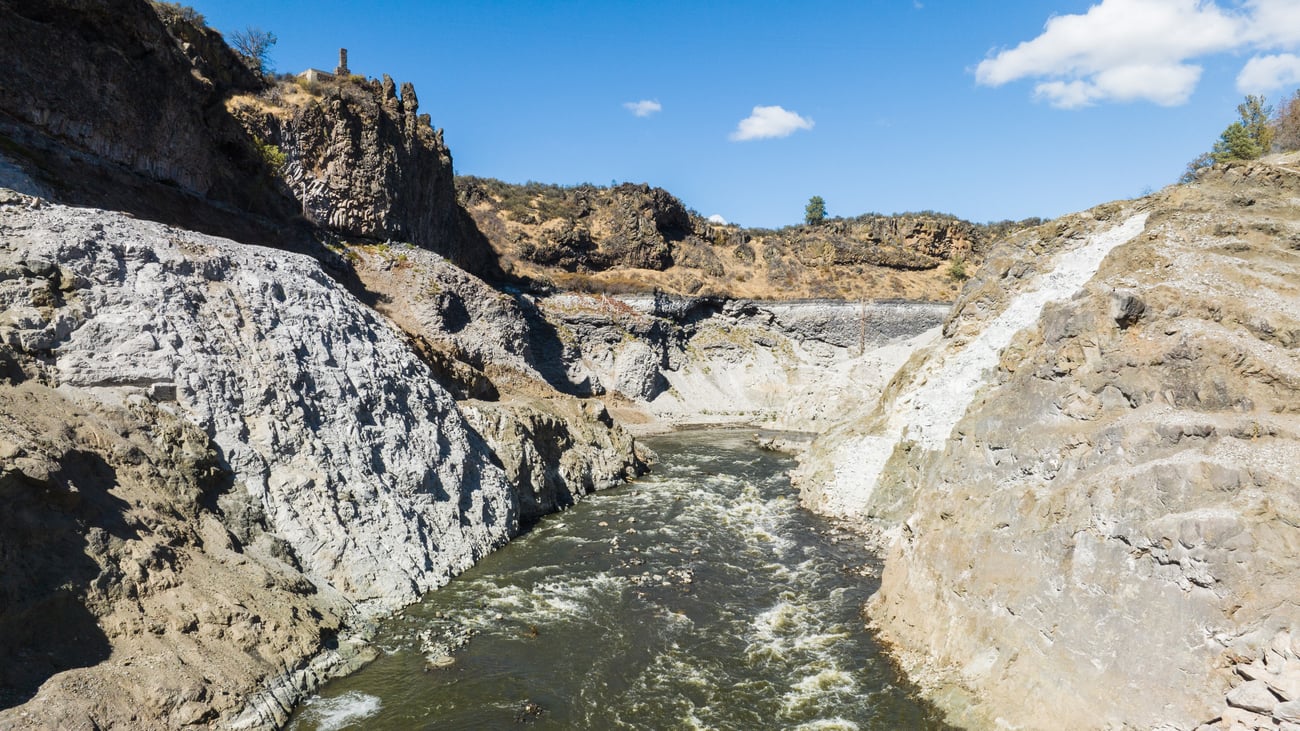
SAN FRANCISCO (CN) — The Ninth Circuit delivered a victory to the Yurok Tribe and fishing advocates on Wednesday, affirming a lower court’s finding that the U.S. Bureau of Reclamation must comply with the Endangered Species Act when operating the Klamath Irrigation Project.
In a 2-1 decision, the appeals panel held the Endangered Species Act applies to the government’s operation of the Klamath Irrigation Project and that the rights of Klamath Project water users are subject to the requirements of the ESA.
“The dissent misconstrues the direct issue on appeal here, which is whether the district court erred by granting declaratory relief on the question whether ‘[the Bureau of] Reclamation’s operation of the Klamath Project, including the exercise of its rights to store water in [Upper Klamath Lake] for irrigation use, is subject to compliance with the ESA.’ Our case law supports that the answer to this question must be ‘yes,’” U.S. Circuit Judge Ronald Gould, a Bill Clinton appointee, wrote for the majority.
The panel largely focused on the applicability of Section 7 of the ESA — which requires federal agencies to ensure that agency action “is not likely to jeopardize the continued existence of any endangered species or threatened species or result in the destruction or adverse modification of habitat of such species” — on the Klamath Irrigation Project, which Gould noted the court has recognized as the “heart of the ESA.”
The judge noted the court previously held in Klamath Water Users Protective Association v. Patterson that the “ESA generally applies to” the Bureau of Reclamation’s water contracts for water management within the Klamath Project, adding the panel “discern[s] no reason to deviate from that holding.”
“After Patterson, we and other Circuits have continued to recognize that the ESA applies to the Bureau of Reclamation’s operation of the Klamath Project, and that the rights of Klamath Project water users are subject to the requirements of the ESA,” he said. “…Thus, Patterson is still good law, and its holding continues to serve as controlling precedent for Klamath Basin litigation.”
The majority also held that a federal judge’s order confirming the government must comply with the ESA when operating the Klamath Irrigation Project was not “judicial taking” of the water rights of the Klamath Irrigation District, as neither court “has adjudicated any water rights,” and that the lower court had jurisdiction to decide ESA’s applicability on the Klamath Irrigation Project.
U.S. Circuit Judge Mary Schroeder, a Jimmy Carter appointee, joined the majority opinion.
Writing for the dissent, U.S. Circuit Judge Ryan Nelson, a Donald Trump appointee, said he agreed with the majority’s finding on judicial taking and jurisdiction but failed to reach a similar conclusion on whether the ESA applies to the Klamath Irrigation Project.
“Under the proper legal analysis, no statutory provision or contract provides agency discretion sufficient to trigger the ESA. Because the majority misreads our precedent, I respectfully dissent,” he said.
In a statement, Kristen Boyles, an attorney for Earthjustice representing the Yurok Tribe, celebrated the ruling.
“The Ninth Circuit today confirmed what has long been settled law — the Endangered Species Act fully protects threatened and endangered salmon in the Klamath River. We hope that the federal agencies and irrigators will now work with the Yurok Tribe and commercial fishing groups to shape a sustainable future in the Klamath Basin,” she said.
However, Nathan Rietmann, an attorney for the Klamath Irrigation District, called the decision “naturally disappointing.”
“The court’s holding that the Endangered Species Act applies to the Klamath Project doesn’t address the central issue we think this case presented: whether the federal government has the authority to meet its ESA obligations by releasing water from storage that Klamath farmers — not Reclamation — own the adjudicated rights to use,” he said, adding, “In our view, Section 8 of the federal Reclamation Act requires Reclamation to comply with state water law, which means it has no discretion to use water contrary to state law to satisfy the ESA.
Elizabeth Nielsen, executive director of the Klamath Water Users Association, also expressed disappointment over the court’s decision, saying the ruling “affects family farmers and ranchers who rely on the Klamath Project for irrigation water.”
“We are still reviewing the decision and evaluating our options carefully, including whether to seek further judicial review,” she said.
A representative for the Department of Justice did not immediately respond to a request for comment.
Managed by the Bureau of Reclamation, the Klamath Irrigation Project supplies water to over 225,000 acres of farmland and two wildlife refuges in the Klamath Basin along the Oregon-California border. The project, however, decimated the local Chinook and Coho salmon population, which the Yurok tribe relies on to survive.
In 2023, U.S. District Judge William Orrick, a Barack Obama appointee, ruled that the federal government must follow its own laws, such as the Endangered Species Act, and is not obligated to comply with an order from the Oregon Water Resources Department to stop releasing water from the Upper Klamath Lake, which is the source of the Klamath River.
Shortly after, the OWRD order was withdrawn. In March 2024, the government asked the appeals court to pause the case for 90 days to allow the new presidential administration to update its position on the operation of the Klamath Irrigation Project.
Last month, the government moved to dismiss the appeal for lack of jurisdiction and asked for a stay to allow the lower court to consider a motion for voluntary dismissal. Appellants Klamath Irrigation District and the Klamath Water Users Association also moved to dismiss.
However, the panel denied the dismissal motions, finding that ruling on whether the ESA applies to the Klamath Irrigation Project would provide “meaningful relief” for the parties.
 Follow @mhattridge_
Subscribe to our free newsletters
Our weekly newsletter Closing Arguments offers the latest about ongoing trials, major litigation and rulings in courthouses around the U.S. and the world, while the monthly Under the Lights dishes the legal dirt from Hollywood, sports, Big Tech and the arts.
Additional Reads
 Finnish Parliament backs lifting ban on nuclear weapons June 17, 2026
 UK imposes rules targeting Google search fairness June 17, 2026