Search Articles


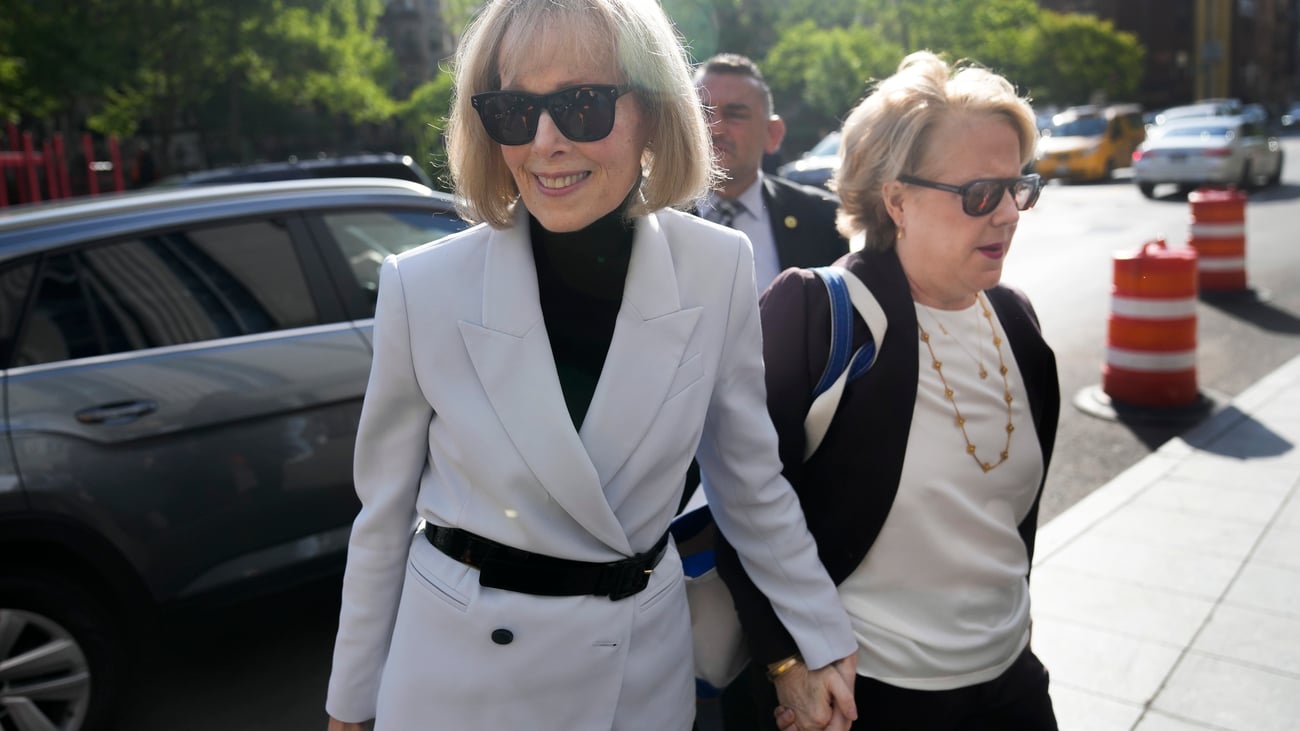
MANHATTAN (CN) — The Second Circuit on Wednesday denied President Donald Trump’s petitions for en banc review of his defeated claims of presidential immunity in the civil rape and defamation case won by writer E. Jean Carroll.
“The fact of the matter is that no other defendant would be permitted to move to substitute the United States in his place, 15 months after trial and the entry of judgment against him,” U.S. Circuit Judge Denny Chin wrote for the majority. “The court appropriately declined to convene en bancto revisit this issue.”
The majority concluded the court had correctly held that presidential immunity is waivable and that had Trump indeed waived it in the Carroll case.
“If any other litigant had failed to raise an affirmative defense in this way, there would be no question as to whether he waived his right to assert it,” Chin, a Barack Obama appointee, wrote.
Trump-appointed U.S. Circuit Judge Steven Menashi penned a dissent in support of granting both of Trump’s petitions for en banc rehearing, “because both decisions were erroneous.”
Menashi said the majority’s affirmation of the rejection of Trump’s motion to substitute the United States as the defendant under the Westfall Act, after the attorney general certified Trump “was acting within the scope of his office or employment at the time of the incident out of which the claim arose,” creates a circuit split given the D.C. Circuit’s decision in Wasserman v. Rodacker.
The dissenting judges also said Trump had not waived presidential immunity against Carroll’s civil claims.
“President Trump consistently raised the defense of presidential immunity throughout this litigation,” Menashi wrote in the dissent. “He did so in his initial answer to the complaint a motion for summary judgment, a motion to amend the answer to raise presidential immunity more specifically if necessary, an answer to the amended complaint, and his appeal.”
Menashi was joined in the dissent by fellow Trump appointee U.S. Circuit Judge Michael Park, and in part by U.S. Circuit Chief Judge Debra Ann Livingston, a George W. Bush appointee.
A concurring opinion was joined by U.S. Circuit Judges Sarah A. L. Merriam, Maria Araújo Kahn, Beth Robinson; and Myrna Pérez, all of whom are Joe Biden appointees.
U.S. Circuit Judge Alison J. Nathan, also a Joe Biden appointee, took no part in the consideration or decision of the petitions.
Trump had attempted to convince the Second Circuit to overturn the award jurors granted Carroll in the second of her two trial wins based on presidential immunity, an argument that has failed to carry water since Trump raised it in pretrial proceedings and in a Second Circuit ruling in September 2025.
Trump’s defense subsequently petitioned the Second Circuit for en banc rehearings of two decisions: the court’s rejection the motion of the United States to substitute the United States as the defendant, and the ruling affirming the judgment awarding Carroll $83.3 million in compensatory and punitive damages and denying the Trump’s motion for a new trial or judgment as a matter of law.
Carroll first went to trial against Trump in 2023, claiming he defamed her in 2019 by denying he’d ever met the longtime advice columnist after she published a book recounting Trump had raped her in the mid-1990s in a dressing room at the famed Fifth Avenue department store Bergdorf Goodman.
Jurors awarded her $2 million in compensatory damages after finding Trump liable for rape, plus $20,000 in punitive damages.
On the defamation count, Trump was ordered to pay $1.7 million in damages for a reputation repair program plus $1 million in other damages.
In June 2025, a Second Circuit panel affirmed the verdict in Carroll’s first trial and struck down Trump’s petitions for en banc rehearing on his bid for a reversal and retrial against Carroll’s claims.
The verdict in Carroll’s second defamation lawsuit carried a much heftier price tag for Trump: the New York City jury awarded Carroll $83.3 million in January 2024 — $65 million in punitive damages and $18.3 million compensatory damages.
Carroll’s attorney Roberta Kaplan applauded the ruling in a statement issued Wednesday afternoon. “E. Jean Carroll is eager for this case, originally filed in 2019, to be over so that she can finally obtain justice,” Kaplan wrote.
Trump vehemently denies sexually assaulting Carroll or having ever met her.
A documentary about Carroll’s life, titled “Ask E. Jean” is scheduled to premiere in select theaters on May 22.
 Follow @jruss_jruss
Subscribe to our free newsletters
Our weekly newsletter Closing Arguments offers the latest about ongoing trials, major litigation and rulings in courthouses around the U.S. and the world, while the monthly Under the Lights dishes the legal dirt from Hollywood, sports, Big Tech and the arts.
Additional Reads
 A year in, Merz stuck in crisis as debt, far right surge April 29, 2026