
 Search Articles


STOCKHOLM (AP) — Three scientists on Wednesday were awarded the Nobel Prize in Chemistry for their contributions to the development of lithium-ion batteries, which have reshaped energy storage and transformed cars, mobile phones and many other devices in an increasingly portable and electronic world.
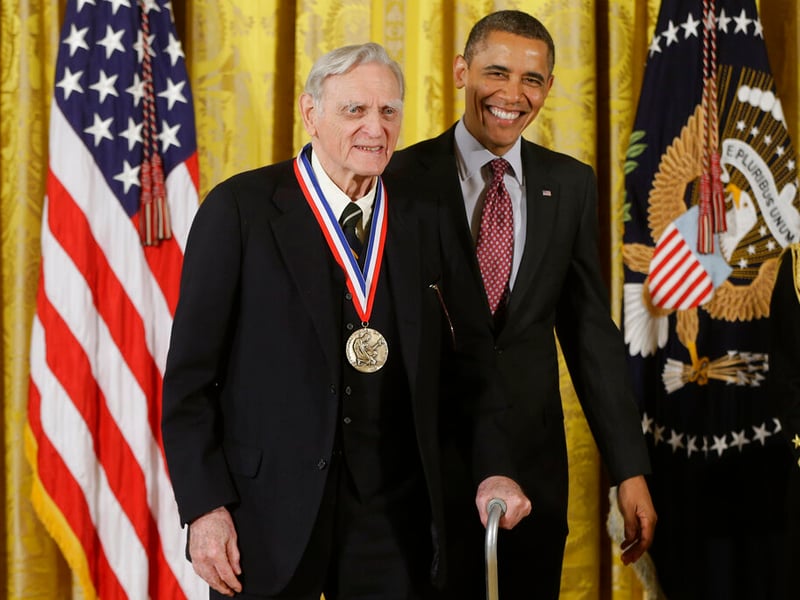
The prize went to John B. Goodenough of the University of Texas; M. Stanley Whittingham of the State University of New York at Binghamton; and Akira Yoshino of Asahi Kasei Corporation and Meijo University in Japan.
Goran Hansson, secretary general of the Royal Swedish Academy of Sciences, said the prize was about “a rechargeable world.”
In a statement, the committee said lithium-ion batteries “have revolutionized our lives,” and that the laureates “laid the foundation of a wireless, fossil fuel-free society.”
The Nobel committee said the lithium-ion battery has its roots in the oil crisis in the 1970s, when Whittingham was working to develop methods aimed at leading to fossil fuel-free energy technologies.
The prizes come with a 9 million kronor ($918,000) cash award, a gold medal and a diploma that are conferred on Dec. 10 — the anniversary of Alfred Nobel’s death in 1896 — in Stockholm and in Oslo, Norway.
On Tuesday, Canadian-born James Peebles won the Physics Prize for his theoretical discoveries in cosmology together with Swiss scientists Michel Mayor and Didier Queloz, who were honored for finding an exoplanet — a planet outside our solar system — that orbits a solar-type star.
Americans William G. Kaelin Jr. and Gregg L. Semenza and Britain’s Peter J. Ratcliffe won the Nobel Prize for advances in physiology or medicine on Monday. They were cited for their discoveries of “how cells sense and adapt to oxygen availability.”
Two literature laureates are to be announced Thursday, because last year’s award was suspended after a scandal rocked the Swedish Academy. The coveted Nobel Peace Prize is Friday and the economics award on Monday.
Subscribe to our free newsletters
Our weekly newsletter Closing Arguments offers the latest about ongoing trials, major litigation and rulings in courthouses around the U.S. and the world, while the monthly Under the Lights dishes the legal dirt from Hollywood, sports, Big Tech and the arts.