
 Search Articles


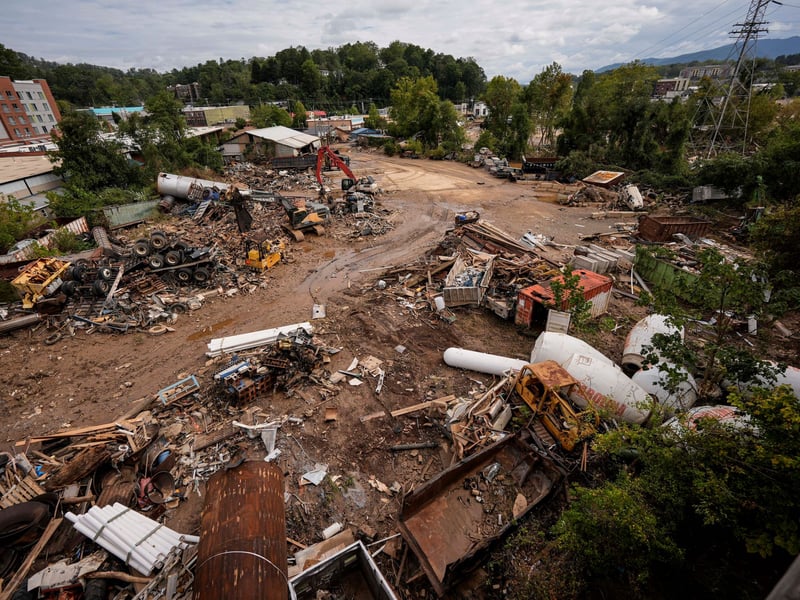
RALEIGH, N.C. (CN) — North Carolina is pushing to ensure voting access in counties hit by Hurricane Helene, just over two weeks before early voting begins.
Still missing answers from weather stricken counties, Karen Brinson Bell, executive director of the State Board of Elections, said Tuesday that mailed absentee ballots lost in the mail will not impact the integrity of the election, and that the state has enough time to get the counties back on their feet.
“We will still be entering in voter history and comparing that to ballots cast, just like we do with every election. And it’s not going to stop how we do elections just because there’s been a hurricane,” said Bell. “We might have to do it a little differently, but we’re going to proceed, and we’re going to deliver this election. And the people of North Carolina and western North Carolina can have faith in these processes that have been long established to deliver the results accurately, safely and securely.”
Representatives for the elections board did not know how many absentee ballots have been lost or damaged in the mail during the weather, or how many voting sites will be usable, but say that there has been no damage to voting equipment in any of the counties.
Bell assured reporters Tuesday that ballots lost or damaged in the mail due to the storm are not a security risk, and that the state tracks the ballots and can render them void.
Voters who request absentee ballots can track their ballot online, and if that ballot is lost or damaged, can spoil it and request a new one. They also have the option of voting in person. If a voter no longer has ID to vote with, they can cast a provisional ballot with an ID exception form.
Dr. Michael Bitzer, an election expert at Catawba College, told Courthouse News in an interview that absentee mail-in voting will likely take the biggest hit, because the post office is also facing delivery challenges as emergency response teams work to restore roads.
There should be no election integrity concerns around lost absentee ballots, Bitzer added, because each ballot is recorded and has a barcode associated with it.
“There is always a record,” he said.
Rural voter turnout in the storm damaged areas may take a small dip, Bitzer said, if county boards of elections work to make voting convenient. On Tuesday, just days after the storm swept the state, the focus is still on humanitarian efforts while the devastated counties attempt to get back on their feet.
“The issues are monumental,” said Bitzer, “in terms of locations of early voting sites that may not exist anymore, polling sites on election day that may have been flooded by 20 feet of water, poll workers that have lost everything that may not be able to work at the polls. We are still very early in this process.”
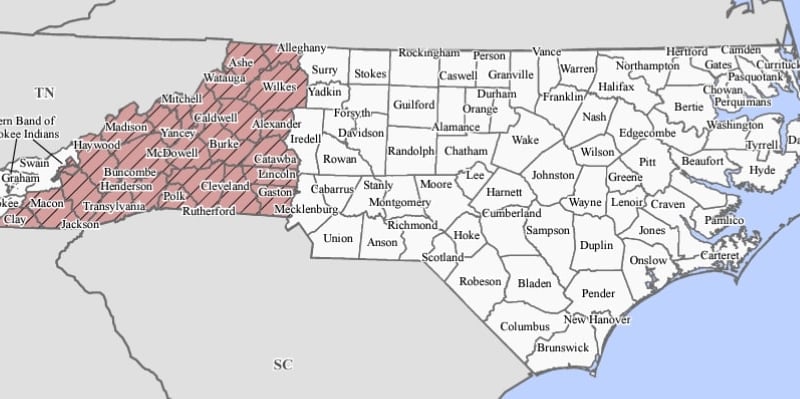
Nearly 1.3 million North Carolina voters were within the storm’s path, and 25 of the state’s 100 counties have been designated disaster areas.
Nearly 500,000 voters in the rural mountainous areas are Republicans, with another half million voters registered as unaffiliated, and almost 300,000 registered Democrats. The city of Asheville alone, within the heavily-hit Buncombe County, has over 200,000 voters.
Former President Donald Trump slightly leads in polls conducted of the swing state before the storm. A Quinnipiac University Poll has Trump polling 49% to Vice President Harris’ 47%, in what is anticipated to be a very close presidential election in North Carolina, while independent candidates fall to the wayside.
In the 2020 election, former President Donald Trump won over President Joe Biden in the state by 74,000 votes, far less than the number of voters currently living in storm-damaged areas.
In North Carolina, early voting begins on October 17, and election officials say they are working to have voting sites up and running before the voters go to the polls.
The state has already dispatched an emergency kit equivalent to an ‘election office in a box’ to one county board of elections and has had requests from four others. Fourteen county boards of elections are still closed, and the status of one other is still unknown.
Absentee ballot mailing began late in North Carolina after courts ruled to remove erstwhile candidate Robert F. Kennedy Jr. from the ballots, forcing the state to update over 2,300 different ballot styles and reprint over 2.9 million ballots.
The state missed its mailing deadline because of Kennedy’s suit and only recently sent out ballots, narrowly making the federal Sept. 21 deadline. Local absentee ballots only began mailing on Sept. 24.
The state is also quickly approaching its Oct. 11 voter registration deadline. Most North Carolinians vote during the early voting period, said Bell, and so the state is pushing to ensure voters will be able to cast their ballots. Polling places may be consolidated if there are not enough facilities, and early voting facilities used, or tents set up in dry parking lots.
Once all of the counties reopen, local boards of elections may also be dealing with a backlog of voter registration requests.
“We know how to conduct an election. We are continuing with those processes,” said Bell. “The only thing we have to do is determine how we deliver those secure processes to the voters who have been affected and whether we will have to alter course in any way because of the storm, but altering course means making sure that they are able to cast their ballot. The security around that ballot has not changed.”
The board of elections is still collecting data to determine how to proceed, and may ask the General Assembly for additional funding, or a change to state law to accept absentee ballots delivered after election day. Bell said they are still waiting to hear from USPS how many ballots are undeliverable and in distribution centers.
On Monday, the board voted unanimously to allow affected county boards to delay required weekly absentee ballot review meetings.
 Follow @SKHaulenbeek
 Follow @shaulenbeek.bsky.social
Subscribe to our free newsletters
Our weekly newsletter Closing Arguments offers the latest about ongoing trials, major litigation and rulings in courthouses around the U.S. and the world, while the monthly Under the Lights dishes the legal dirt from Hollywood, sports, Big Tech and the arts.