
 Search Articles


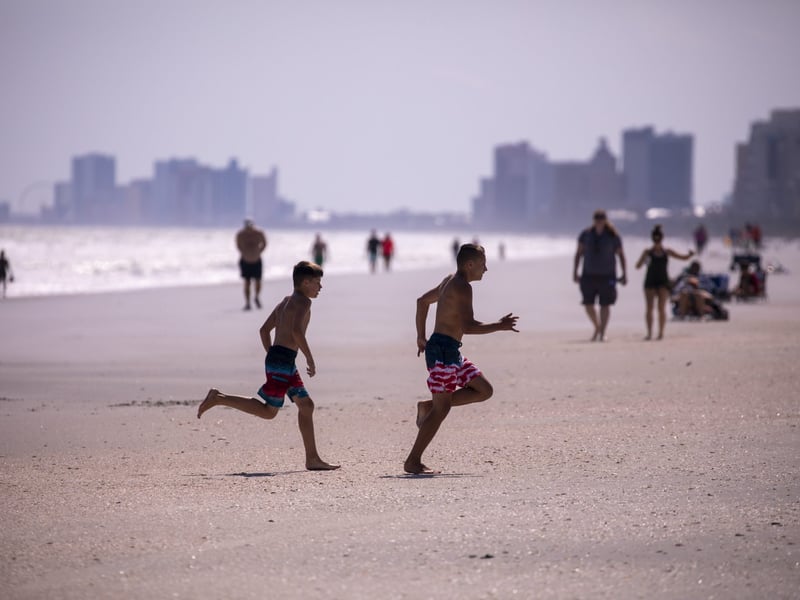
(CN) — A beach gear rental company accused a South Carolina city of shady practices in arguments Wednesday before the Fourth Circuit Court of Appeals.
Cherry Grove Beach Gear claims the city of North Myrtle Beach is violating federal antitrust laws by banning companies from renting beach chairs and sun umbrellas on nine miles of public beach, leaving the city as the sole provider of gear.
“It’s an anticompetitive, profit-motivated scheme by the city,” said attorney Kenneth Moss for Wright, Worley, Pope, Ekster & Moss of North Myrtle Beach.
The city argues the ordinance ensures chairs and umbrellas rented to beachgoers are safe while helping to pay for dozens of certified lifeguards. Renting equipment on the beach is prohibited, but businesses can still solicit customers door-to-door or on the nearby streets.
“Running a rental business out of your garage is not as easy as staffing the beach with a hundred lifeguards and training them properly,” said city attorney Elbert Dorn of Maynard Nexsen in Myrtle Beach.
City officials warned Cherry Grove Beach Gear against offering customers on-beach delivery of rented beach equipment for months before it passed an ordinance in June 2022 clarifying its prohibition on the practice.
The business challenged the ordinance in federal court, arguing the city violated the Sherman Antitrust Act by monopolizing the beach gear rentals market, among other claims.
U.S. District Judge Joseph Dawson III, a Donald Trump appointee, determined in December 2022 that the city was immune from liability on the antitrust claim. Citing Parker v. Brown , the district judge ruled that South Carolina’s laws granted municipalities the right to regulate industries on public beaches.
Cherry Grove Beach Gear argues on appeal that North Myrtle Beach was not acting solely as a regulator of the beach gear rentals but as an active participant in the market, and therefore, the district judge should not have granted the city state-action immunity from claims.
U.S. Circuit Judge Roger Gregory, a Bill Clinton appointee, questioned Wednesday why it mattered whether the city used money from its beach gear rental business to fund lifeguards. Barring businesses from renting equipment was anticompetitive, regardless of how the money was spent.
Dorn said the two issues were intertwined in state law. South Carolina empowers coastal communities to grant a company providing lifeguard services the exclusive right to perform on-beach rentals of chairs and umbrellas. Since the city provides lifeguard services in North Myrtle Beach, it can also grant itself the exclusive right to rent beach equipment to fund its public safety work.
Dorn pointed to the Fourth Circuit’s decision in Western Star Hospital Authority Inc. v. City of Richmond , wherein the appellate court ruled the city could lawfully ban an EMS transport business that competed with public services.
Moss argued this case differed from the Western Star case because Virginia statutes clearly articulated the ways municipalities could curb competition for EMS services. Nothing in South Carolina’s statute grants municipalities the right to engage in antimonopolistic conduct.
U.S. Chief Circuit Judge Albert Diaz, a Barack Obama appointee, observed that North Myrtle Beach’s rental equipment ordinance served a public safety purpose — protecting beachgoers from unsafe umbrellas. Municipalities have broad authority to regulate matters related to public safety, so did it matter if the money was spent on lifeguards?
“I suppose, in theory, you could just completely bar them from engaging in [sales] at all because the city could say this is just too much of a safety issue,” Diaz said.
U.S. Circuit Judge DeAndrea Gist Benjamin, a Joe Biden appointee, rounded out the panel.
 Follow @SteveGarrisonPC
Subscribe to our free newsletters
Our weekly newsletter Closing Arguments offers the latest about ongoing trials, major litigation and rulings in courthouses around the U.S. and the world, while the monthly Under the Lights dishes the legal dirt from Hollywood, sports, Big Tech and the arts.