
 Search Articles



(CN) — Think it’s embarrassing to get caught watching porn? Try getting sued for it. It’s a sticky situation faced by thousands of Americans each year, thanks in large part to Strike 3 Holdings LLC, an adult film company that’s changing how courts handle copyright infringement.
Since 2017, Strike 3 has filed more than 17,000 lawsuits against people it accuses of illegally downloading its X-rated movies, including 4,059 suits just last year. Critics say the company pressures defendants to the negotiating table, including by threatening to expose their names in legal documents if they don’t settle. One federal judge has likened its practices to extortion.
Strike 3 is the parent company of internet porn brands like Blacked, Blacked Raw, Tushy, Vixen, Deeper and Slayed.
Known collectively as Vixen Media Group, these brands are famous for their high-end premium and paid content, featuring Hollywood-sized budgets and critically acclaimed directors. The network draws in more than 30 million visitors every month.
In the legal world, Strike 3 is famous for other reasons.
“Strike 3 is also a copyright troll,” U.S. District Judge Royce Lamberth ruled in 2018. “Its feigned desire for legal process masks what it really seeks: for the court to oversee a high-tech shakedown.”
Strike 3 did not respond to multiple requests for comment from Courthouse News, including calls and emails to the company, its subsidiaries and its in-house counsel.
The unflattering term “copyright troll” describes companies that critics say turn threats of copyright litigation into profit. Filing massive numbers of lawsuits, these companies often threaten individual internet users with enormous and unpredictable copyright damages.
In 2015, cases from these lawsuit-prone entities comprised 58% of all federal copyright cases, according to one study. It’s a similar dynamic to what’s happened in patent law, where so-called patent trolls also regularly test the limits of their patent claims in court.
“The copyright troll’s success rate comes not from the Copyright Act, but from the law of large numbers,” wrote Lamberth, a Ronald Reagan appointee.
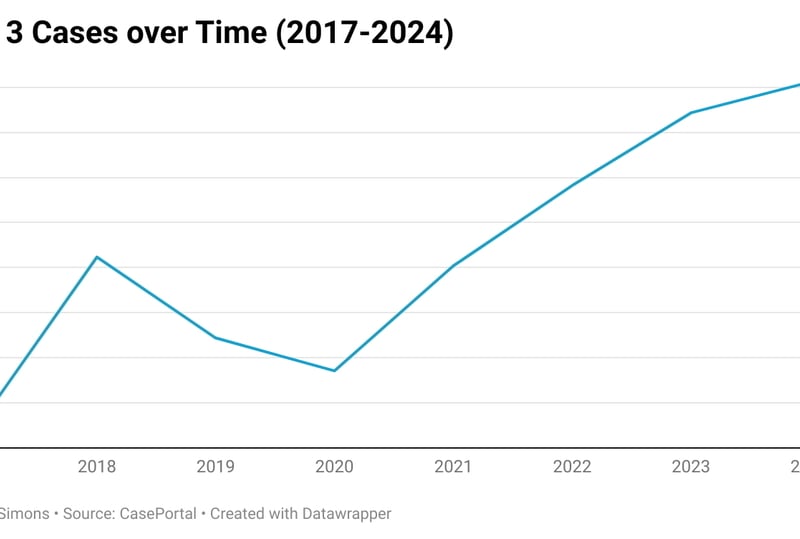
Strike 3 filed 4,059 cases last year — but it’s unclear if a single one went to trial.
Many get voluntarily dismissed, fueling speculation that the company’s lawsuits are more about profit than fighting piracy.
Some lawyers estimate that Strike 3 generates between $15 to $20 million from its lawsuits each year. Typical settlements reportedly range from four to five figures. The company has never confirmed that number and has stayed tight-lipped about its legal practices.
Strike 3’s copyright lawsuits often follow a script. Using software, the company identifies an IP address it claims was used to download its content. Strike 3 then files a lawsuit against the John Doe user associated with that address.
With a suit filed, Strike 3 can ask a judge to subpoena internet providers like Comcast and AT&T for customer names and addresses. Such requests are justified under theDigital Millennium Copyright Act. From there, the company can send intimidating letters to internet users, threatening damages of up to $150,000.
If internet users don’t settle, the company can name-and-shame them as porno thieves in publicly available court documents. That’s where the cases get into dubious ethical territory, according to legal experts like Lamberth.
“Once the ISP outs the subscriber … any future Google search of their name will turn up associations with the websites Vixen, Blacked, Tushy and Blacked Raw ,” the judge wrote in his 2018 decision. “The first two are awkward enough, but the latter two cater to even more singular tastes.”
Critics say this is far removed from the goals of the Constitution’s intellectual property clause.
“This issue about abusive IP enforcement is a serious one, and it’s one most people don’t like to talk about,” said Eric Goldman, a professor at the Santa Clara University School of Law.
Goldman is one of many legal scholars who take issue with Strike 3’s approach, which he says isn’t about good-faith copyright enforcement. The company is aiming for profits he said — and experts have questioned the company’s methods for identifying infringers.
The fear is that even innocent people could be scared into settling. After all, porn is taboo.
It’s an invisible issue, Goldman said: Embarrassing John Doe cases are filed under seal, then settled out of court.
Strike 3 is “using the legal system to sue innocent defendants,” he said. “In my opinion, their error rate is too high.”
Strike 3 has its defenders. Justin Hughes, a legal professor at Loyola Marymount University, questions whether it’s fair to call the company a troll just because “they have potentially weak evidentiary cases when they send the [demand] letters.”
“No one has enough evidence to go to trial when they send a demand letter,” Hughes said. “That’s the point of discovery.”
It’s a murky legal issue. Since most so-called copyright trolling complies with formal legal rules, there isn’t necessarily much legal basis to curb the practice. Still, Goldman notes, some lawyers have beendisbarred for copyright trolling.
Experts expect the lawsuits will continue. The number of Strike 3 cases has only risen in recent years. Internet users should take heed: If a porno company sends a legal letter, you just might get screwed.
Subscribe to our free newsletters
Our weekly newsletter Closing Arguments offers the latest about ongoing trials, major litigation and rulings in courthouses around the U.S. and the world, while the monthly Under the Lights dishes the legal dirt from Hollywood, sports, Big Tech and the arts.