Search Articles


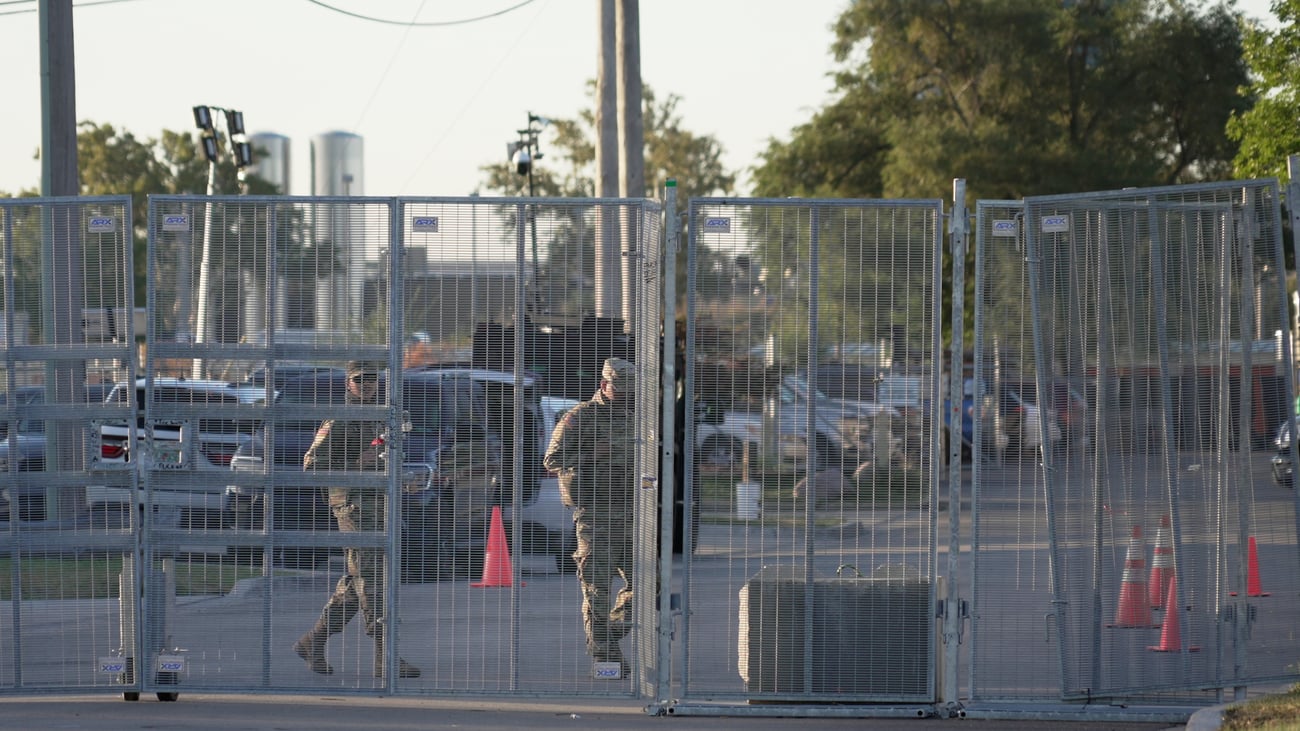
CHICAGO (CN) — After a heavily followed case against a group of anti-ICE protesters fell apart due to prosecutorial misconduct, experts say public trust in federal attorneys’ ability to secure charges moving forward may be compromised.
Just a week before the “Broadview Six” protesters were set to go on trial, U.S. District Judge April Perry learned prosecutors had improper contact with the grand jury that indicted them, and then redacted it from the transcripts.
“I have read hundreds, if not thousands, of grand jury transcripts involving prosecutors who are the most junior of prosecutors to several U.S. Attorneys who appeared before the grand jury," the Joe Biden appointee said then, according to a transcript of the closed-door May 21 proceedings. “I have never seen the types of prosecutorial behavior before a grand jury that I saw in those transcripts.”
Grand juries were created as a check on the executive branch, and to ensure criminal prosecutions are being brought forth in an apolitical and unbiased manner. Grand jury proceedings always happen behind closed doors, in part to protect both the jurors and the witnesses.
“The reason why we want to have this independent check on the executive branch in terms of the cases that are charged, is because when someone is facing a federal criminal charge, it’s a really serious thing,” Sharon Fairley, a former federal prosecutor and current law school professor at the University of Chicago, said. “There’s a lot of consequences that can happen from being charged with a federal offense.”
But the secrecy of grand juries, while intended to protect jurors and witnesses alike, has perhaps turned the proceedings into more of a bulwark for prosecutorial immunity than a check on executive power.
Ric Simmons, a law professor at The Ohio State University, said the secrecy “makes it easier, in theory, for prosecutors to act unethically or improperly in the grand jury that has never to my mind — and I’ve studied this for decades — never been a problem before, because DOJ attorneys have had sort of the most impeccable standards and a reputation for being honest and having integrity when they do this kind of work.”
Broadview Six
The group of protesters known as the Broadview Six faced federal charges after they blocked an Immigration and Customs Enforcement vehicle — reportedly damaging the agent’s car by etching the word “pig” onto it — outside of the Broadview immigration processing center, west of Chicago.
The case was mired in controversy from the outset, as the defendants maintained the charges were nothing more than an attempt from the Trump administration to silence loud dissenters.
All of the charges were eventually dropped against two of the so-called Broadview Six, leaving the remaining four defendants on the hook for felony conspiracy charges. But those charges were also dropped, which defense attorneys claimed was a ruse so prosecutors wouldn’t have to show U.S. District Judge April Perry unredacted grand jury transcripts.
The four remaining members of the Broadview Six were set to go on trial for misdemeanor charges on May 26, until those charges were also dismissed the week before trial after Perry discovered the grand jury issues.
Andrew Boutros, Chicago’s top federal prosecutor, told Perry he heard about the misconduct weeks ago, but maintained no one from his office ever intended to mislead her.
The day after the case fell apart, he also announced a series of sweeping reforms to internal grand jury practices and disclosures, though he didn’t specify what those reforms would look like.
Since the start of Trump’s crackdown on federal immigration enforcement in Chicago, more than 30 people have been charged with crimes not related to immigration. In most cases, defendants were charged with assaulting federal agents or interfering with their ability to effectuate their duties. Few of these cases ever saw a trial, and a majority of these charges have since been absolved.
Amidst all the pushback, Boutros released a rare special report reiterating that he has not appeared before a grand jury in any role but an advisory one.
In the report, he also released excerpts of his contact with grand jury members throughout the Broadview Six case. At one point, he asked outright if there anyone who “cannot set aside their personal feelings on any case, immigration or otherwise, child exploitation, immigration, whatever it is. Anyone who thinks they can’t do it, please raise your hand.”
Robert Weisberg, a professor at Stanford University’s law school, highlighted how unlike in a regular trial, lawyers cannot use preemptory challenges, so Boutros’ line of questioning was outrageous.
“It’s none of his damn business,” Weisberg told Courthouse News. “You know, in a regular trial, of course, the prosecution and the defense and the judge are all allowed, to some extent, to question potential jurors, trial jurors, to help determine who is going to sit on the jury, so there were challenges for cause and peremptory challenges. There’s not such thing in a grand jury, especially if it’s done solely by the prosecutor.”
Prosecutorial powers
Defense attorneys wrote in a motion filed Tuesday prosecutors’ misconduct “shocks the conscience.” The defense is looking to recoup attorneys’ fees and indicated they’d pursue prosecutorial sanctions.
“This wide-ranging misconduct, both outside of and before the court, cast serious doubts on the government’s prior representations, including the lack of any outside influence and direction from Washington D.C. in bringing these charges, which raises concerns beyond the problematic presentation of the case to the grand jury and subsequent cover-up,” they wrote in the motion.
Experts couldn’t say for certain how courts could check prosecutorial power.
Weisberg mentioned the grand jury rules of New York as a good model, in part because the evidentiary rules follow the state’s criminal evidence rules, unlike in other federal grand juries. Others agreed, and hoped the chaos from the collapse of the Broadview Six case can result in some meaningful reform.
“My dream is this would lead to some kind of reform of grand juries so that we actually can do more to make them more robust. I just don’t know if there’s ever going to be appetite for that,” Simmons said.
“When I did write about this, I was working in New York City at the time, and New York state has very different rules for grand juries and so they have much more robust protection for grand juries,” he added. “Their indictment rate is lower something more like 90%, which I know is high, but that means that they’re at least taking critical look at this. So there are changes you can make to the grand jury rules, Congress would have to make them, to give them more, to give them that power back.”
Illinois Senators Dick Durbin and Tammy Duckworth have said Boutros should leave his post at the U.S. Attorneys Office. They joined Democratic Senate nominee Julianna Stratton and 9th Congressional district nominee Daniel Biss, who called for Boutros’ resignation soon after the Broadview Six case was dismissed.
 Follow @RosenCaitlyn
Subscribe to our free newsletters
Our weekly newsletter Closing Arguments offers the latest about ongoing trials, major litigation and rulings in courthouses around the U.S. and the world, while the monthly Under the Lights dishes the legal dirt from Hollywood, sports, Big Tech and the arts.