Search Articles


WOODLAND, Calif. (CN) — Carlos Reales Dominguez, acquitted last year on first-degree murder charges, returned to court Thursday for the start of his second trial.
A new jury, selected over the past several days, heard details of the 2023 slayings already known by many. Prosecutors accuse Dominguez, 23, of fatally stabbing David Breaux, 50, and Karim Abou Najm, 20, and of the attempted murder of a formerly unhoused woman.
Jurors in his first trial acquitted Dominguez on first-degree murder charges, meaning he can’t face a retrial on them. However, that jury couldn’t reach verdicts on second-degree murder and attempted murder charges, setting the stage for another trial.
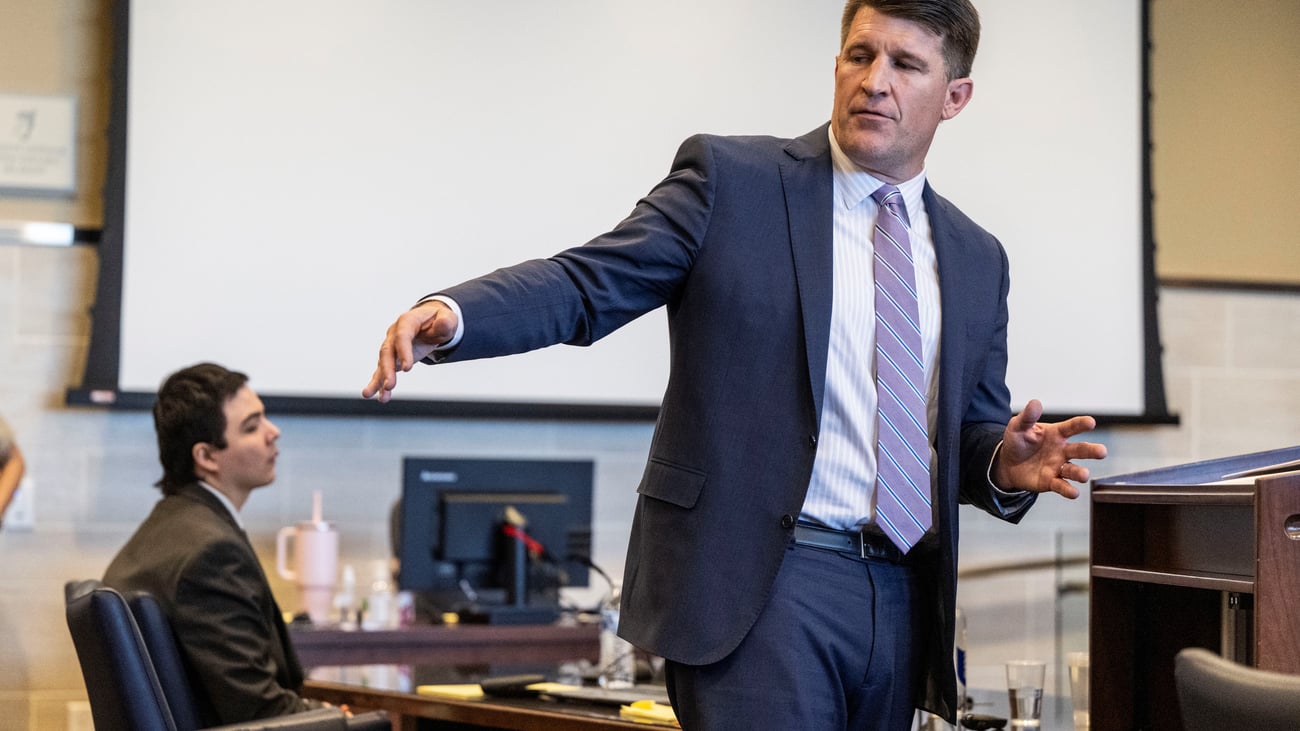
“All of this death, this despair, this destruction was due to one individual,” Deputy District Attorney Matt De Moura told jurors Thursday.
Dominguez has pleaded not guilty.
Prosecutors opted for a different theory for this trial. Last year, they challenged Dominguez’s claims that a diagnosis of schizophrenia and seeing “shadow shapeshifters” led him to kill people. They instead argued the slayings were sparked by Dominguez being scorned by his girlfriend and expelled from college.
On Thursday, De Moura pointed to what he called Dominguez’s heavy cannabis use. His behavior changed when he began smoking marijuana. The prosecutor said jurors would hear that cannabis can interact with a young, developing mind.
De Moura called it cannabis-induced psychosis — use of the drug revealed Dominguez’s dormant illness.
“Heavy cannabis use can result in that person becoming psychotic,” he said, adding: “Basically, it can push someone over the edge, in other words.”
Dominguez exhibited no signs of schizophrenia until he began using cannabis, De Moura said. He argued Dominguez made goal-directed actions. He fled from the site of Najm’s stabbing and from the unhoused woman’s tent. He also used a false name when speaking to police the day of his arrest.
“Purposeful, directed, goal-oriented behavior,” the prosecutor said.
Representing Dominguez, Deputy Public Defender Dan Hutchinson told jurors that they wouldn’t need to determine who fatally stabbed the victims and tried to kill the woman.
“What was Carlos Reales Dominguez’s specific intent and mental state when he did these physical acts?” Hutchinson said jurors needed to consider.
It’s unknown the precise cause of schizophrenia, though Hutchinson said genetics plays a large role and severe stress in childhood can increase that risk.
Hutchinson told jurors his client, born in El Salvador, watched both his parents leave the country at an early age. Then, around 6 years old, human smugglers tried to bring him to the United States, where he was kept at an immigration center until he was released to an uncle and later his parents in California.
Dominguez’s degradation reportedly happened over his first year at UC Davis. His friends and girlfriend saw an athletic and meticulously hygienic young man change into one who was thin, failed to shower regularly and suffered hallucinations and delusions, Hutchinson said.
Dominguez tried to attend classes but couldn’t complete the work. One professor grew concerned at his behavior, nothing he wrote a name other than his own on a quiz, his attorney said.
“But nobody from UC Davis followed up on that report,” Hutchinson said. “Nobody did anything.”
His client was experiencing psychosis, the defense attorney said. At his arrest, he said, Dominguez didn’t believe he’d stabbed or killed anyone.
Additionally, three medical professionals have diagnosed Dominguez with schizophrenia, determined he was in a state of psychosis and experiencing hallucinations. Only one professional, who Hutchinson said didn’t interview his client, has advanced the theory of cannabis-induced psychosis.
That theory, Hutchinson added, was created by the Yolo County District Attorney’s Office last autumn.
“Cannabis use was the product of his mental illness,” Hutchinson said. “It was not the cause of it.”
The trial is expected to take several weeks.
Subscribe to our free newsletters
Our weekly newsletter Closing Arguments offers the latest about ongoing trials, major litigation and rulings in courthouses around the U.S. and the world, while the monthly Under the Lights dishes the legal dirt from Hollywood, sports, Big Tech and the arts.