
 Search Articles


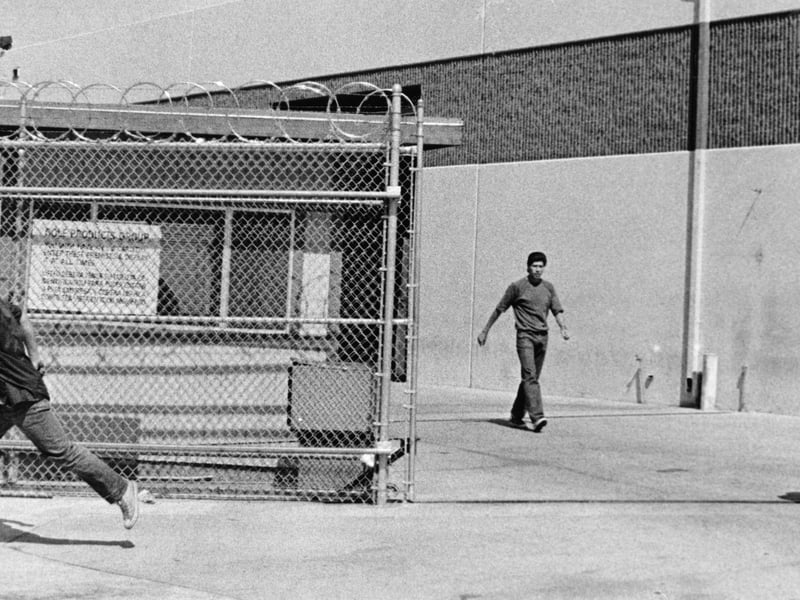
LOS ANGELES (CN) — The federal immigration agents seemed to be everywhere in the city, prowling the streets in vans and bursting into businesses.
Known by the slang term “La Migra,” they racially profiled Latinos, rounding people up en masse regardless of their immigration status.
It was the 1980s — not 2025 — and these fearsome authorities worked not for U.S. Immigration and Customs Enforcement but for its predecessor, the U.S. Immigration and Naturalization Service or INS.
For working-class Latinos in Los Angeles in the 1980s, INS agents were a part of everyday life, just as ICE is becoming under the second Donald Trump administration.
“They were notorious,” Democratic State Senator and longtime labor leader Maria Elena Durazo told me in 2013.
After showing up in their trademark green vans, INS agents “would walk into the factory where there were immigrants, and they would just say, ‘We’re here,’” she said. They would “literally run through the factory and round people up."
As President Donald Trump seeks to carry out his pledge of mass deportations, he’s zeroed in on Los Angeles.
In the country’s second-largest city, immigrant enforcement is once again in the spotlight.
A Democratic stronghold with a strong immigrant and Latino presence, Trump has called the city “under siege” and a “trash heap.”
Masked ICE agents have stormed L.A. streets, causing massive protests and making many afraid to leave their homes. And these tactics gained new legal legitimacy this week, after the Supreme Court ruled 6-3 that ICE can legally target people based on factors like their job and whether they speak Spanish.
Talk to those who remember the raids of the 1980s, and the resemblances to today are uncanny.
Back in the 1980s, civil-rights lawyer Mark Rosenbaum represented plaintiffs suing the federal government over the INS raids. Now working for the pro bono law firm Public Counsel, he’s one of many lawyers representing immigrants in a federal class action over these immigration sweeps.
“INS agents would literally stand on street corners and confront anybody who had a Latino appearance,” Rosenbaum said. “It was not unlike what they’re doing here.”
“It was racial profiling,” he added: “Detain first, and then interrogate without any reasonable suspicion. It’s the trademark of ICE, and it was the trademark of its predecessor, INS."
The federal government gained control of immigration enforcement in the late 19th century. Since then, the U.S. has deported more than 60 million people, says Adam Goodman, a professor at the University of Illinois Chicago and author of “The Deportation Machine.”
“Because the United States has welcomed tens of millions people into the country throughout the last two and a half centuries, it’s also had to decide who’s allowed to enter and who’s allowed to remain,” Goodman said in an interview. As a result, he says immigration in the United States has long been “inextricably connected and intertwined” with deportation.
In 1954, under so-called Operation Wetback, President Dwight Eisenhower deported 1.1 million people, including U.S. citizens — a precursor to today’s mass-deportation policies.
It wasn’t just Republican presidents who played tough on immigration. A year after the seasonal-worker Bracero Program ended, President Lyndon Johnson signed the Immigration and Nationality Act of 1965 in a ceremony at the base of the Statue of Liberty.
The law ended a controversial, racialized immigrant quota system but also capped legal immigration from Mexico for the first time ever. In his book, Goodman calls this moment “the dawn of the age of mass expulsion.” For the rest of the 20th century, the U.S. would deport around 900,000 people every year.
The 1970s were characterized by economic woes and fears of overpopulation, as seen in the 1969 book “The Population Bomb” by Stanford University professor Paul Ehrlich.
That general sense of malaise further fueled anti-immigrant sentiment, including in California. At the time, nearly half of all undocumented immigrants lived in the Golden State, making Southern California ground zero for INS sweeps.
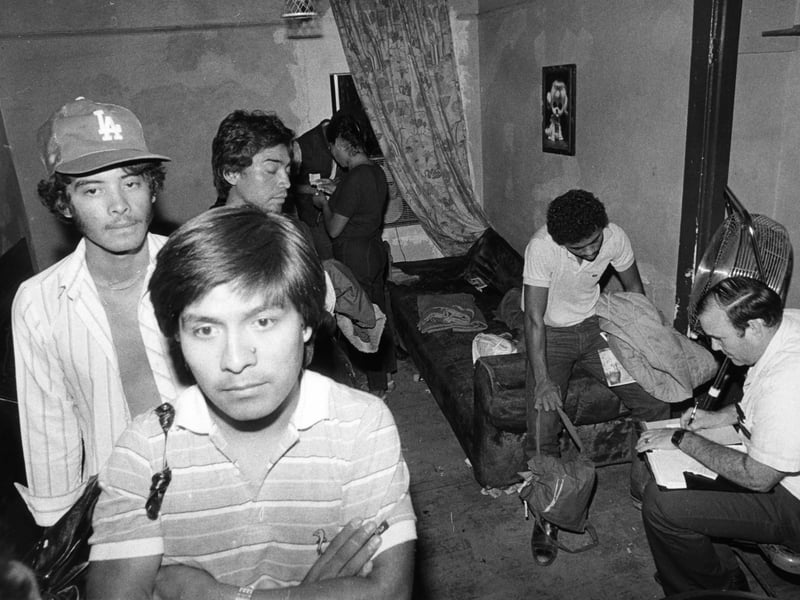
INS orchestrated dramatic raids, with armed agents blocking entrances and exits. According to Goodman, employers would sometimes “call the Immigration Service right before payday, to essentially deport people before they got paid and get free labor."
“These were indiscriminate mass raids that were well planned out,” he said. “Immigration officials would descend on factories in the San Gabriel Valley early in the morning and round up everyone who was working there, regardless of whether they had citizenship or not.”
Like today, even Latinos who held U.S. citizenship could feel as though they were being unfairly discriminated against.
“It didn’t matter if you were a kid. It didn’t matter if you were an adult,” Rosenbaum said. “It didn’t matter what your legal status was. If you had brown skin, that was evidence of illegal presence in the country.”
Also like today, the militarized immigration raids led to a pervasive sense of unease. Goodman recalls meeting a Latino man who carried around a hidden $20 bill. That way, if he got deported to Tijuana, he could at least call his family and get something to eat. Others became afraid to leave the house. They stopped going to stores, the movies, even church. In 1986, roughly 1.6 million people were deported from the U.S., the most of any year in history.
There was one big difference between then and now, though. The U.S.-Mexico border was far more porous in the 1980s, with only a smattering of fences and barriers.
That made deportation an inconvenience, maybe even a costly one — but not necessarily a life-changing event. Goodman said, “Some people were apprehended and deported maybe 10 times in a single year.”
The so-called revolving door at the border was satirized in the 1978 stoner comedy “Up in Smoke.”
In one memorable scene, Cheech Marin and Tommy Chong are alarmed to see the police. Then, Cheech realizes: “Oh man, it’s just La Migra.”
Cheech explains that his family had called INS on themselves, so that they could get a free ride back to Mexico to attend a family wedding in Tijuana.
“They come down with a big ol’ bus, they take the whole wedding party down,” Cheech gushes. “Plus, they even get fed lunch, man!”

These days, it’s much harder to get across the border undetected. There are roughly 648 miles of physical barriers along the border, plus technology like blimps, drones and heat-sensing cameras.
Since 1994, a so-called “Prevention Through Deterrence” strategy at U.S. Border Patrol has funneled migrants away from population centers and into rugged and far-flung areas, often deserts. The strategy has made the border much harder to cross, but critics say it’s also led to a surge in migrant deaths and been a boon to human smugglers.
Fast forward to 2025, and Trump has made anti-immigrant politics central to his brand. Back in office for a second term, he’s made ICE the highest-funded federal law-enforcement agency, with an annual budget of around $28 billion.
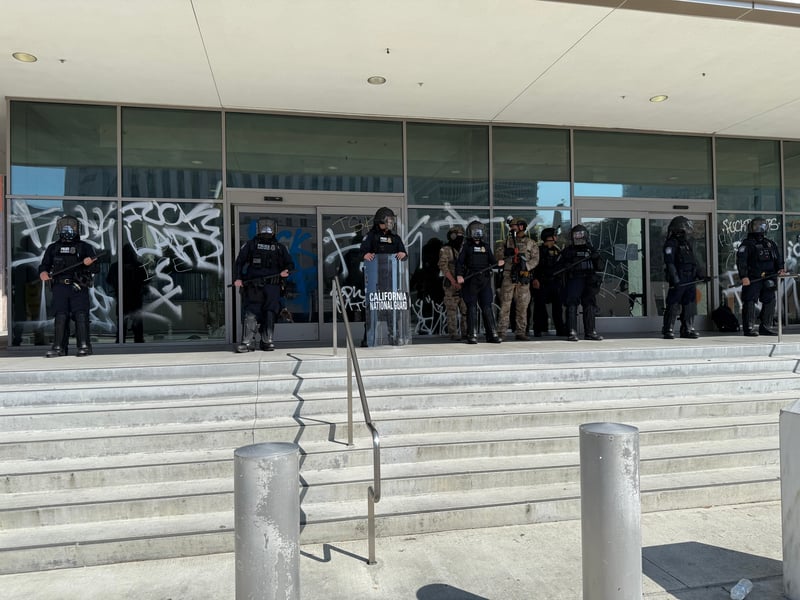
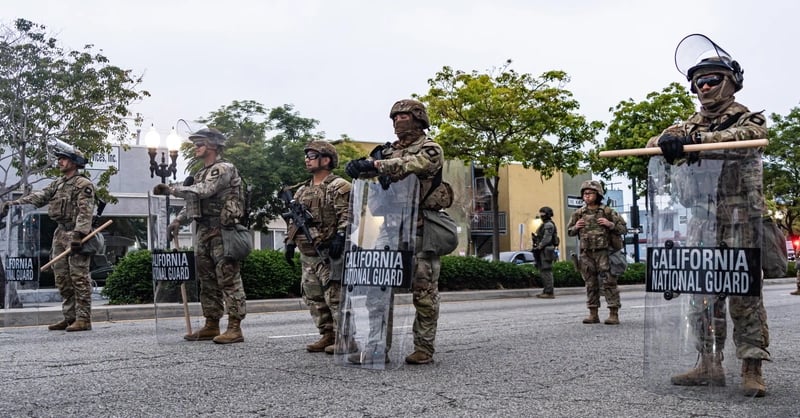
ICE now has more than 21,000 employees spread out all over the country. Amid a massive hiring push, that number will only grow. As for the raids themselves, they’re more militarized than ever, with ICE agents donning face masks and army-style vests as they coordinate with National Guard or even Marines.
“It is literally a military operation,” Rosenbaum said.
In Los Angeles and beyond, what makes the current moment different from the 1980s is the Trump administration’s disregard for normal immigration processes and procedures.
Trump has tested the limits of his immigration powers, most notoriously by deporting people to the CECOT megaprison in El Salvador. And for many in Los Angeles, recent ICE operations feel less about public safety than about raw political force.
In Vasquez Perdomo v. Noem , the case Rosenbaum is working, lawyers argued federal agents were unfairly targeting people based on factors like their employment. A federal judge on July 10 issued a temporary restraining order, blocking the Trump administration from detaining Angelenos without probable cause.
Even with a court order, the Trump administration showed little sign of backing down. Secretary of Homeland Security Kristi Noem called the judge “an idiot.”
“We have all the right in the world to go out on the streets and to uphold the law,” Noem said. “None of our operations are going to change."
The strong-armed approach gained new legitimacy this week, as the Supreme Court overturned the restraining order along ideological lines.
Justice Sonia Sotomayor dissented, writing: “We should not have to live in a country where the government can seize anyone who looks Latino, speaks Spanish, and appears to work a low wage job."
It’s an opinion that would not have sounded out of place 40 years ago, during similar immigration raids in Los Angeles. Such is the push-pull of immigration policy in the United States. If the U.S. is a nation of immigrants, as then-Senator John F. Kennedy wrote in 1958, it’s also a nation of expulsion. And Exhibit A just might be Southern California, a region shaped by both immigrants and backlash against them.
 Follow @hillelaron
Subscribe to our free newsletters
Our weekly newsletter Closing Arguments offers the latest about ongoing trials, major litigation and rulings in courthouses around the U.S. and the world, while the monthly Under the Lights dishes the legal dirt from Hollywood, sports, Big Tech and the arts.