
 Search Articles


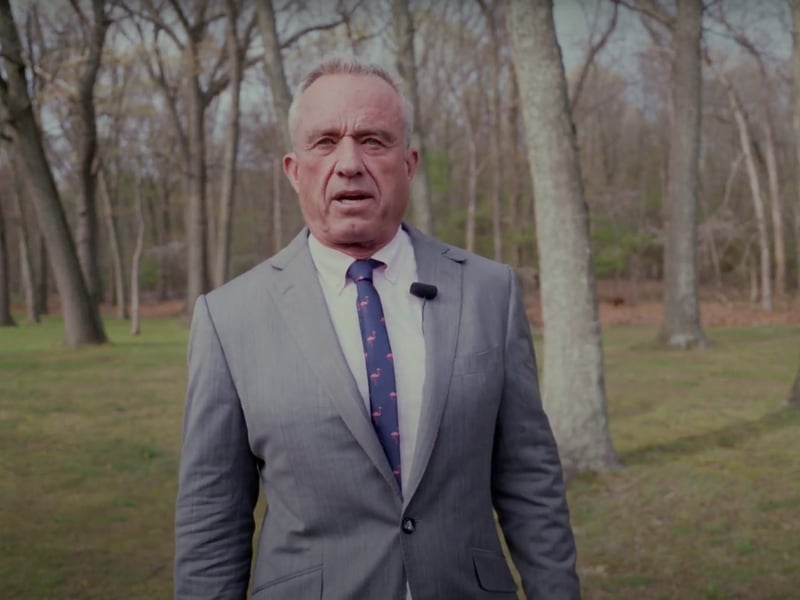
SAN FRANCISCO (CN) — Robert F. Kennedy Jr.’s request for a preliminary injunction against Meta on claims that the social media giant interfered his now-defunct presidential campaign was denied Tuesday morning.
In a 28-page ruling, Senior U.S. District Judge William Orrick III found Kennedy had failed to prove that Meta was acting on behalf of the U.S. government when it briefly removed a 30-minute Kennedy campaign video about Kennedy’s life that expressed skepticism about the Covid-19 pandemic and subsequent lockdowns.
Kennedy sued Meta in May, claiming Meta censored a video titled “Who is Bobby Kennedy” on Facebook, Instagram and other Meta-owned platforms by blocking users on those platforms from watching, sharing or linking to the video. When users attempted to share or discuss the video, Kennedy claims that Meta suspended or banned the accounts in violation of the First Amendment.
Orrick found the First Amendment only prohibits the government from censoring speech, and that Kennedy provided no evidence of any specific agreement between Meta and the government to specifically remove Kennedy-related content from Meta’s platforms.
Orrick said the only evidence presented consisted of “at most a relationship or communications between Meta and the government about removal of Covid-19 misinformation in 2020 and 2021.”
He added: “Even if the plaintiffs proved that Meta and the government acted jointly, or colluded, or that Meta was coerced by the government to remove and flag Covin-19 misinformation three years ago, that says nothing about Meta’s relationship and communications with the government in 2024. Nor does it suggest that Meta and the government worked together to remove pro-Kennedy content from Meta’s platforms."
At a hearing last week in San Francisco, Kennedy argued that Meta’s conduct also violated the Voting Rights Act because users that shared pro-Kennedy posts on Meta’s platforms were threatened with account suspension.
Orrick wrote that while he believed it is possible for a social media company to chill political participation, Kennedy had shown no evidence that Meta had done so.
“First, with respect to blocking links to the Who Is Bobby Kennedy video, the parties submitted contested evidence about why the links were blocked. The defendants point to compelling evidence that the video links were incorrectly automatically flagged as a phishing attack, a ‘not uncommon’ response by its automated software to newly created links with high traffic flow. The defendants’ evidence shows that once the defendants were alerted to the problem, through channels set up specifically for that purpose, the links were restored, and the video was made (and is currently still) available on its platform,” Orrick wrote.
Kennedy argued that the removal of the video was an effort to coerce users to not share pro-Kennedy content, but Orrick wrote that Kennedy knew Meta made a mistake when it originally took the video down.
“And if the plaintiffs were aware that a tech issue caused the removal of the videos, with that ‘context’ it would probably not be reasonable for them to believe the video links were removed in an effort to coerce or intimidate them,” Orrick wrote.
Finally, Orrick wrote that Kennedy had failed to provide a single user who had been banned, censored or threatened by Meta for posting messages of support for Kennedy on Meta’s platforms.
“The plaintiffs, therefore, fail to counter the compelling evidence and reasons that the defendants identify in explanation for the alleged censorship,” Orrick wrote.
The denial of the preliminary injunction ends a turbulent few weeks for Kennedy. Last week, the Ninth Circuit Court of Appeals threw out a similar suit Kennedy brought against Google. On Aug. 23, Kennedy dropped out of the 2024 presidential race and endorsed Republican nominee Donald Trump.
Lawyers for Meta and Kennedy did not respond to requests for comment before publishing.
Subscribe to our free newsletters
Our weekly newsletter Closing Arguments offers the latest about ongoing trials, major litigation and rulings in courthouses around the U.S. and the world, while the monthly Under the Lights dishes the legal dirt from Hollywood, sports, Big Tech and the arts.