
 Search Articles


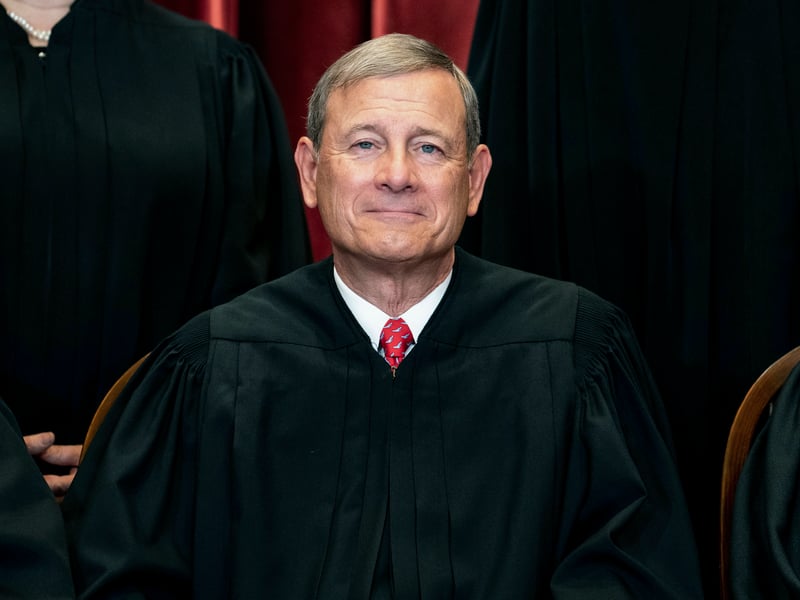
WASHINGTON (CN) — Chief Justice John Roberts called for an end to personal attacks against judges on Tuesday and rejected claims that the justices were beholden to the politics of the presidents who put them on the bench.
Speaking at an event at Rice University, the George W. Bush appointee’s comments came just days after President Donald Trump lashed out at the Supreme Court and D.C. District Judge James Boasberg in a lengthy social media post.
“Judges around the country work very hard to get it right, and if they don’t, their opinions are subject to criticism, but personally directed hostility is dangerous, and it’s got to stop,” Roberts said.
Trump’s Sunday night critique targeted the Supreme Court’s tariff ruling and Boasberg’s rejection of Justice Department subpoenas against Fed chairman Jerome Powell. The president called the Barack Obama-appointed Boasberg “wacky, nasty, crooked and totally out of control” and claimed he displayed “open, flagrant, and extreme partisan bias and contempt against Republicans and the Trump administration.”
Trump blamed his tariff loss on partisan bias on the Supreme Court, stating that “Democrats on the court always ‘stick together.’” And he claimed Roberts and Justices Neil Gorsuch and Amy Coney Barrett, both Trump appointees, had openly disrespected the president who nominated them “to prove how ‘honest,’ ‘independent,’ and ‘legitimate’ they are.”
Last March, Roberts issued a rare rebuke of Trump’s call for Boasberg’s impeachment.
Without directly responding to Trump’s claims on Tuesday, Roberts said there was a problem with criticisms of court rulings moving from legal analysis to personalities. Acknowledging that some commentary was healthy, he said misconceptions about the justices’ political bias were not.
“The notion that we carry forward the views of the people that appointed us is absurd,” Roberts said. “President George W. Bush appointed me 20 years ago. The idea that I’m carrying out his agenda somehow is absurd … History is full of examples of presidents appointing people and being really surprised how they turned out, going both ways.”
Roberts said the idea that he or any of the other justices were carrying out presidential agendas was “fallacious.”
The idea that this court has overruled a lot of cases, Roberts said, was overblown. He cited statistics from the Warren, Burger and Rehnquist Courts, stating that they all overturned more precedents than the current court.
“You hear about the cases that people don’t like for one reason or another that are very controversial — and they certainly have the right and frankly, it is quite welcome, if they want to let us know where they disagree — but it’s important to keep the facts before you,” Roberts said.
Roberts also pushed back on claims of the court lacking diversity, noting that the justices were appointed by five different presidents.
“In some places you look at us and we’re not very diverse, but I think we’re from three different law schools, that’s a diverse perspective,” Roberts said.
Despite his qualms, when asked whether the sun was rising or setting on the republic, Roberts picked the former.
“From my perspective, it is rising because of the commitment I see, not only on the court, but on in the trial judges, where the rubber really does hit the road and the faith of so many people in our institutions, which of course, are certainly subject to criticism, but I think they emerge from a lot of the criticism stronger,” Roberts said. “The separation of powers, which the framers, in a stroke of brilliance, realized was important to keep power under control by having gift branches separate each other. There are always difficulties. They’re going to change. That document has proven durable over almost two centuries, and I think it’s going to continue for many more.”
 Follow @KelseyReichmann
 Follow @kelseyreichmann.bsky.social
Subscribe to our free newsletters
Our weekly newsletter Closing Arguments offers the latest about ongoing trials, major litigation and rulings in courthouses around the U.S. and the world, while the monthly Under the Lights dishes the legal dirt from Hollywood, sports, Big Tech and the arts.