
 Search Articles


(CN) — Carbon is one of the most important elements for life on Earth, yet how it moves throughout the planet and atmosphere continues to bring new questions about how the carbon cycle is impacting climate — and in turn rising temperatures.
In a paper published in Science on Thursday, University of California, Riverside geologists Dominik Hülse and Andy Ridgwell assert through computational models that past ice ages were a part of Earth’s overcorrection to balance the carbon cycle, causing the planet to cool to extreme temperatures.
“Our biggest surprise was that greenhouse gas release could eventually push the Earth into an ice age,” Ridgwell said in an email. “We 100% were not expecting this result.”
Because of the planet’s rapidly changing climate, the study indicates an upcoming ice age is likely in approximately the next 100,000 years after a massive release of carbon to the atmosphere — a scenario Earth is already experiencing with carbon burial, according to Ridgwell.
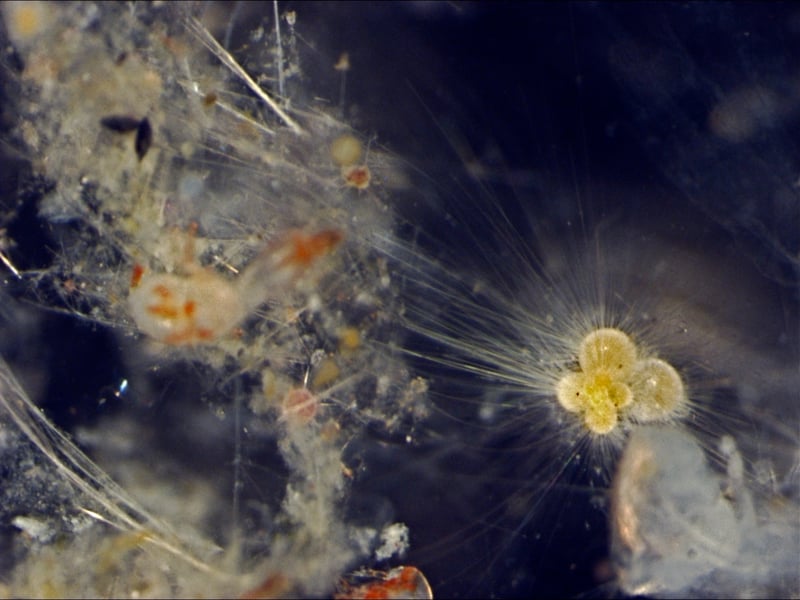
Carbon can be buried as carbonate, such as limestone from corals, chalk from plankton and rocks, but the authors focused on organic carbon from marine plankton. “The carbon that eventually becomes for instance, oil and gas,” Ridgwell explained.
The burial of organic carbon depends on how much is created at the ocean surface by plankton, which need nutrients such as phosphorous, according to Ridgwell. In turn, oxygen controls how much phosphorous can be returned to the plankton instead of being buried as they die and sink to the bottom of the ocean, taking their carbon with them.
In the Earth’s ancient past, lower atmospheric oxygen levels made the planet’s “thermostat” much more unstable and caused extreme ice ages.
And currently, as humans add more CO₂ to the atmosphere, the planet will continue to warm, creating more algae in the sea and leaving phosphorous to be recycled in ocean waters instead of buried.
“This creates a feedback loop where more nutrients in the water create more plankton, whose decay removes even more oxygen, and more nutrients get recycled. At the same time, massive amounts of carbon are buried, and the Earth cools,” according to a news release about the study.
Instead of balancing the climate, the study’s model indicates the “thermostat” will overshoot, cooling Earth.
And what does the start of an ice age look like?
“A cooler climate than what you started with,” said Ridgwell. “In our extreme case relevant to earlier in Earth history — an initially mild climate like today, heated by CO₂ emissions, would become colder than our last ice age.”
Ridgwell noted that in the past, scientists agreed the next ice age could be as far off as 100,000 years due to the “unusual current orbital configuration of Earth.”
“More recently, once people realized how long fossil fuel CO₂ would remain in the atmosphere, our best estimate became more like 500,000 years and delayed far, far into the future,” he said.
However, the study’s findings show a much more rapid CO₂ and climate recovery from current emissions, meaning the next ice age might start “right on time after all,” Ridgwell said.
“At the end of the day, does it matter much if the start of the next ice age is 50, 100, or 200 thousand years into the future?” Ridgwell questioned in a news release.
“We need to focus now on limiting ongoing warming,” he said. “That the Earth will eventually cool back down, in however wobbly a way, is not going to happen fast enough to help us out in this lifetime.”
Subscribe to our free newsletters
Our weekly newsletter Closing Arguments offers the latest about ongoing trials, major litigation and rulings in courthouses around the U.S. and the world, while the monthly Under the Lights dishes the legal dirt from Hollywood, sports, Big Tech and the arts.