
 Search Articles


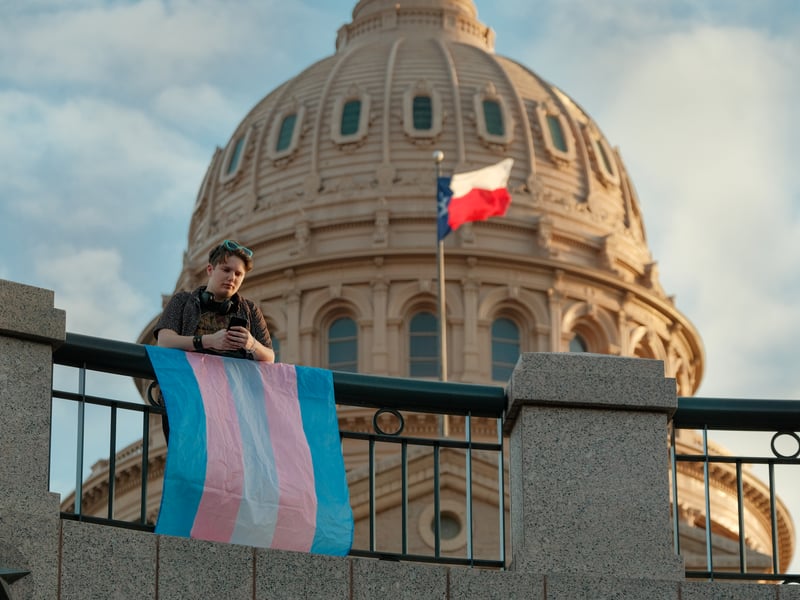
WASHINGTON (CN) — The Supreme Court on Friday kept intact a lower court ruling on the Biden administration’s Title IX rules, preventing protections for breastfeeding mothers and others facing sex-based discrimination in schools from being enforced while safeguards for transgender students are litigated.
The Biden administration’s rules protecting transgender students from discrimination took effect in 24 states on Aug. 1, but lawsuits from Republican-led states left the regulations on pause from the rest of the country.
In a per curium order, the high court determined that the Republican states were entitled to preliminary injunctive relief regarding three provisions of the rule, particularly the central provision that defined sex discrimination to include discrimination based on sexual orientation and gender identity.
The justices explained that those three provisions were intertwined with many other parts of the Biden administration’s rule, and therefore the court could not grant the government’s request to split those provisions off to allow the rest of the rule to take effect.
“Those [lower] courts therefore concluded, at least at this preliminary stage, that the allegedly unlawful provisions are not readily severable from the remaining provisions,” the court said. “The lower courts also pointed out the difficulty that schools would face in determining how to apply the rule for a temporary period with some provisions in effect and some enjoined.”
U.S. Solicitor General Elizabeth Prelogar filed an emergency application at the Supreme Court to enforce some of the rules — like access to lactation spaces and restroom breaks for pregnant and postpartum students and employees — nationwide. The regulations also provided instructions on responses to discrimination claims and requirements for notices and record-keeping.
The federal government sought to prohibit discrimination based on gender identity while the more controversial rules over bathroom access go through the lower courts.
More than 20 conservative states object to several rules for how schools must prevent discrimination for transgender students, including allowing access to sex-separated facilities of their choosing. The states claim the policy would allow transgender girls to play on girl’s athletic teams.
The Biden administration argued that the rules are a continuation of Title IX protections because discrimination against an individual because of gender identity is a form of sex-based discrimination. The argument is based on the Supreme Court’s 2020 decision in Bostock v. Clayton County , in which it found that the sex discrimination ban in Title VII of the Civil Rights Act of 1964 includes bans on both sexual orientation and gender identity discrimination.
Judges in Texas, Louisiana, Kentucky, Kansas, Missouri and Oklahoma issued injunctions against the rule, prohibiting the Education Department from enforcing the regulations in 26 states. The rule is also blocked in nearly 700 colleges and over 2,000 primary and secondary schools where members of several organizations involved in the litigation are enrolled.
The emergency application before the court involves a case from Tennessee, Kentucky, Ohio, Indiana, Virginia and West Virginia.
Prelogar said the injunctions exceeded the judges’ authority because they blocked rules that the states did not challenge.
“The lower courts ignored that bedrock equitable principle by presuming that the purported legal defects they identified in three provisions of the Rule justified an injunction barring implementation of other provisions that respondents had not challenged,” Prelogar wrote.
Prelogar said protections for pregnant mothers and others should be enforced. The rule recognizing that discrimination based on gender identity is discrimination based on sex was included in this bunch. The remaining provisions for transgender students, Prelogar said, could remain paused because they raised important issues to be litigated on appeal.
Tennessee said the request amounted to a merits preview.
“The government’s proposed ‘partial stay’ artificially conceals how extending Bostock to Title IX would explode longstanding policies,” the state told the court. “The government is arguing elsewhere that, because Bostock governs Title IX, schools cannot bar transgender students from using bathrooms or playing sports of the opposite sex — under Title IX itself, regardless of any regulations.”
The Biden administration said Tennessee wasn’t harmed by categorizing discrimination on gender identity as sex-based. Prelogar said the government only asked if the lower court erred by prohibiting schools from excluding or penalizing a student simply for being transgender.
Despite the court’s per curiam order, four justices wrote a dissent disagreeing in part with the majority’s decision. Justice Sonia Sotomayor was joined by justices Elena Kagan, Ketanji Brown Jackson and Neil Gorsuch in her dissent.
Sotomayor, a Barack Obama appointee, noted that she and her three dissenting colleagues agreed that the states were entitled to interim relief, but took issue with the decision to leave the lower courts’ full preliminary injunctions in place, calling them “overbroad”
“To be sure, this litigation is still unfolding, and respondents might eventually show injuries from the other portions of the rule,” Sotomayor wrote. “If so, those injuries might merit further relief. For now, on the briefing and record currently before us, I would stay the preliminary injunctions except as to the three provisions above, in keeping with the traditional principles of equitable remedies.”
 Follow @Ryan_Knappy
Subscribe to our free newsletters
Our weekly newsletter Closing Arguments offers the latest about ongoing trials, major litigation and rulings in courthouses around the U.S. and the world, while the monthly Under the Lights dishes the legal dirt from Hollywood, sports, Big Tech and the arts.