Search Articles


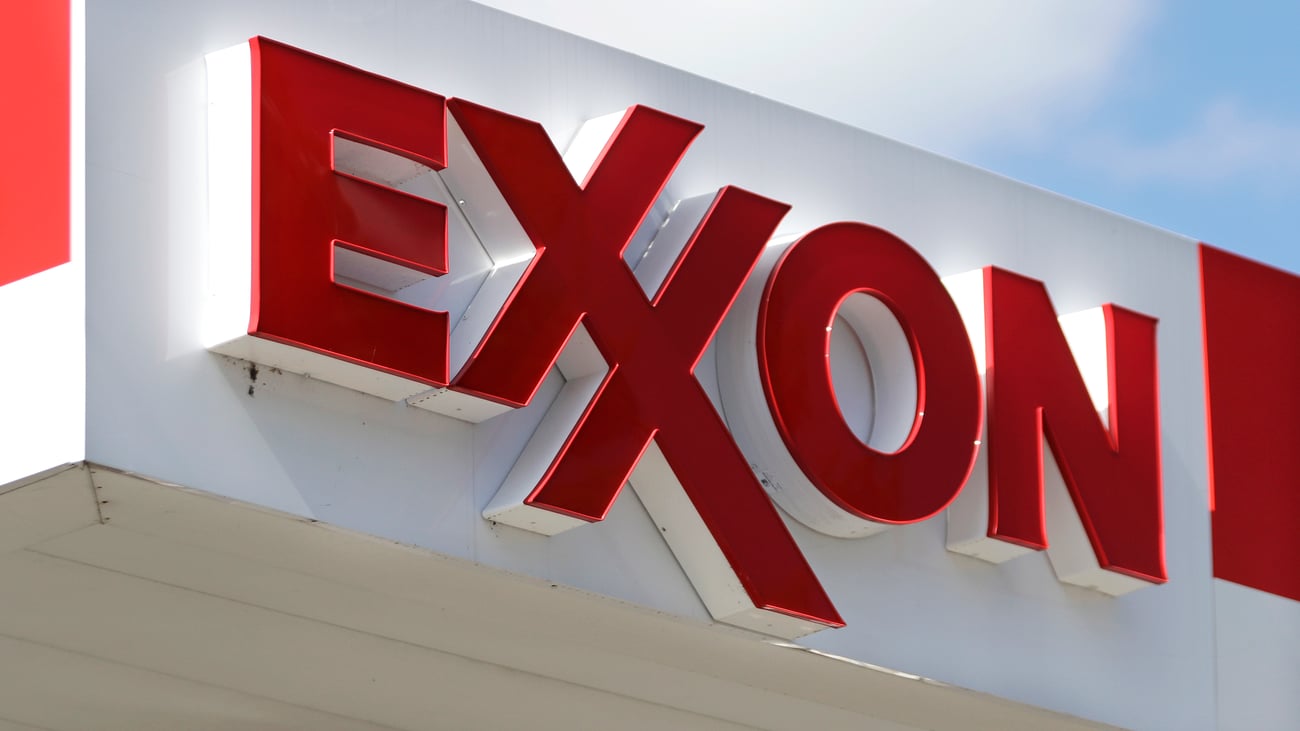
WASHINGTON (CN) — The Supreme Court reversed a lower court ruling against Exxon Mobil on Tuesday, greenlighting the U.S. oil giant’s lawsuit against Cuban-owned companies profiting off infrastructure confiscated during Fidel Castro’s regime.
In a 6-3 decision, the high court ruled that the Cuban government could not claim sovereign immunity from the lawsuit because of the Helms-Burton Act of 1996, which created a cause of action for cases like Exxon’s and thus would be toothless if such immunity applied.
Justice Brett Kavanaugh, a Donald Trump appointee, wrote in the majority opinion that the Foreign Sovereign Immunities Act, while it would normally bar such suits against another nation and its entities, was abrogated — eliminated — by the statute.
“In 1996, to afford victims of ‘Castro’s wrongful seizures’ a ‘judicial remedy in the courts of the United States,’ Congress passed and President [Bill] Clinton signed the Helms-Burton Act, formally known as the Cuban Liberty and Democratic Solidarity Act,” Kavanaugh wrote. “That act created a private right of action for U.S. national whose property was unlawfully confiscated: They may sue Cuban agencies and instrumentalities that possess, use or otherwise traffic in the confiscated property.
“If the court were to accept the Cuban companies’ argument that foreign immunity applied, the statute would effectively be “an empty threat,” Kavanaugh said.
Thirty years ago, Congress created a liability scheme to squeeze the communist regime and prevent profiteering off U.S. nationals’ stolen property. But it took two decades for a president to wield the legislation.
During his first term, President Donald Trump allowed U.S. companies to seek compensation against foreign corporations that coordinated with the Cuban government to traffic their confiscated goods. The consequences of that decision came to a head at the Supreme Court as the justices probed how far the government could go to deter third-party investment on the island.
Under the leadership of Castro, the Cuban government confiscated all U.S. property on the island in 1960, igniting a total trade embargo that only briefly thawed once over six decades.
Congress enacted the Cuban Claims Act creating a pathway for U.S. nationals to recoup the value of their seized property. The Foreign Claims Settlement Commission, an agency housed within the Department of Justice, certified thousands of claims against the Cuban government, but there were no Cuban assets in the U.S. to satisfy those claims.
In 1996, Congress passed the Cuban Liberty and Democratic Solidarity, or LIBERTAD Act — also known as the Helms-Burton Act — as a solution. Along with harsher sanctions, the law allowed U.S. nationals to go after companies working with the Cuban government to profit off their stolen goods.
Every six months between 1996 and 2018, American presidents acted to suspend the provision, but former Secretary of State Mike Pompeo announced that it would go into effect in 2019.
Exxon Mobile sued Cuban-owned oil companies for operating out of refinery and service stations that were confiscated during Castro’s regime. Typically, foreign states and their instrumentalities are immune from lawsuits in U.S. courts under the Foreign Sovereign Immunities Act.
But Exxon said the LIBERTAD Act stripped Cuban corporations of those protections.
“Time did not stop in 1976 when Congress enacted the [Foreign Sovereign Immunities Act],” Kavanaugh wrote. “And one Congress cannot bind another — meaning that a later Congress always may repeal or modify an old law, or enact a new law that is exempt from the old law.”
Justice Elena Kagan, joined by Justices Sonia Sotomayor and Ketanji Brown Jackson, issued a dissent and wrote that the central question in the case is whether an exception to the presumption of sovereign immunity applies.
“The court instead concludes that the answer is no — not because of anything in the FSIA, but on the ground that a different law, the Helms-Burton Act, abrogates (in nonlegal speak, eliminates) the immunity that the FSIA may otherwise grant,” the Barack Obama appointee wrote. “The problem for the majority is that the bar for finding congressional abrogation is high, and the Helms-Burton Act falls short. Because there is no abrogation in that act — even in hiding, as the majority finds — I respectfully dissent.”
Kagan said that simply because the Helms-Burton Act created a cause of action against Cuban-owned companies does not implicitly say whether Congress eliminated the general sovereign immunity, as the 1996 statute does not include an explicit abrogation provision.
The statute still empowers a plaintiff to sue any private party that traffics confiscated property and any foreign instrumentalities when their trafficking falls within an immunity exception, Kagan said, and thus there is no need to construct a “hidden abrogation” provision.
“Nothing in this case presents a choice between giving effect to the Helms-Burton Act and preserving the immunity codified in the FSIA,” Kagan wrote. “So I would apply both laws as Congress wrote them. That means, as the lower courts here held, that Exxon’s suit can proceed if — but only if — it can show an FSIA exception is satisfied.”
 Follow @Ryan_Knappy
Subscribe to our free newsletters
Our weekly newsletter Closing Arguments offers the latest about ongoing trials, major litigation and rulings in courthouses around the U.S. and the world, while the monthly Under the Lights dishes the legal dirt from Hollywood, sports, Big Tech and the arts.
Additional Reads

 Justices slam court doors on foreign torture claims June 23, 2026