
 Search Articles


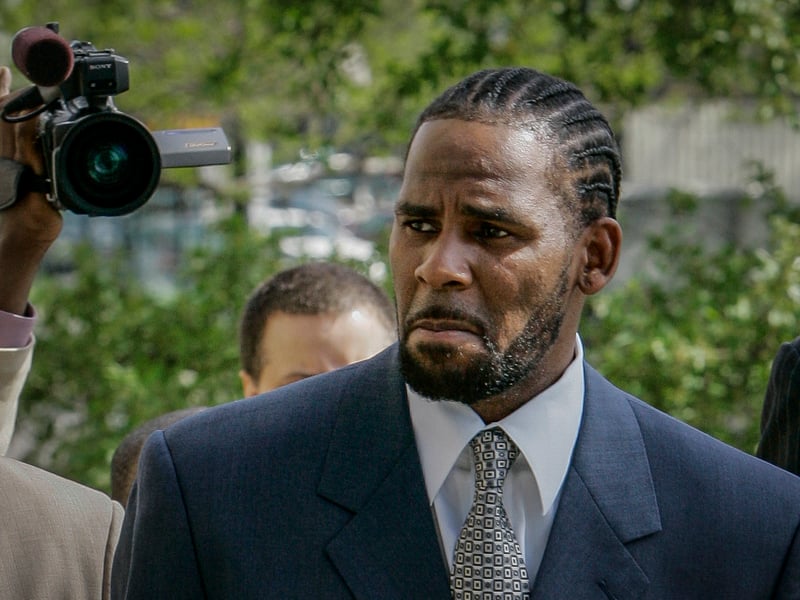
MANHATTAN (CN) — A Second Circuit panel on Wednesday affirmed R. Kelly’s conviction for using his entourage to systematically recruit and abuse underage girls, despite the recording artist’s claims the trial evidence wasn’t sufficient.
R. Kelly, 57, was sentenced to 30 years on sex trafficking and racketeering charges in 2022. At a six-week trial in Brooklyn federal court, a slew of witnesses said the “I Believe I Can Fly” singer used his entourage to systematically recruit and abuse young women and minors, including the late singer Aaliyah.
During oral arguments, Kelly told the panel the government failed to support his racketeering conviction because there wasn’t enough evidence to show the enterprise had an illegal purpose. He also claimed that federal prosecutors did not make it clear at trial that Kelly’s employees were explicitly trying to recruit underage women for him.
U.S. Circuit Judge Denny Chin, a Barack Obama appointee, said he wasn’t swayed by this argument and said there was sufficient evidence proving Kelly’s direct connection to his entourage’s pattern of recruiting and abusing underage women.
“The record is replete with evidence that Kelly was able to commit the predicate acts because he was the head of a close-knit group of associates and he controlled the affairs of the enterprise,” Chin wrote in the panel’s decision.
For instance, the panel pointed to trial evidence indicating Kelly’s entourage devised a plan for Kelly to marry Aaliyah when she was underage. The plan was devised after Kelly said he was worried she was pregnant and needed “to protect himself.”
The panel also pointed to other evidence showing that Kelly’s entourage helped introduce him to underage girls and abused girls at Kelly’s direction.
“There was extensive evidence showing how Kelly ensnared young girls and women into his orbit, endeavored to control their lives and secured their compliance with his personal and sexual demands through verbal and physical abuse, threats of blackmail and humiliation,” Chin wrote.
Kelly also claimed four of the jurors at his trial were biased against him and asserted he had ineffective assistance of counsel because his attorney failed to properly question them.
But the panel found that each juror was subject to thorough questioning and that Kelly’s counsel challenged several potential jurors during the selection process.
“All four now-challenged jurors represented to the district court that they could be fair and impartial, follow the presumption of innocence and hold the government to its burden of proof,” Chin said.
U.S. Circuit Judge Susan Carney, another Obama appointee, also participated in the majority decision.
While U.S. Circuit Judge Richard J. Sullivan, a Donald Trump appointee, largely sided with the panel’s decision, he disagreed with how the lower court calculated restitution for one of the victims.
One witness, Jane, said she contracted herpes during her sexual relationship with Kelly.
Sullivan said prosecutors failed to adequately show that Jane contracted herpes as a result of Kelly’s conduct. He added that the court erred in calculating Jane’s restitution based on a lifetime supply of the brand-name herpes drug, Valtrex, instead of the cheaper generic drug, valacyclovir.
According to Kelly, the brand-name drug would cost over $200,000 more than the generic drug over the course of Jane’s lifetime.
“Nothing in record suggests a qualitative difference between Valtrex and the generic drug, or that Jane used Valtrex exclusively,” Sullivan said in his dissenting opinion.
Jennifer Bonjean, an attorney for Kelly, said the Second Circuit’s decision is disappointing but added they plan on appealing to the U.S. Supreme Court.
“We believe the United States Supreme Court will be interested in reviewing this unprecedented opinion that gives the government limitless discretion to apply the RICO statute to situations absurdly remote from the statute’s intent,” Bonjean said. “The statute was intended to punish organized crime — not individual conduct.”
She also praised the dissenting opinion and added that it demonstrates prosecutors were using financial incentives to influence witness testimony.
“This was not restitution; this was an effort by the government to financially enrich government witnesses for their testimony,” Bonjean said.
The U.S. Attorney’s Office for the Eastern District of New York declined to comment.
 Follow @NikaSchoonover
Subscribe to our free newsletters
Our weekly newsletter Closing Arguments offers the latest about ongoing trials, major litigation and rulings in courthouses around the U.S. and the world, while the monthly Under the Lights dishes the legal dirt from Hollywood, sports, Big Tech and the arts.