Search Articles


MANHATTAN (CN) — A pair of suburban counties in New York have failed to revive their lawsuitschallenging Manhattan’s congestion pricing program, with the Second Circuit greenlighting the toll in a Monday ruling.
In a19-page opinion, a three-judge panel on the federal appeals court found that the counties — Orange and Rockland — insufficiently argued the toll was an unauthorized tax restricting the constitutional right to travel.
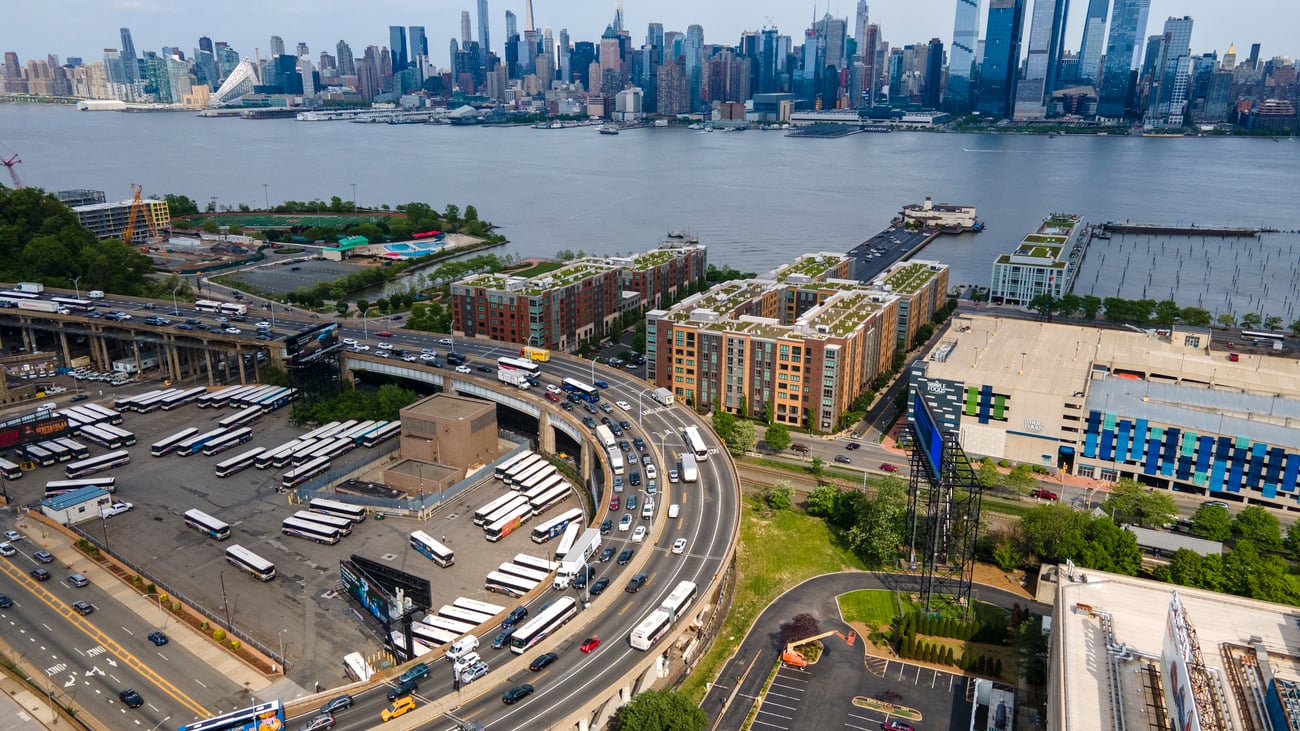
The ruling comes roughly a year and a half after the first-in-the-nation program got off the ground in early 2025. Passenger cars are now charged $9 for driving south of 60th Street in Manhattan, New York’s central business district, during peak business hours, with the goal of reducing traffic congestion and pollution in the city’s busiest zone.
While controversial at its inception, congestion pricing has graduallygrown in popularity among New York City residents after data revealed faster commutes and less noise. The toll also raised more than $500 million in 2025 for the city’s aging public transit infrastructure.
Orange and Rockland Counties, both located just outside of New York City, sued the Metropolitan Transportation Authority and the Triborough Bridge and Tunnel Authority in 2024 — before the program took effect — in hopes of stopping it in its tracks. A federal judge dismissed their suit last year, and the counties took their case to the Second Circuit for one more shot at putting congestion pricing on ice.
Their efforts proved futile, however, with the Second Circuit panel ruling Monday that the toll does not unconstitutionally restrict the right to travel. Despite Orange County’s claim that driving “is often the only viable” way for its residents to commute to Manhattan, the panel found this is no reason to trigger the constitutional concern.
“Orange [County] cites no authority, and we have found none, holding that a toll imposes more than a minor restriction on travel because of the alleged importance of the route,” the judges ruled.
Rockland County had claimed the program amounts to an unauthorized state tax imposed by the transit agencies. Only legislative bodies have the power to impose taxes in New York; tolls can be enacted more broadly.
The Second Circuit panel said this was an issue for state court, however.
“The [Tax Injunction Act] would thus deprive the federal courts of jurisdiction over plaintiffs’ claims if we were to agree with them that the program imposes a state tax,” the judges found.
In a statement to Courthouse News, the MTA’s counsel at Kaplan Martin LLP said it is pleased with the ruling.
“To date, with our co-counsel at Sive, Paget & Riesel P.C., we have successfully defeated dozens of legal challenges to New York’s historic congestion pricing program,” the firm said. “The record is clear: case after case has confirmed that congestion pricing is lawful, and study after study has proven that the program supports critical subway infrastructure programs for New Yorkers while meaningfully reducing pollution, traffic, and accidents within the toll zone.”
John J. McCarthy, chief of policy and external relations at the MTA, called the ruling the “latest of dozens from the courts confirming congestion relief is lawful.”
“More than a year and a half since its launch, the program is reducing traffic, increasing safety for pedestrians, and making the air we breathe healthier, while raising critical revenue to improve transit for all commuters in the New York region,” he said.
The suing counties didn’t immediately respond to requests for comment.
Behind the appellate ruling were U.S. Circuit Judges Sarah Merriam and Guido Calabresi, as well as U.S. District Judge Michael Park. Merriam was appointed by Joe Biden, Calabresi was appointed by Bill Clinton and Park was appointed by Donald Trump.
Their opinion affirms the dismissal of the counties’ joint lawsuits by U.S. District Judge Cathy Seibel, who ruled last year that the toll wasn’t necessarily unconstitutional just because it impacted their residents more than others.
“There are pros and cons to living in Rockland and Orange counties, as there are with any locality,” the George W. Bush appointee wrote in her own order. “The congestion pricing toll is one of the cons, but it does not rise to the level of a constitutional deprivation.”
At oral arguments in March, the appellate panel seemed inclined to agree with the lower court. Calabresi noted from the bench he hadn’t found “a single case” suggesting tolls violate the right to travel. And Merriam bucked the claim that congestion pricing amounted to an unlawful tax, stating instead it was a specific toll to fund a targeted area: fixing the subways.
“It’s not like this fee is going to fund public schools,” she quipped at the time.
Congestion pricing has prompted much litigation at the state and federal level. Even the Trump administration had it in its sights, with the Department of Transportation unsuccessfully ordering the program scrapped last year via a memo that has beendeemed wholly unlawful.
 Follow @Uebey
 Follow @uebey.bsky.social
Subscribe to our free newsletters
Our weekly newsletter Closing Arguments offers the latest about ongoing trials, major litigation and rulings in courthouses around the U.S. and the world, while the monthly Under the Lights dishes the legal dirt from Hollywood, sports, Big Tech and the arts.
Additional Reads

 Landlords lose appeal challenging NYC broker fee ban July 13, 2026