
 Search Articles


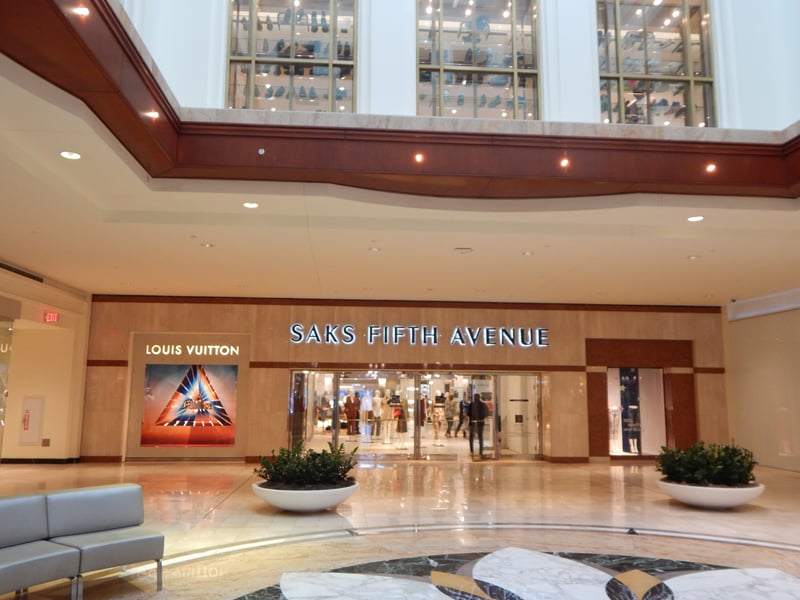
MANHATTAN (CN) — A federal appeals court on Thursday affirmed a lower court’s dismissal of an antitrust class action brought by luxury retail employees who claimed that “no-hire” clauses in agreements for salespeople working at high-end brand retailers like Saks, Gucci, and Louis Vuitton hindered their wages and restricted professional mobility.
“The amended complaint alleges in a purely conclusory fashion that plaintiffs’ own suppressed wages and decreased mobility ‘spread through the market for Luxury Retail Employees,’” the appeals judges wrote in their unsigned order. “But the amended complaint contains no specific allegations regarding the suppression of compensation or mobility among luxury retail employees ‘market-wide,’ that is, nationally, among all businesses employing such workers.”
The ex-employees brought a class action in 2020 claiming Louis Vuitton, Loro Piana, Gucci, Prada, Brunello Cucinelli and Fendi conspired with Saks beginning in 2014, agreeing not to hire applicants who worked at Saks within the previous six months without permission from Saks management. Because of the lack of competition spurred by the conspiracy, the former employees claimed they received lower pay.
Chief U.S. District Judge for the Eastern District of New York Margo Brodie dismissed the case in March 2023, finding the four-year statute of limitations for federal antitrust claims had passed and that the employees failed to establish a claim on which relief could be granted.
On appeal to the Second Circuit Court of Appeals, the former employees argued that competition among the luxury brands took a wage-lowering hit, too, thanks to the agreements.
“If there had been competition for Saks employees with the brand defendants, that would have caused Saks to raise their pay — which would have in turn caused the brand defendants to raise their pay,” attorney Daniel Walker of the Washington-based firm Berger Montague said at oral arguments before the appeals panel. “Perhaps to prevent employees from moving — or to prevent Saks from poaching those employees.”
The Second Circuit nonetheless concluded that the lower court appropriately dismissed the plaintiffs’ amended complaint because they failed to “plausibly allege market-wide harm.”
The three-judge panel wrote the ex-employees failed to provide any “meaningful information” that would quantify the number of employment opportunities foreclosed by the “no-hire” agreements in relation to the number of employment opportunities that remain open, unaffected by the agreements.
The panel was composed of Joe Biden-appointed U.S. Circuit Judges Sarah A. L. Merriam and Maria Araujo Kahn, as well as U.S. Circuit Judge Pierre N. Leval, a Bill Clinton appointee.
The luxury brands argued the federal district court was right to apply the “rule of regal” legal standard examining both the positive and negative effects of an agreement before determining whether it violates antitrust laws — in other words, whether a practice’s anticompetitive harm is outweighed by its effectiveness in promoting competition.
Attorney Mark Andrew Perry of Washington firm Weil, Gotshal & Manges said the collaboration among his clients was a positive outweighing any negative effect of the agreements with Saks.
“What did the brand defendants get? They got reduced rates within Saks’ doors, and they got access to the Saks’ customers, those are vertical considerations,” Perry said. “And in exchange, they gave up the ability to recruit Saks employees. That is still part of the same vertical relationship that is in the same market.”
The U.S. government filed an amicus brief in support of the plaintiff employees and agreed that the lower court should have applied the per se rule.
“Each of the agreements between Saks and the brand defendants is horizontal,” Justice Department attorney Matthew Waring said Monday. “They are concededly competitors for these luxury retail employees, and they are agreeing to a restraint that affects how they will compete for these workers.”
 Follow @jruss_jruss
Subscribe to our free newsletters
Our weekly newsletter Closing Arguments offers the latest about ongoing trials, major litigation and rulings in courthouses around the U.S. and the world, while the monthly Under the Lights dishes the legal dirt from Hollywood, sports, Big Tech and the arts.