Search Articles



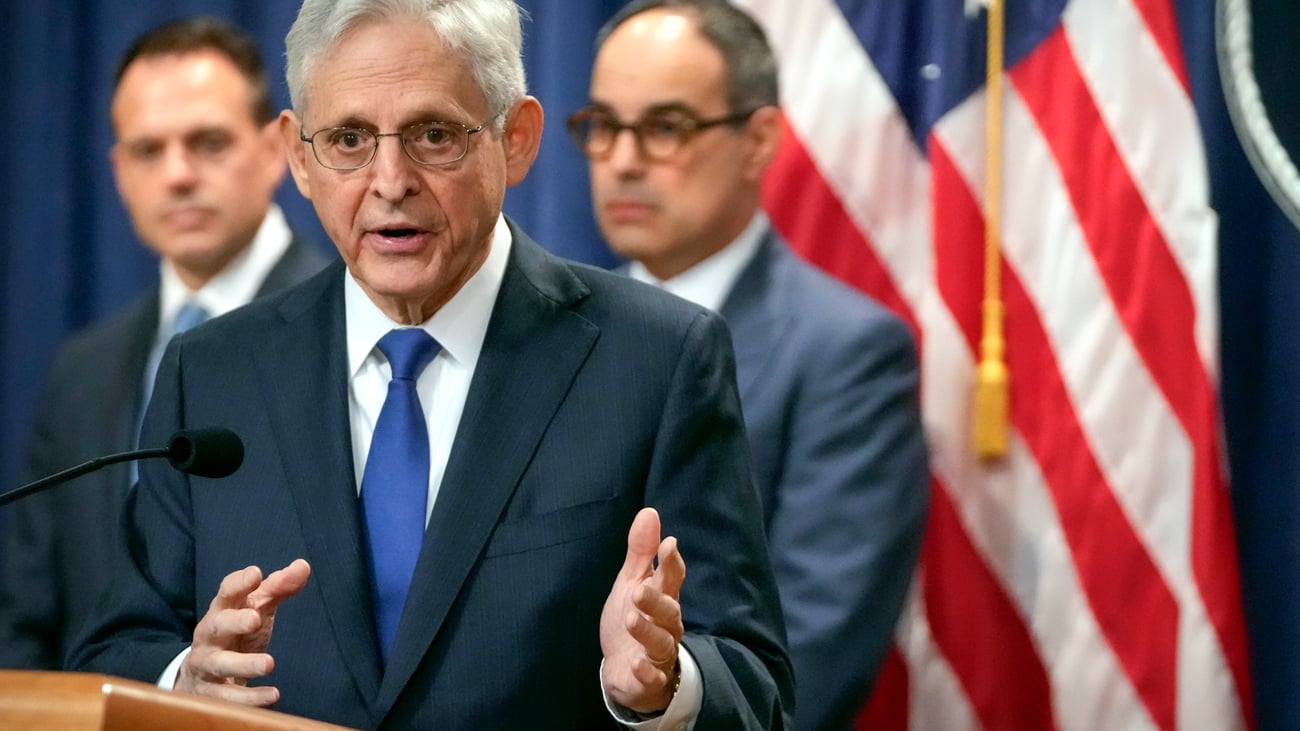
WASHINGTON (CN) — Acting Attorney General Todd Blanche on Tuesday defended a billion-dollar fund unveiled by the Justice Department from Senate appropriators who claimed the new program was little more than a “slush fund" for President Donald Trump’s allies.
But Blanche insisted to lawmakers that the “anti-weaponization fund” his agency had established was an unusual — but not unprecedented — avenue for the Trump administration to address longstanding claims that the government illegally targeted some people for political or ideological reasons.
The Justice Department announced Monday that it would set up the nearly $1.8 billion fund to provide a “systematic process” for people seeking relief for claims of “weaponization and lawfare” by the federal government. The $1.776 billion reserve, which will be paid for using the agency’s judgment fund, is the result of a settlement between Trump and the Internal Revenue Service in the case over the 2019 leak of the president’s tax returns.
Payments from the fund will be adjudicated by a five-member commission appointed by the attorney general, with one member selected in conjunction with Congress.
Though the Justice Department hailed the “weaponization” fund as redress for victims of legal malfeasance at the hands of the U.S. government, critics — including several congressional Republicans — expressed concern about how claims would be considered and who might be eligible to receive payments.
And those issues were front and center for lawmakers on the Senate Appropriations Committee on Tuesday morning, as they met to grill Blanche on the Justice Department’s 2027 budget request.
Maine Senator Susan Collins said the IRS leak of Trump’s tax returns was “totally inappropriate,” but questioned whether the government had ever approved a disbursement of funds from the Justice Department’s judgment fund for claims “that have yet to be brought” against the government, as is the case with the administration’s new anti-weaponization fund.
Blanche in response pointed to a 2011 settlement in the case Keepseagle v. Vilsack, which he claimed was “identical in structure” to his agency’s new fund. The Obama-era agreement approved $680 million in funds for indigenous people who accused the government of discriminating against tribal farmers.
“In that case, there were allegations made by Native Americans that the Department of Agriculture has systematically treated them unfairly, and some had filed claims,” the acting attorney general told Collins. “There was a pending lawsuit, but many had not.”
Blanche argued that, following the Keepseagle settlement, roughly $300 million remained in the government fund and that the Obama administration had “set it up” so that the remaining cash was transferred to nonprofit groups.
“It’s true that this is unusual … but it is not unprecedented, and it was done to address something that had never happened, either,” he said.
But Maryland Senator Chris Van Hollen pushed back on Blanche’s framing of the Keepseagle case, calling it “incredibly deceptive.” The Democratic lawmaker pointed out that a federal judge approved the plan to send roughly $300 million left in that settlement fund to nonprofit groups. No such oversight occurred for the anti-weaponization fund, he added.
Blanche admitted that no federal judge had approved the Justice Department’s new program, but held that it did not make a “big difference,” claiming that while a judge signed off on the Keepseagle agreement the courts had “nothing to do” with handling the money involved.
The $300 million transfer in the Obama-era case came after negotiations between the parties involved in the Keepseagle case and a judge approved the framework under which claimants from the class could secure payments.
The acting attorney general, meanwhile, also faced sharp questions Tuesday about who might be eligible to receive a payment as part of the anti-weaponization fund. Van Hollen demanded to know whether defendants in cases related to the Jan. 6, 2021, Capitol riot — particularly those accused of assaulting police officers — would be eligible for relief.
“As was made plain yesterday, anybody in this country is eligible to apply if they believe they were victims of weaponization,” Blanche replied, adding that he would “expect” there to be rules about who could seek relief from the Justice Department.
“You’re appointing four of the five members,” Van Hollen retorted. “I would hope you make a rule that anyone convicted of assaulting a police officer or of violent crime is simply not eligible.”
Blanche told lawmakers that there would be “full transparency” in his agency’s reports on payments from the settlement fund, adding a caveat for “laws that exist around privacy and privileges and whatnot.”
According to the Justice Department, the commissioners overseeing the anti-weaponization fund will submit a quarterly report to the attorney general outlining the types of awards distributed and who received relief.
Claimants, the agency has said, may receive monetary payments from the settlement fund, or simply a formal apology from the federal government. Remaining cash in the fund will return to the government once it stops processing new claims in December 2028.
Democrats this week stepped in on Trump’s case against the IRS, filing an amicus brief in U.S. District Court for the Southern District of Florida aiming to halt the creation of the new $1.8 billion fund. They argued that the case should be unreviewable because both parties to the litigation effectively represent the president.
Maryland Representative Jamie Raskin, the top Democrat on the House Judiciary Committee, called the move “pure fraud and highway robbery.”
“No one can be both plaintiff and defendant in the same case,” he said. “This is simply not a genuine case or controversy as required by the Constitution.”
 Follow @BenjaminSWeiss
Subscribe to our free newsletters
Our weekly newsletter Closing Arguments offers the latest about ongoing trials, major litigation and rulings in courthouses around the U.S. and the world, while the monthly Under the Lights dishes the legal dirt from Hollywood, sports, Big Tech and the arts.