
 Search Articles


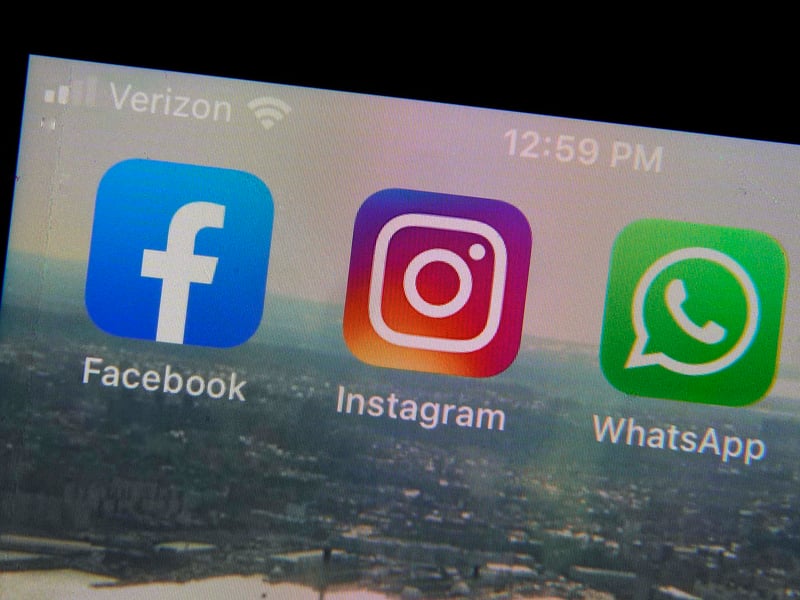
LOS ANGELES (CN) — Lawyers for the biggest social media companies in the world appeared in court on Monday to ask a Los Angeles Superior Court Judge to dismiss most of a lawsuit filed against them by hundreds of school districts who say the social media platforms have exacerbated mental health issues in their students.
More than a thousand claims filed against Facebook, Instagram, Snapchat, TikTok and YouTube have been consolidated into a pair of sprawling multi-district actions that includes lawsuits filed by more than 700 personal injury victims and 600 school districts all across the country.
The school districts say that the popular social media apps have fomented a mental health crisis, and have caused students to become depressed, distracted and more difficult to educate. One of their claims is that the companies have created a public nuisance, a legal theory previously employed in mass torts against the makers and sellers of opioids, lead paint, e-cigarettes and firearms.
On Monday, YouTube attorney Ashley Hardin argued that the public nuisance law was never intended to “address all of society’s problems,” but was rather meant for the more limited purpose of when, say, someone pollutes on public land.
“Nearly all examples are limited to a specific location,” said Hardin. In most of the jurisdictions, she said, “public nuisance does not cover claims where there is a defectively designed product.”
“There is nothing about the alleged interference that impacts the public’s ability to be in public,” she added.
Hardin said the harms being claimed by the school districts — that using apps like Instagram and Facebook have led teens to develop body dysmorphia, anxiety and depression — are individual harms and private harms.
“It’s hard to imagine a less collective or more individual interference than how one thinks about one’s own body,” she said.
The school districts have also put forward three other causes of action including for negligence and gross negligence.
The plaintiffs’ attorney Felicia Craick argued Monday that the social media companies had deliberately designed their products to be addictive to minors, and had purposely targeted high schools, citing a piece of internal communication from Meta in 2018 which read, “Winning schools is the way to win with teens.”
The social media companies, Craick said, have “fundamentally changed the learning environment in public schools,” and their conduct has “resulted in a significant disruption to school operations.”
The defendants argued that the school districts themselves hadn’t been harmed directly by social media, but were seeking to sue on behalf of its own students, which they had no right to do.
“The relationship between the school districts and the students is too tenuous,” said TikTok attorney David Mattern. He compared it to school districts suing over sugary treats, notebooks used by student to pass notes or cell phones.
Mattern also pointed out that the defendants comprise an industry “that has been widely recognized to provide a public benefit” — namely, encouraging free speech. The apps’ lawyers argued that they should be shielded from the lawsuit by the First Amendment and by Section 230 of the Communications Decency Act.
They have also sought immunity from the consolidated personal injury lawsuits under Section 230. Nearly two months after arguments for that motion was heard, Superior Court Judge Carolyn Kuhl has yet to render a verdict. Kuhl did not issue a ruling on the motions argued on Monday either, and did not indicate how she would rule.
As of May 9, there are 741 personal injury plaintiffs from 40 different states that have filed claims against the social media companies, as well as 617 school districts from 34 states, six local governments and three Native American tribes. The court plans to pick a number of plaintiffs to serve as bellwether cases, which will go to trial — the outcome of which will be used to determine a global settlement.
 Follow @hillelaron
Subscribe to our free newsletters
Our weekly newsletter Closing Arguments offers the latest about ongoing trials, major litigation and rulings in courthouses around the U.S. and the world, while the monthly Under the Lights dishes the legal dirt from Hollywood, sports, Big Tech and the arts.