
 Search Articles


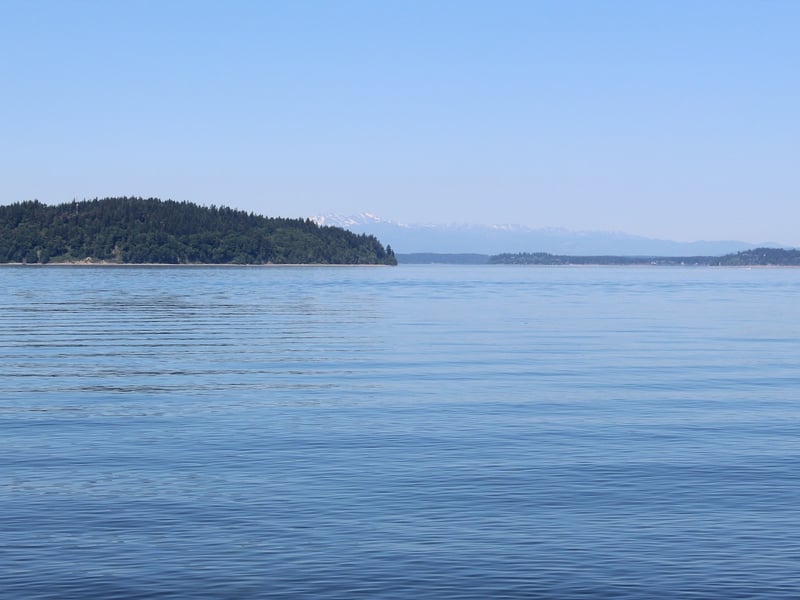
(CN) — In a blow to the Stillaguamish Tribe’s efforts to expand their treaty-guaranteed fishing grounds, a Ninth Circuit panel Wednesday upheld a decision that denied the tribe’s claim to fishing rights in marine waters east of Whidbey Island, Washington.
The ruling, which follows years of litigation, centers on whether the tribe’s “usual and accustomed grounds and stations” for fishing under the 1855 Treaty of Point Elliott extends into waters including Port Susan, Saratoga Passage, Skagit Bay, Penn Cove, Holmes Harbor and Deception Pass.
The Stillaguamish Tribe argued that historical evidence and expert testimony supported their ancestral presence in those waters, referred to as the “claimed waters.” The tribe presented testimony from multiple experts, including anthropologists and ethnohistorians, along with accounts from tribal elders and settlers to demonstrate their fishing activities in the marine areas at treaty times.
However, the federal appeals court judges found the tribe’s evidence insufficient, concluding it was too speculative to meet the legal burden required to establish fishing rights in the contested waters.
The three-judge appellate panel — comprised of Senior U.S. Circuit Judge Susan Graber, a Bill Clinton appointee, Senior U.S. Circuit Judge Richard Clifton, a George W. Bush appointee, and U.S. Circuit Judge Mark Bennett, a Donald Trump appointee — considered the tribe’s challenges to the lower court’s finding that evidence from certain experts was speculative.
“It was not clear error for the district court to conclude that Dr. (Barbara) Lane’s statements from testimony in 1975 and 1983 and from a 1974 private letter, introduced through Dr. Friday, were speculative as to Stillaguamish marine fishing,” the panel wrote.
The panel further discussed the testimony of Chris Friday, referenced above, who is a Western Washington University professor specializing in Indigenous Pacific Northwest history.
“The district court also did not clearly err in finding Dr. Friday’s testimony was speculative as to Stillaguamish marine fishing,” the panel said in the ruling. “The record reveals that, while he ably recounted the work of other scholars, Dr. Friday did not point to evidence of fishing activity by Stillaguamish in the Claimed Waters at or before treaty times.”
The ruling is a setback for the Stillaguamish Tribe in its efforts to expand their recognized fishing territories, particularly as other tribes have successfully argued for broader interpretations of their treaty rights. The tribe had previously pointed to the nearby Tulalip Tribes, who won expansion of their customary fishing rights based on similar expert testimony.
The Treaty of Point Elliott, signed on January 22, 1855, was one of several agreements in which the Stillaguamish and nearby tribes gave up their lands to the U.S. in return for the guaranteed right to fish at their usual and accustomed grounds and stations.
The 1974 landmark case United States v. Washington clarified that usual and accustomed grounds and stations referred to every place where tribal members traditionally fished from time to time prior to the signing of the treaties.
The decision has broader implications for tribal fishing rights disputes in the Pacific Northwest, where access to marine resources remains economically and culturally vital to Native American communities. The contested waters are also claimed by the Upper Skagit Indian Tribe, whose attorney argued that granting the Stillaguamish claim would encompass most or all of their client’s recognized fishing grounds.
The panel emphasized that the burden of proof remained on the Stillaguamish Tribe to demonstrate historical fishing activity in the claimed waters.
“Given its factual findings here, the district court did not err in concluding that Stillaguamish’s case-in-chief failed to show that the tribe’s (usual and accustomed grounds and stations) extended beyond the Stillaguamish River to the claimed waters,” the panel said.
The Stillaguamish Tribe and Upper Skagit Indian Tribe could not immediately be reached for comment.
 Follow @JeremyYurow
Subscribe to our free newsletters
Our weekly newsletter Closing Arguments offers the latest about ongoing trials, major litigation and rulings in courthouses around the U.S. and the world, while the monthly Under the Lights dishes the legal dirt from Hollywood, sports, Big Tech and the arts.